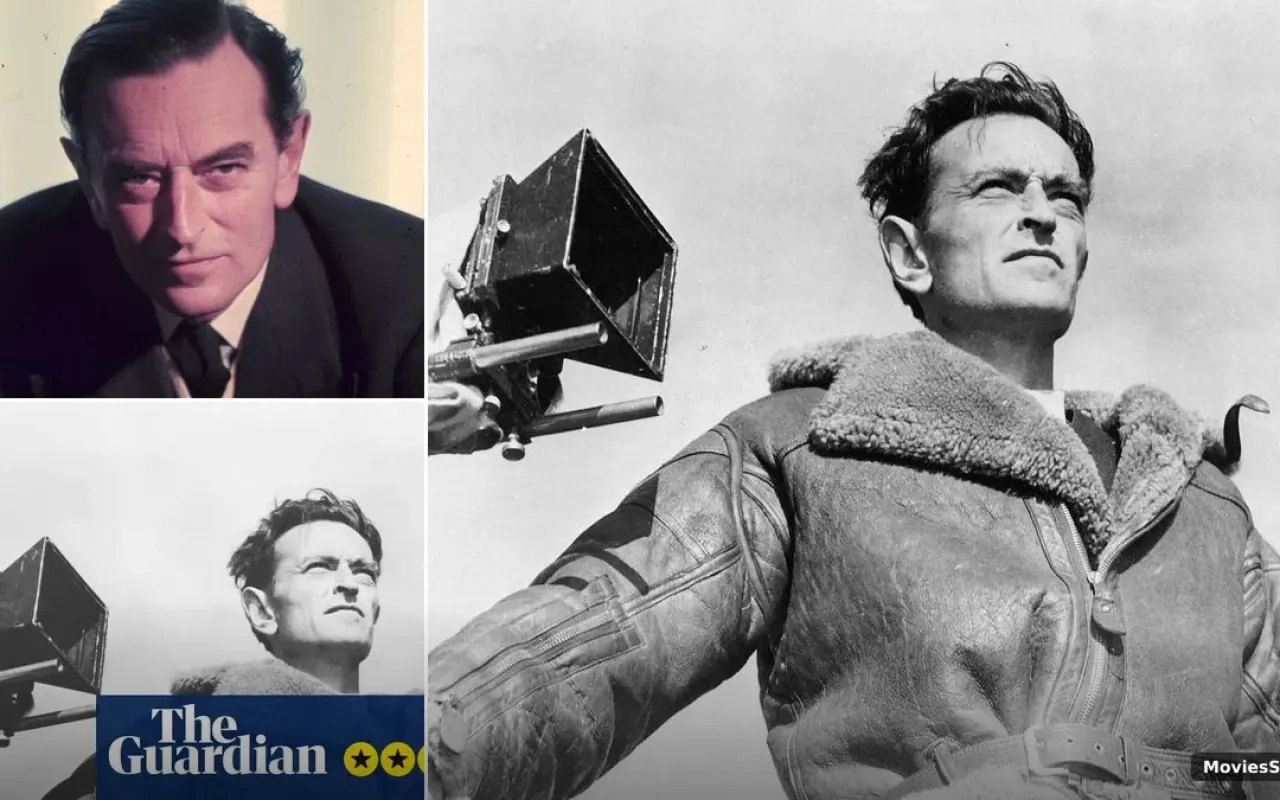
Imagine being the person who directed the "pyramids of cinema"—films so massive they literally redefined what a movie screen could do—only to be bullied into a 14-year silence by a group of critics in a New York hotel room. That is the jarring, high-stakes reality explored in Maverick: The Epic Adventures of David Lean, the new documentary that just set the Cannes Film Festival on fire.
Directed by Barnaby Thompson and narrated by the ethereal Cate Blanchett, this isn’t your typical "greatest hits" retrospective. It’s a deep dive into the psyche of a man who was simultaneously a logistical god and an emotional wreck. The documentary Maverick: The Epic Adventures of David Lean explores the life and career of the legendary British filmmaker, covering his rise from a Quaker upbringing and dyslexia to directing epics like Lawrence of Arabia, his David Lean 14 year hiatus caused by harsh critics, and his complex personal life involving six marriages. It’s a story of how a man who couldn’t read well ended up writing the visual grammar for every blockbuster you’ve ever loved.
The Cannes Premiere: Why Maverick is the Documentary of the Year
The David Lean documentary Cannes premiere wasn't just another screening; it was treated like a "seance." In a festival that often feels like it’s chasing the next TikTok-friendly trend, Barnaby Thompson brought a ghost back to life. Thompson, who recently explored the life of Noel Coward, found a similar "outsider-to-insider" arc in Lean.
The film doesn't just rely on dusty archival footage. It features a heavy-hitting lineup of modern masters—Steven Spielberg, Martin Scorsese, Christopher Nolan, and Denis Villeneuve—all testifying to Lean’s status as the ultimate "maverick." While the industry moves toward "slow cinema" or quick-cut streaming content, Maverick: The Epic Adventures of David Lean reminds us of a time when movies were massive, analogue, and meant to be seen on a 70mm screen. The documentary uses never-before-seen materials from the David Lean Foundation archives, including personal letters found in literal cardboard boxes that humanize a man often seen as a cold, technical perfectionist.
A Love-Starved Childhood: Dyslexia and the Shadow of a Quaker Father
To understand why Lean needed to build entire cities in the desert, you have to look at his childhood in Croydon. Born in 1908 to a strict Quaker upbringing, Lean was effectively banned from watching movies. His father, Frank, was an accountant who viewed cinema as a low-brow distraction.
The David Lean Foundation archives revealed a heartbreaking dynamic: Frank Lean walked out on the family when David was young, and even after David became a global icon, the approval never came. In a letter found in the archives, his father bluntly told him, "You’re not very good." In fact, when David invited his father to the 1962 premiere of Lawrence of Arabia, Frank didn't even show up. He died in 1973 without ever seeing a single one of his son's films.
Adding to this emotional deficit was Lean’s struggle with dyslexia in cinema. In an era where the condition wasn't understood, he was branded a "dunce." This forced him to lean into his eyes rather than his ears. He became obsessed with photography and editing, eventually becoming the best film editor in England before Noel Coward pushed him into the director's chair. His "grammar of modern filmmaking" wasn't learned in a classroom; it was forged through a desperate need to communicate visually because words had failed him.
The Algonquin Incident: How Critics Silenced a Genius for 14 Years
The most shocking revelation in the documentary is the David Lean film critics controversy. We often think of legendary directors as untouchable, but Lean was surprisingly fragile. In 1970, after the release of Ryan's Daughter, Lean was invited to the Algonquin Hotel in New York for what he thought was a professional discussion with the National Society of Film Critics.
It turned into a bloodbath. Pauline Kael, the formidable New Yorker critic, and Richard Schickel of Time Magazine basically took him to task for making a "big" movie at a time when the "New Hollywood" of Easy Rider was in vogue. Schickel reportedly asked how the man who made Brief Encounter could produce such "rubbish." Kael was even more dismissive, calling him a "super-technician" rather than an artist.
The David Lean 14 year hiatus wasn't a choice; it was a retreat. Lean was so wounded by the "snarky" reviews that he became ashamed to go out in public, fearing people would point him out as the man who made a "disastrous" film. This gap—from 1970 until 1984's A Passage to India—is one of the great "what ifs" of cinema history. What masterpieces did we lose because a group of critics decided to be mean at lunch?
Six Wives and a Thousand Lovers: The Messy Private Life of a Romantic
Lean’s films are famous for their "star-crossed" romances, and the David Lean marriages and lovers section of the documentary explains why. He was a man perpetually chasing a "peak" of romantic excitement that he could never sustain. One friend in the documentary claims Lean had as many as a thousand lovers throughout his life.
His sexual restlessness was legendary, and it resulted in six marriages, many of which were overlapping or short-lived:
- Isabel Lean (1930–1936): His first cousin. The marriage was reportedly stifling and ended as his career began to take off.
- Kay Walsh (1940–1949): An actress who appeared in his Dickens adaptations. She was his creative partner but couldn't handle his infidelities.
- Ann Todd (1949–1957): Another actress. Their relationship was volatile and professional, often described as a "battle of wills."
- Leila Matkar (1960–1978): An Indian woman he met while scouting for A Passage to India (decades before he actually made it). Their relationship lasted through his most successful years.
- Sandra Hotz (1981–1984): A Swiss woman who was significantly younger.
- Sandra Lean (Lady Lean) (1990–1991): His final wife, who has spent the years since his death guarding his legacy through the BFI National Archive and the Foundation.
The documentary doesn't shy away from the "arsey" side of his personality. Actors like Robert Mitchum and Leo McKern famously hated him. During the filming of Ryan's Daughter, McKern—who played the village local—nearly drowned and lost his glass eye because Lean refused to stop filming during a dangerous storm. Lean was a man who put the shot above the human, a trait that made him a genius on screen but a nightmare at home. He even had a strained relationship with his own children, often prioritizing his 70mm landscapes over his own flesh and blood.
The 70mm Legacy: Why Spielberg and Villeneuve Still Worship Lean
Despite the personal mess, Lean’s technical brilliance remains unmatched. He was the master of 70mm cinematography, a format that allowed him to capture the desert in Lawrence of Arabia and the snow-covered steppes in Doctor Zhivago with a clarity that still looks better than 8K digital today.
Steven Spielberg calls The Bridge on the River Kwai "the perfect picture." Denis Villeneuve admits that Dune wouldn't exist without Lean’s influence. The documentary breaks down his David Lean editing techniques—specifically the "hard cut" from a blowing match to a desert sunrise in Lawrence—which he actually "stole" from the French New Wave, proving he was more experimental than his "establishment" reputation suggests.
However, the documentary also touches on the "brownface" controversy surrounding Alec Guinness in A Passage to India. While Lean was a product of his time, the film acknowledges these "blind spots" in his later work, even as it celebrates his ability to tell intimate human stories (like the quiet heartbreak of Brief Encounter) on a gargantuan scale.
David Lean’s Essential Filmography & Oscar Stats
| Film | Year | Oscar Wins (Total) | Lean's Personal Win |
|---|---|---|---|
| Brief Encounter | 1945 | 0 (3 Noms) | Nominated (Director) |
| Great Expectations | 1946 | 2 | Nominated (Director) |
| The Bridge on the River Kwai | 1957 | 7 | Winner (Best Director) |
| Lawrence of Arabia | 1962 | 7 | Winner (Best Director) |
| Doctor Zhivago | 1965 | 5 | Nominated (Director) |
| Ryan's Daughter | 1970 | 2 | - |
| A Passage to India | 1984 | 2 | Nominated (Dir/Editor/Writer) |
Where to Watch and What’s Next
If you're looking for the David Lean documentary streaming release date, the news is still "coming soon." Following its successful Maverick documentary review 2024 cycle at Cannes, the film is currently seeking wide distribution. Industry insiders expect it to land on a prestige streamer like Max or MUBI by late 2024 or early 2025, likely timed with the 80th anniversary of Brief Encounter.
As for his physical legacy, the David Lean Foundation continues to restore his films. One lingering mystery mentioned by The Guardian is the current location of Lean’s personal Rolls-Royce Phantom II—a car as grand and imposing as his films—which remains a holy grail for cinema collectors.
Key Takeaways from the David Lean Documentary
- The 14-Year Gap: Lean stopped directing for over a decade after being psychologically crushed by critics at the Algonquin Hotel in 1970.
- Dyslexia as a Tool: His inability to read well as a child drove him to become a visual storyteller, mastering the "grammar of filmmaking."
- The "Thousand Lovers": Lean’s personal life was a chaotic search for the romantic high he depicted on screen, leading to six marriages.
- Modern Influence: Directors like Spielberg, Nolan, and Villeneuve still use Lean’s 70mm epics as the gold standard for landscape cinematography.
- The Father Figure: Lean’s lifelong drive for success was fueled by a father who never gave him a single word of praise.
Ultimately, Maverick: The Epic Adventures of David Lean proves that Lean wasn't just a "super-technician." He was a man who felt everything too deeply—every criticism, every romantic spark, and every frame of film. He was a movie maverick who proved that you could be the biggest director in the world and still be the loneliest man in the room. As the industry shifts back toward "maximalism" with films like Oppenheimer and Dune, Lean’s ghost isn't just haunting the theaters; he's leading the way.