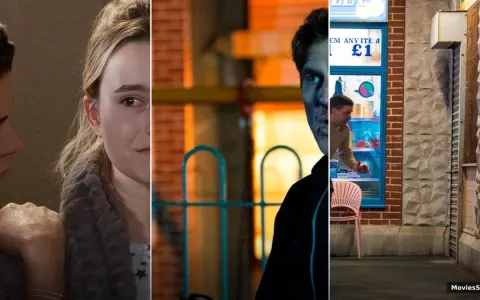
If you thought the body-swap genre peaked with Lindsay Lohan and Jamie Lee Curtis, Arthur Harari is here to politely—and then violently—disabuse you of that notion. His latest film, The Unknown (L’Inconnue), which premiered in Competition at Cannes 2026, is less Freaky Friday and more like a fever dream directed by Michelangelo Antonioni with a script by Franz Kafka. It’s a 146-minute descent into existential horror that uses a sentient STD as a vehicle for a total erasure of the self.
In this The Unknown movie review, we’re breaking down why this film is the most polarizing thing to hit the Croisette in years, from its "crypto-fascist" political baggage to the haunting way it handles gender dysphoria and identity. Real talk: this isn't just a movie; it’s a psychological haunting that lingers long after the credits roll.
Plot Summary: The Metamorphosis of David Zimmerman
The Unknown (L'Inconnue) is a 2026 psychological thriller directed by Arthur Harari. It follows David Zimmerman (Niels Schneider), a photographer who swaps bodies with a mysterious woman named Eva (Léa Seydoux) after a sexual encounter. The film explores themes of identity, gender dysphoria, and erasure, and is adapted from the graphic novel 'The Case of David Zimmerman'.
David is a reclusive photographer living in the Paris suburbs, obsessed with metamorphosis—specifically how the city’s architecture is being erased and replaced by high-rises. He spends his days matching vintage postcards to modern construction sites, documenting what has disappeared. His life takes a sharp left turn at a drug-fueled costume party where a giant papier-mâché Trump head is beaten like a piñata (a nice bit of political foreshadowing).
There, he locks eyes with Eva Heisinger (Seydoux). They have wordless, almost animalistic sex in a grimy basement. There’s no passion here, only a sense of "indefinable compulsion." When David wakes up, he’s in Eva’s body. But this isn't a clean trade. As David-in-Eva tries to find his original form, he discovers his body has been hijacked by Malia (Lilith Grasmug), a 20-year-old girl who was previously missing. The "swap" is actually a chain reaction of metempsychosis, a spiritual infection passing through sexual contact like a ghost in the machine.
The Cannes Controversy: Arthur Harari vs. Vincent Bolloré
You can’t talk about Arthur Harari’s The Unknown without talking about the political firestorm happening off-screen. During the festival, Harari was one of the lead signatories of the "Time to Switch-Off Bolloré" open letter. The letter sounded the alarm on billionaire Vincent Bolloré and his growing "far-right" influence over French media through Canal Plus.
The fallout was immediate. Maxime Saada, the CEO of Canal Plus, went scorched-earth, announcing that the network would no longer collaborate with the 600 professionals who signed the letter. Harari, who called Bolloré a "crypto-fascist" in a Libération interview, became the face of the resistance. During his press conference, Harari doubled down, stating that the CNC (National Center for Cinema) is under direct threat from far-right parties who want to dismantle the very system that funded his film. It’s a wild moment for French cinema where the art on screen is mirroring the "erasure" and "displacement" the director is fighting in real life.
The Unknown Ending Explained: Identity and Erasure
If you're looking for a The Unknown movie ending explained that wraps everything up in a neat bow, you’re in the wrong theater. The film’s final act moves away from the "investigative thriller" vibe and into pure existential horror.
David and Malia eventually realize there is no "reverse" button. The idea of having sex again to switch back is floated but never works. Instead, the film concludes with two devastating scenes of non-recognition:
- The Father: Malia (in David’s 40-year-old male body) watches her father, played by Romanian director Radu Jude, from a distance at a wedding. She realizes that telling him the truth would only bring him more pain. The physical gap between them is now a permanent metaphysical one.
- The Mother: David (in Eva’s body) visits his mother, Gabi. He sits in his childhood home as a total stranger, realizing that his identity only exists as a memory that he can no longer share with the people who loved him.
The Léa Seydoux body swap isn't just a plot device; it’s a metaphor for how we become strangers to ourselves. The film suggests that "who we are" is just a collection of memories tied to a corporeal frame that can be replaced at any moment. By the end, the "David" we knew is effectively dead, replaced by a permanent state of gender distress and social invisibility.
Graphic Novel vs. Film: The Case of David Zimmerman
The film is adapted from the graphic novel The Case of David Zimmerman, co-written by Arthur and his brother Lucas Harari. While the 2024 source material is a noirish, high-contrast mystery, the film—shot by Tom Harari—opts for a "digital POV" look that feels uncomfortably naturalistic.
There are a few key differences you should know:
| Feature | Graphic Novel | The Unknown (2026 Movie) |
|---|---|---|
| Tone | Stylized Noir | Naturalistic Existential Horror |
| The Swap | More mechanical/Sci-fi | Described as a "sentient STD" or infection |
| Ending | Resolution-focused | Ambiguous and focused on "erasure" |
One of the most intense subtexts the film adds is the "Jew in a German body" layer. David Zimmerman is a distinctly Jewish name, while Eva Heisinger is German. The film briefly touches on this historical metempsychosis, suggesting that the weight of the past is literally being carried by new, unwilling hosts. It adds a layer of identity politics that the graphic novel only hinted at.
A Masterclass in Psychological Thriller Craft
Despite the "weird fantasy" label, The Unknown is technically flawless. The soundtrack by Andrea Poggio—blended with tracks like The Weeknd’s "I Feel it Coming"—creates a sotto giallo atmosphere that is both modern and retro.
The performances are where the movie truly lives. Schneider is heartbreaking as a teenage girl trapped in a middle-aged man’s body, while Seydoux proves once again why she’s the queen of French cinema. Her ability to play a man "possessing" her own body—mimicking David’s hunched, frantic movements—is eerie. Transgender critics have already pointed out how the film accurately captures the "isolating dysphoria" of feeling alien to one's own skin, even if the film’s characters react to their new bodies with more disgust than acceptance.
Key Takeaways
- Release Info: Neon distribution has the North American rights, so expect a theatrical run later this year.
- Runtime: At 146 minutes, it’s a slow burn that demands your full attention.
- The Controversy: Harari’s public feud with Maxime Saada and Canal+ might affect the film’s future streaming availability in France.
- The Vibe: Think Under the Skin meets Anatomy of a Fall.
The Verdict: Is The Unknown Worth the Hype?
Look, The Unknown movie review consensus is going to be split. If you want a movie that explains its mechanics and gives you a happy ending, stay far away. But if you want a film that explores the "friction between fluidity and permanence," this is a masterpiece. Harari has crafted a story about how we are all, eventually, erased—by time, by politics, or by the simple fact that our bodies are just temporary vehicles.
It’s uncomfortable, it’s provocative, and it’s arguably the most important French film of the decade. Just maybe... use a condom next time. Or don't go to any parties with giant Trump piñatas. You've been warned.