For over forty years, Isabel Allende’s debut novel has stood as a pillar of global literature, a sweeping epic that defined the genre of magical realism for millions. Now, the definitive Isabel Allende TV adaptation is finally arriving. The House of the Spirits Prime Video series marks a historic moment: the first time this multi-generational saga has been adapted into its native Spanish language, filmed on location in Chile with an all-Latin American cast and crew. This eight-episode miniseries promises to rectify the "whitewashed" Hollywood approach of the past, offering a raw, mystical, and politically charged journey through the Trueba and del Valle bloodlines.
Release Date and How to Watch
What is the release date of The House of the Spirits on Prime Video? The House of the Spirits TV series premieres globally on Prime Video on April 29, 2026. The eight-episode adaptation of Isabel Allende's novel will release its first three episodes on launch day, followed by weekly installments until the finale on May 13, 2026.
The series will be available in over 240 countries and territories. For viewers seeking the highest technical quality, the production was shot in native 4K with HDR support, capturing the stark contrasts of the Chilean landscape—from the arid northern deserts to the lush, rain-swept southern forests—with cinematic precision.
The Cast of The House of the Spirits: Who Plays Who?
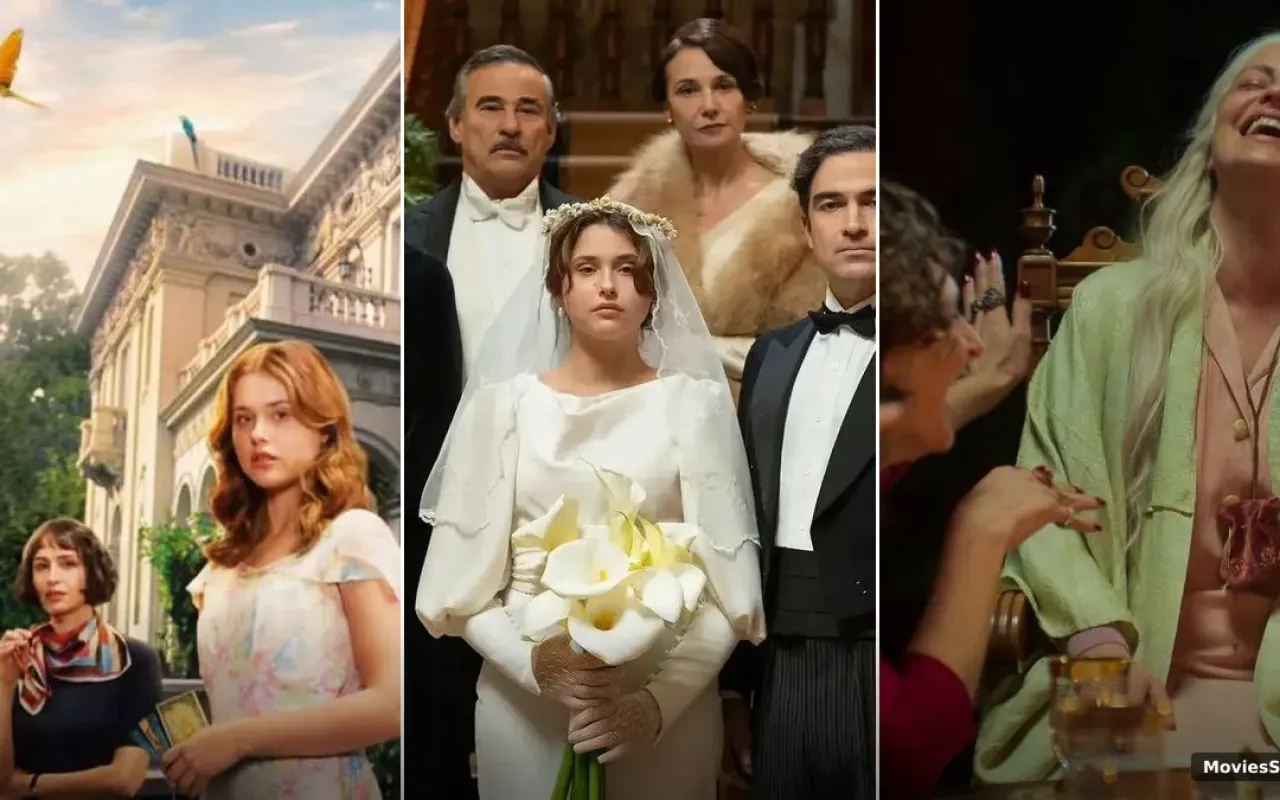
One of the most anticipated aspects of the House of the Spirits 2026 cast is its commitment to cultural authenticity. Leading the ensemble is Alfonso Herrera, who takes on the complex role of the patriarch Esteban Trueba. Herrera portrays the character's evolution from a penniless miner to a powerful, often tyrannical, conservative senator.
The narrative heart of the show lies in the three generations of women who endure and challenge Esteban’s legacy:
- Clara del Valle: The clairvoyant matriarch is played by Nicole Wallace (in her younger years) and Dolores Fonzi. Clara’s supernatural gifts—levitation, telekinesis, and communication with the dead—serve as the story's spiritual anchor.
- Blanca Trueba: Portrayed by Fernanda Urrejola (who also serves as co-showrunner), Blanca represents the bridge between the family's aristocratic past and its revolutionary future through her forbidden love for Pedro Tercero.
- Alba Trueba: Played by Rochi Hernández, Alba serves as the series' narrator. In a significant shift from previous adaptations, the story is told from Alba’s perspective in the 1970s as she reconstructs her family's history using her grandmother's diaries.
Rounding out the cast is Fernanda Castillo as Férula Trueba, Esteban’s repressed and devoted sister, whose tragic arc provides some of the series' most emotional moments. This Spanish language series ensures that the linguistic nuances of Allende's prose are finally captured on screen.
Magical Realism: Bringing the Supernatural to Life
As a cornerstone of magical realism TV shows, the series faced the daunting task of making the supernatural feel mundane. Isabel Allende herself initially feared that certain elements, such as Clara’s levitation or the "green hair" of her sister Rosa, might look "ridiculous" or "clownish" on screen. However, showrunners Francisca Alegría and Andrés Wood opted for a naturalistic, subtle approach.
Rather than relying on garish CGI, the magical realism is integrated through practical effects and clever cinematography. For instance, the legendary green hair of Rosa del Valle is treated as a subtle, iridescent reflection rather than a bright dye job. To prepare for her role as the mystical Clara, Nicole Wallace reportedly explored astral journeys and "Akashic Records" to bring a genuine sense of spirituality to the performance, ensuring the character felt like a person living between worlds rather than a caricature.
Historical Context: The Real History Behind the Story
While the novel is set in an "unnamed South American country," it is a transparent reflection of Chilean history. The La Casa de los Espíritus series leans heavily into this context, specifically the 1973 Chilean coup. The narrative tracks the rise of political polarization that led to the overthrow of the democratically elected socialist government—led in real life by Isabel Allende’s cousin, Salvador Allende—and the subsequent military dictatorship of Augusto Pinochet.
The series provides vital context for international viewers, illustrating how the Trueba family's internal conflicts mirror the nation's fracture. The production utilized historical consultants to ensure the accuracy of the 1970s setting, portraying the brutal reality of political exile and the "disappeared" with unflinching honesty. This focus on memory serves as a warning against repeating the mistakes of the past, a theme Allende has championed since writing the book in exile in Venezuela.
Production Insights: Soundtrack, Locations, and Visuals
The production scale of The House of the Spirits Prime Video is unprecedented for a Latin American series. The House of the Spirits series soundtrack features an original score and contributions from Chilean icon Mon Laferte, whose haunting vocals blend traditional folk influences with contemporary intensity, perfectly matching the show's "spectacular and gutting" tone.
Filming locations were chosen to represent the vast geographical diversity of Chile. The production moved from the "Las Tres Marías" estate (reconstructed in the central valleys) to the rugged coastlines and the high-altitude deserts. This visual richness is a far cry from the 1993 film, which was largely shot in Portugal and Denmark.
Book vs. Series: Key Differences
While the series is a literary adaptation that stays remarkably loyal to the source material, several strategic changes were made for the eight-episode format:
| Feature | 1982 Novel / 2026 Series | 1993 Feature Film |
|---|---|---|
| Language | Spanish (Authentic) | English |
| Narrative Voice | Alba (via Clara's diaries) | Linear third-person |
| Green Hair | Subtle green reflection | Omitted/Changed |
| Political Depth | Full focus on the 1973 Coup | Simplified for Hollywood |
| Runtime | ~8 hours (Limited Series) | 2 hours, 12 minutes |
The Feminist Shift in Alba’s Narration
Critics and scholars have noted that the Prime Video series places a stronger emphasis on the "feminist" lineage of the story. By centering the 1970s-era Alba as the primary narrator, the show highlights how women preserved the history that men like Esteban Trueba tried to erase or dominate. This shift allows the series to explore themes of female agency and survival during the Chilean dictatorship without judging the characters for the compromises they were forced to make.
Key Takeaways
- Global Premiere: The series debuts on Prime Video on April 29, 2026.
- Authenticity: It is the first Spanish-language adaptation, featuring a Latin American cast and filmed in Chile.
- Format: An eight-episode miniseries (no Season 2 is planned as it covers the full book).
- Creative Team: Executive produced by Isabel Allende; showrun by Francisca Alegría, Fernanda Urrejola, and Andrés Wood.
- Visual Style: A naturalistic take on magical realism, avoiding "ridiculous" CGI in favor of atmospheric storytelling.
- Historical Stakes: Deeply explores the 1973 Chilean coup and its multi-generational impact on the Trueba family.
Conclusion: A Legacy Reclaimed
The The House of the Spirits Prime Video adaptation is more than just a remake; it is a cultural reclamation. By returning the story to the Spanish language and the Chilean soil that inspired it, the production honors Isabel Allende’s "love letter to her grandfather" while making it accessible to a new generation. As the series navigates the delicate balance between the ghosts of the past and the political fires of the present, it stands as a testament to the power of memory. Whether you are a lifelong fan of the novel or a newcomer to the world of the Truebas, this 2026 adaptation is set to be the definitive screen version of a Latin American masterpiece.