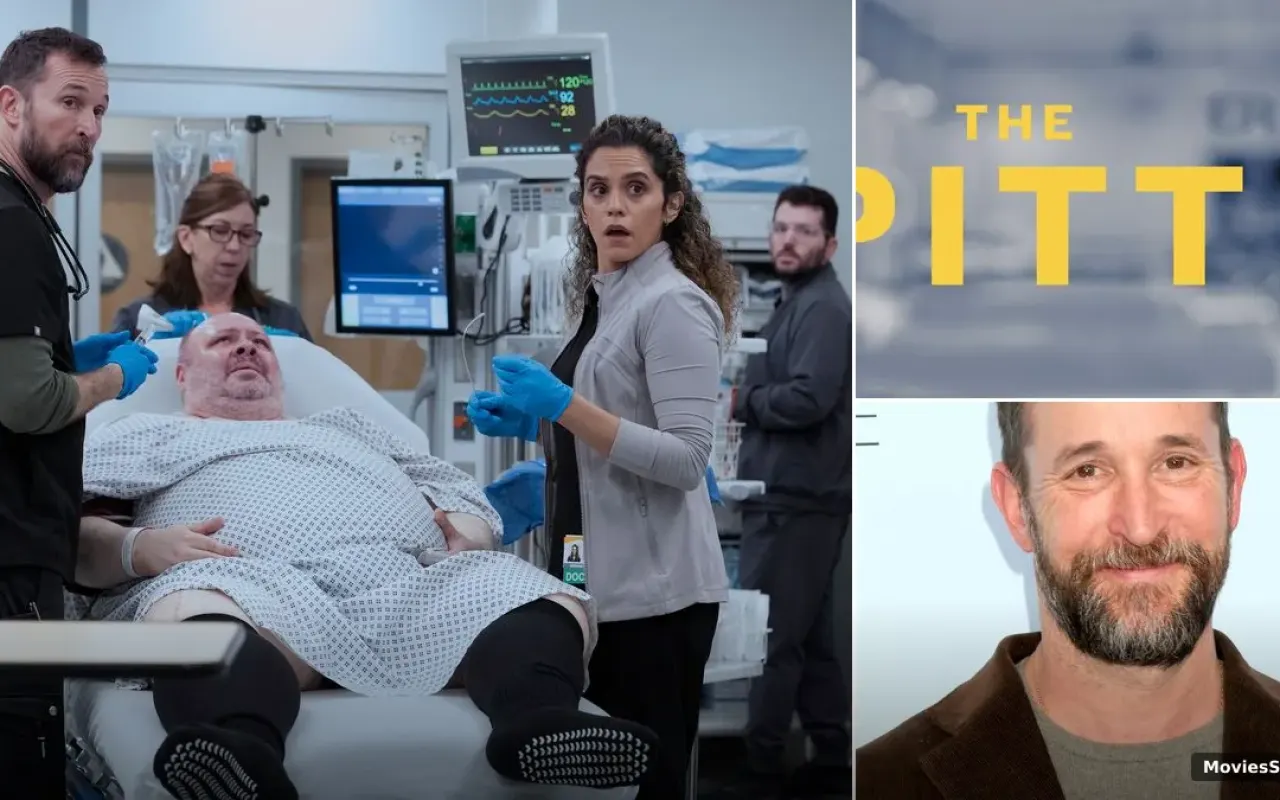
The final hour of the second season, titled "10:00 P.M.," delivered a masterclass in tension, concluding a grueling 15-hour Fourth of July shift that pushed the staff of the Pittsburgh Medical Trauma Center to their absolute limits. As fireworks erupted over the city skyline, the internal explosions within the Emergency Department left fans reeling. In this comprehensive The Pitt Season 2 Finale Explained deep-dive, we break down the emotional collapse of Michael Robinavitch, the shocking departure of a fan-favorite doctor, and what the future holds for the series.
The Pitt Season 2 Finale Explained: Dr. Robby’s Breaking Point
The central arc of the finale focused on the psychological disintegration of Noah Wyle’s character, Dr. Michael “Robby” Robinavitch. Throughout the season, the "Woe-Is-He" narrative reached a fever pitch, illustrating a psychological profile of burnout that many real-world medical professionals find hauntingly accurate. Robby, a man who has carried the trauma of the COVID-19 pandemic like a lead weight, finally saw his "white knight" complex shatter.
The catalyst was the "Baby Jane Doe" case—a nameless infant brought in during the chaotic Fourth of July shift. Robby’s obsession with saving the child, despite dwindling medical hope, served as a proxy for his own need for salvation. When the case ended in tragedy, it triggered a confrontation with Dr. Baran Al-Hashimi. The tension between the mentor and his hand-picked successor boiled over when Robby weaponized his knowledge of Al-Hashimi’s seizure disorder, accusing her of professional recklessness. This betrayal highlighted the toxic workplace dynamics that have become a hallmark of the show’s gritty realism.
By the time the clock hit 10:00 P.M., Robby was seen packing his locker, preparing for his Dr. Robby sabbatical. This three-month hiatus isn't just a plot device; it is a necessary narrative reset for a character who has become a "workplace monster," sacrificing both his own humanity and the well-being of his staff in the pursuit of a perfection that doesn't exist in trauma medicine.
Is Supriya Ganesh Leaving The Pitt? Dr. Mohan’s Heartbreaking Exit
One of the most searched questions following the finale is the status of the hospital's most promising resident. Is Supriya Ganesh leaving The Pitt?
Yes, Supriya Ganesh, who plays Dr. Samira Mohan, is officially leaving 'The Pitt' and will not return as a series regular for Season 3. Her character's exit was finalized in the Season 2 finale, '10:00 P.M.', where she expressed a desire to move into geriatrics following personal and professional burnout.
The departure of Dr. Samira Mohan has sparked significant debate among the fanbase. Throughout the season, Mohan struggled under the weight of her mother’s overbearing expectations and Robby’s increasingly verbal lashes. After suffering a debilitating panic attack mid-shift, Mohan realized that the high-octane environment of the Emergency Department was no longer sustainable for her mental health. Her decision to pivot toward geriatrics is a poignant commentary on the "quiet quitting" phenomenon in healthcare, where talented professionals seek roles with lower acuity to preserve their sanity.
The Pitt Medical Accuracy: A Forensic Breakdown of the Finale
The show continues to set a new gold standard for The Pitt medical accuracy, largely thanks to the involvement of Joe Sachs and R. Scott Gemmill. Unlike other medical procedurals that rely on "deus ex machina" saves, this season utilized a real-time narrative to show the grueling reality of a 15-hour shift.
- Necrotizing Fasciitis: The finale featured a harrowing case of "flesh-eating bacteria." The show accurately depicted the rapid progression of the infection and the necessity of aggressive surgical debridement, avoiding the "miracle cure" trope.
- Closed Cervical Reduction: A high-stakes procedure involving a spinal injury was praised by real ER doctors for its technical precision, showing the literal "halo" placement and the risks of paralysis.
- SANE Nursing: The portrayal of Dana Evans (Katherine LaNasa) working with a sexual assault victim highlighted the vital role of SANE (Sexual Assault Nurse Examiner) professionals, focusing on the forensic and emotional sensitivity required in such cases.
The show’s commitment to realism extended to its AI in healthcare subplot. While many shows treat AI as a futuristic gimmick, the series explored the "hallucination" errors of AI-driven charting systems. This mirrors real-world concerns where AI in healthcare implementation can lead to fabricated quotes in patient histories if not strictly supervised by human eyes.
The Pitt HBO Max Ratings: Why the Weekly Release Strategy Won
In an era of binge-watching, The Pitt HBO Max ratings have proven that "Appointment TV" is far from dead. According to Nielsen streaming charts, the show hit a massive milestone, recording 1.16 billion minutes of watch time in a single week. This marked the eighth consecutive week the show surpassed the billion-minute mark.
Comparison data shows that The Pitt avoided the "sophomore slump" that plagued other streaming originals like Netflix’s Running Point or Beef Season 2. By using a weekly cadence, the show allowed social media sentiment to build, creating a "watercooler effect" that drove new viewers to catch up on Season 1 while Season 2 was airing. This strategy resulted in a 57% rise in viewership compared to the debut season, proving that the slow-burn real-time narrative is a perfect match for weekly distribution.
Missing Perspectives: The Legal and Social Stakes
While the medical drama takes center stage, the medical malpractice suit involving Mel (Dr. King) added a layer of legal realism often ignored by competitors. Taylor Dearden’s portrayal of a neurodivergent doctor facing a deposition provided a rare look at how disability is navigated in high-pressure professional environments. Disability advocates have praised the show for Mel's neurodivergent representation, noting that her "quirkiness" is never treated as a deficit, but rather a different way of processing the chaos of the PIT.
Furthermore, the show’s Pittsburgh filming locations—from the gritty alleys of the Strip District to the towering views of the Ohio River—ground the series in a specific blue-collar reality. The Pittsburgh Medical Trauma Center feels like a character itself, struggling with Medicaid expansion issues and the looming threat of hospital cyberattacks that were hinted at earlier in the season.
The Pitt Season 3 Release Date and What to Expect
With the The Pitt Season 2 Finale Explained, all eyes now turn to the future. While an official The Pitt Season 3 release date has not been set by HBO Max, the current production cycle suggests a return in January 2027.
The post-credits scene, featuring a haunting Alanis Morissette track, showed Dr. Robby driving away from the city, leaving the keys to the department in the hands of Dr. Al-Hashimi. This raises the question: Will Sepideh Moafi be the lead of Season 3? With Robby on a three-month sabbatical, the power vacuum in the PIT will likely be the primary conflict of the next season.
Expect Season 3 to deal with:
- The Successor Conflict: Can Al-Hashimi lead while managing her own health secrets?
- The New Residents: With Dr. Mohan gone, a new crop of "newbies" will enter the arena, potentially including the promotion of Dr. Ellis.
- The Cyberattack Fallout: Rumors suggest the hospital’s digital infrastructure will be the next major "patient" in crisis.
Key Takeaways
- Dr. Robby’s Exit: Noah Wyle’s character is taking a 3-month sabbatical to address severe burnout and psychological collapse.
- Cast Departure: Supriya Ganesh (Dr. Samira Mohan) is officially leaving the show to pursue geriatrics.
- Ratings Success: The show reached 1.16 billion minutes on Nielsen charts, proving the success of weekly releases.
- Medical Realism: The finale featured accurate depictions of Necrotizing Fasciitis and the role of SANE nurses.
- Season 3 Timeline: A premiere is expected in early 2027, focusing on the transition of leadership to Dr. Al-Hashimi.
Conclusion
The Season 2 finale of The Pitt was more than just a conclusion to a 15-hour shift; it was a sobering look at the cost of care. By refusing to offer easy answers or "happily ever after" endings for its doctors, the show has cemented its place as the definitive medical drama of the 2020s. Whether Dr. Robby returns from his sabbatical as a changed man or a broken one remains to be seen, but one thing is certain: the doors of the Pittsburgh Medical Trauma Center never truly close. Stay tuned for more updates as we approach the 2027 premiere of Season 3.