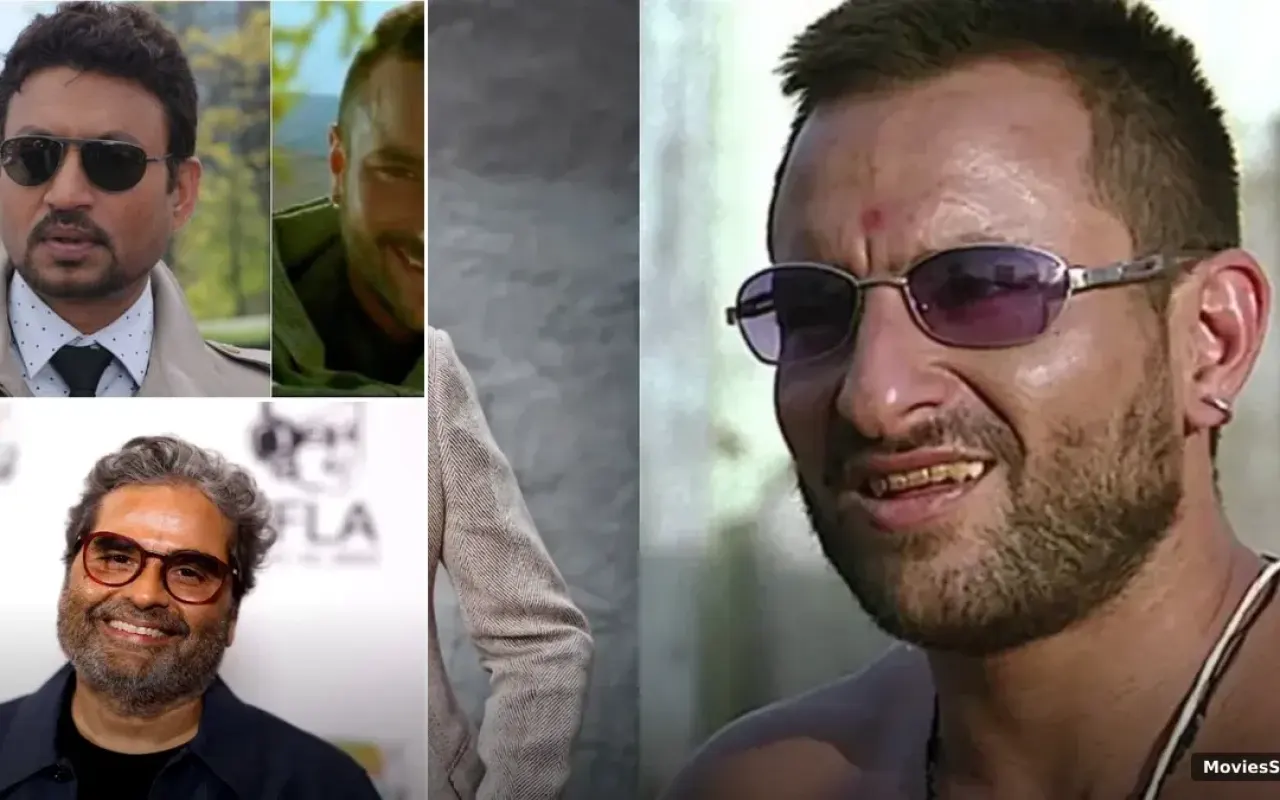
On April 29, 2026, the Indian film industry gathered at the Nita Mukesh Ambani Cultural Centre (NMACC) in Mumbai to mark the sixth death anniversary of a titan. The event, headlined by the screening of the documentary A Story That Refused to Die, served as a catalyst for a series of profound Vishal Bhardwaj Irrfan Khan revelations. These stories, shared by Bhardwaj and director Tigmanshu Dhulia, offer a rare glimpse into a partnership that defined the Shakespearean trilogy of modern Indian cinema but was nearly derailed by professional pride and misunderstood intentions.
The 47-minute documentary, directed by Saurabh Dwivedi, focuses on the grueling yet triumphant making of Paan Singh Tomar (2012). However, the subsequent panel discussion unearthed deeper layers of the relationship between the director and his muse, ranging from a 30-month period of total silence to the "what-ifs" of casting that could have altered the course of Bollywood history.
The 2.5-Year Silence: The Ishqiya and No Smoking Rift
One of the most significant Vishal Bhardwaj Irrfan Khan revelations involves a professional fallout that lasted two and a half years. The tension began following the commercial failure of No Smoking (2007), a surrealist film produced by Bhardwaj that struggled at the box office. This Vishal Bhardwaj Irrfan Khan fight was not born of malice, but of a fundamental misunderstanding regarding the industry's resilience.
Why did Vishal Bhardwaj and Irrfan Khan have a rift?
The rift between Vishal Bhardwaj and Irrfan Khan lasted 2.5 years and was caused by a misunderstanding over the film Ishqiya. After Bhardwaj's production No Smoking failed at the box office, Irrfan assumed Bhardwaj would stop producing films and gave his dates to another project, leading to a professional disagreement.
Bhardwaj recalled his frustration when Irrfan claimed he assumed the director was "finished" as a producer. "I told him, ‘Irrfan, does it work like that? Will I stop making films just because one didn't work?’" Bhardwaj shared. The silence only broke when Bhardwaj was casting for 7 Khoon Maaf (2011). When he finally called Irrfan to play the role of Wasiullah Khan, the actor didn't even ask for a narration, simply stating he had been waiting for the call to make amends.
Irrfan Khan as Langda Tyagi? The Omkara Casting Debate
Perhaps the most tantalizing "what-if" discussed was the casting of Irrfan Khan Langda Tyagi Omkara. While Saif Ali Khan eventually won a National Award for his career-defining portrayal of the antagonist in the 2006 adaptation of Othello, Irrfan was initially highly skeptical of the choice.
At the time, Saif Ali Khan was primarily known for his "urban cool" roles in films like Dil Chahta Hai. Irrfan, who had already established his raw, grounded prowess in Maqbool, felt the role of the rustic, manipulative Langda Tyagi belonged to him. Bhardwaj revealed that Irrfan jokingly remarked, "It will be a huge deal if [Saif] even agrees to cut his hair. I should be doing this part."
While Saif’s performance is now legendary, Bhardwaj admitted that an Irrfan-led Omkara would have been "something else entirely." Irrfan’s ability to inhabit the shadows of a character might have leaned further into the psychological manipulation of Iago, whereas Saif brought a shocking, visceral transformation to the screen.
The Srinagar Car Attack: Political Awareness During Haider
The Haider Srinagar car attack remains one of the most harrowing yet revealing anecdotes of Irrfan’s career. While shooting the 2014 film in Downtown Srinagar, the crew faced intense local scrutiny. In a moment of high tension, a local resident threw a stone at Irrfan’s car, shattering the window. While the security detail reacted with alarm, Irrfan’s response was characteristically unique.
Bhardwaj noted Irrfan’s deep political awareness; the actor initially refused the role, wanting to do a "bigger" lead project, but changed his mind once he read the script and understood its importance to the Kashmiri narrative. After the car attack, instead of being shaken, Irrfan sat in the hotel lobby praising the "aim" of the stone-thrower. "He was making fun of it," Bhardwaj said, noting that Irrfan even stopped a security guard from loading a weapon, asking, "Are you crazy? Will you fire a bullet?" This nonchalance highlighted his comfort in volatile environments and his dedication to the story over personal safety.
The Lost Masterpieces: Tirichh and Dream Sequence
Beyond the films that made it to the screen, the event highlighted several Irrfan Khan unmade movies that remain "lost" to cinema history. These projects showcase the intellectual depth Irrfan brought to his collaborations:
- Tirichh: An adaptation of the short story by Uday Prakash. Irrfan was obsessed with this magical-realist tale of a son’s relationship with his father and a hallucinatory lizard. He even brought the author to Bhardwaj’s office, but the project never found its footing.
- Dream Sequence: A love story where Irrfan desperately wanted to play a singer. He was captivated by a video of a Persian girl playing a traditional instrument with "electrifying" presence and told Bhardwaj he wanted to mirror that specific musical energy.
- O'Romeo: Originally envisioned for Irrfan Khan and Deepika Padukone, this project eventually evolved into the film O'Romeo, slated for a 2026 release with a different cast.
The "Khatarnaak" Acting Process
Tigmanshu Dhulia, who directed Irrfan in the seminal Haasil and Paan Singh Tomar, touched upon the actor’s khatarnaak (dangerous) acting process. Dhulia recalled how Irrfan once tricked him into screening Haasil for Bhardwaj to secure the lead in Maqbool.
During the transition between the two films, Irrfan refused to shave his Maqbool beard for a remaining action sequence in Haasil shot in Delhi’s Chandni Chowk. Despite the continuity error, Dhulia remarked that Irrfan was such a masterful performer that he "hid" the beard through his movement and screen presence, ensuring the audience never noticed the discrepancy. This level of craft, honed at the National School of Drama, allowed him to navigate both mainstream hits and the burgeoning Indian parallel cinema history with ease.
Chronology of Collaboration
| Year | Film / Project | Role / Context |
|---|---|---|
| 2003 | Haasil | Directed by Tigmanshu Dhulia; Irrfan's breakout antagonist role. |
| 2004 | Maqbool | Bhardwaj's first Shakespeare adaptation; Irrfan as the lead. |
| 2007 | No Smoking | Produced by Bhardwaj; its failure triggered the 2.5-year rift. |
| 2011 | 7 Khoon Maaf | The reconciliation film between Bhardwaj and Irrfan. |
| 2012 | Paan Singh Tomar | National Award-winning performance; subject of the 2026 documentary. |
| 2014 | Haider | Irrfan's pivotal role as 'Roohdar' amidst the Srinagar car attack. |
| 2026 | A Story That Refused to Die | Documentary screening marking the 6th death anniversary. |
Key Takeaways from the Revelations
- Professional Integrity: The 2.5-year rift was a result of Bhardwaj’s passion for production and Irrfan’s pragmatic (though mistaken) view of industry economics.
- Casting Ambitions: Irrfan’s desire to play Langda Tyagi suggests he sought roles that challenged his "intellectual" persona with more visceral, physical performances.
- Unmatched Resilience: The Srinagar incident proved that Irrfan was more interested in the "truth" of a location and a character than the comforts of stardom.
- Legacy of Unmade Work: Projects like Tirichh highlight Irrfan's commitment to bringing literary, regional Indian stories to the global stage.
Conclusion: A Legacy That Refuses to Fade
The Vishal Bhardwaj Irrfan Khan revelations shared on this sixth anniversary remind us that their partnership was as volatile as it was brilliant. While we mourn the "Lost Masterpieces" like Tirichh, the existing body of work—from Maqbool to Haider—remains a testament to a friendship that survived rifts, box office failures, and even physical attacks. As the documentary A Story That Refused to Die begins its journey to wider audiences, it ensures that while the actor may be gone, his "khatarnaak" spirit and political consciousness continue to influence the next generation of Indian filmmakers. Whether Tirichh will ever be made remains an open question, but the blueprint Irrfan left behind is indelible.