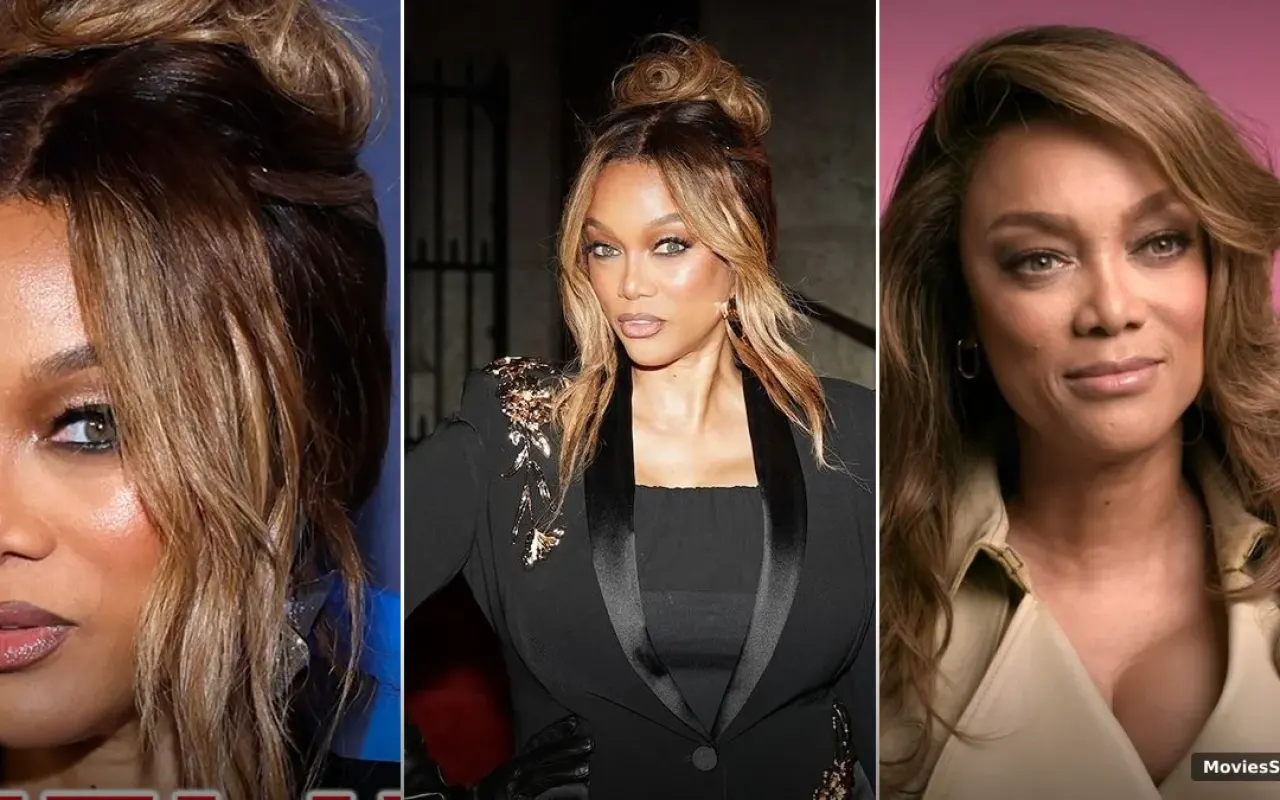
The 16-minute edit heard 'round the world. In the era of the "re-evaluation," we’ve seen countless early-2000s icons dragged back into the spotlight to answer for the sins of the past. But Tyra Banks isn't just taking this one on the chin. The supermodel-turned-mogul has officially entered the legal chat, filing a massive Tyra Banks Netflix lawsuit that claims the streaming giant didn't just document the history of America’s Next Top Model (ANTM)—they surgically manufactured a villainous narrative that never actually happened.
At the center of the storm is the docuseries Reality Check: Inside America’s Next Top Model, which debuted on February 16, 2026. While the show was marketed as a deep dive into the show’s complicated legacy, Banks alleges it was actually a hit piece designed to make her look like she covered up a sexual assault. The lawsuit, filed on June 13 in Los Angeles federal court, pulls back the curtain on how "reality" is constructed in the editing room and what happens when a creator loses control of their own story.
Why is Tyra Banks Suing Netflix?
Tyra Banks is suing Netflix for defamation, false light, and breach of contract regarding the docuseries 'Reality Check: Inside America’s Next Top Model.' The lawsuit alleges that producers used 'selective editing' and 'surgical manipulation' to falsely imply Banks knowingly covered up a sexual assault involving contestant Shandi Sullivan during the show's second season.
The core of the complaint is a discrepancy in time and intent. Banks sat for a grueling 3.5-hour interview, expecting to have a nuanced, "candid conversation" about the show’s 24-season run—the highs, the lows, and the "really off choices" she’s admitted to in the past. Instead, the lawsuit claims Netflix and EverWonder Studio stripped that footage down to a mere 16 minutes, discarding her accountability and "surgical[ly] manipulating" the remaining clips to support a "complete fabrication."
The Shandi Sullivan Incident: Fact-Checking the 'Milan Assault' Narrative
To understand why this lawsuit is so explosive, we have to go back to 2004. If you were online during the Cycle 2 era, you remember the Milan incident. Contestant Shandi Sullivan, who was the ultimate "indie girl" transformation of the season, had a sexual encounter with a male model while the cast was in Italy. At the time, the narrative broadcast to millions on UPN was one of infidelity—Shandi famously called her boyfriend back home in a tearful, gut-wrenching confession that became one of the most iconic (and exploited) moments in reality TV history.
Fast forward to 2026. In the Reality Check ANTM documentary, Sullivan reframes that night as a sexual assault. This is a heavy, serious allegation that changes the entire context of that footage. However, the Tyra Banks defamation suit argues that the producers set a trap. Banks claims she was never told about Sullivan's new perspective before or during her 3.5-hour interview.
The lawsuit highlights a specific, devastating moment in the docuseries. Director Mor Loushy asks Banks: “You remember the story with Shandi?” The edit shows Banks glancing upward, saying “um,” and then the screen abruptly cuts to black. To the viewer, it looks like Tyra is either callous enough to forget a sexual assault or is caught in a lie.
The reality? Banks’ lawyers say she immediately followed that "um" by saying, "I do remember her story," and went on to discuss her memories of Sullivan as a talented model and the incident as a "matter of regret over infidelity"—which was the only version of the story Banks, the network executives, and the standards-and-practices reviewers had ever been told in the twenty years since it aired. By cutting the footage right before she confirmed her memory, the lawsuit alleges Netflix committed defamation by implication.
Surgical Manipulation: How Selective Editing Leads to 'False Light'
In the legal world, there is a distinct difference between being "mean" and committing a crime. Banks’ legal team is leaning heavily on the concept of false light. While defamation usually involves a direct false statement, a "false light" claim argues that the way information was presented created a misleading and highly offensive impression of the person to the public.
The lawsuit describes the editing process as surgical manipulation. Here’s how that works in reality TV production:
- Confessional Footage Reassembly: Taking a "yes" from a question about lunch and placing it after a question about a scandal.
- Context Stripping: Removing the "if" or "but" from a sentence to make a conditional statement sound like an absolute one.
- Reaction Shots (The "Kuleshov Effect"): Using a shot of someone looking confused or angry from one part of the day and inserting it after another person's emotional revelation.
The Tyra Banks Netflix lawsuit argues that because this was a "documentary" and not a "reality competition show," the standards for truth are higher. When you sign a reality TV production contract as a contestant, you often sign away your right to sue for how you are portrayed. But Banks, as an executive producer and a participant in a documentary, argues that the "documentary" label implies a level of journalistic integrity that was breached when the producers allegedly ignored her actual answers to build a more "sensational" narrative for ratings.
Defamation vs. False Light: A Legal Glossary
To understand the defamation of public figures standard, you have to look at actual malice. Because Tyra is a public figure, she has to prove that Netflix and the directors (Daniel Sivan and Mor Loushy) acted with a reckless disregard for the truth.
- Defamation by Implication: When the facts presented are technically true, but the way they are arranged creates a false conclusion.
- False Light: Protecting a person's "mental or emotional well-being" from being portrayed in a way that is "highly offensive to a reasonable person."
- California Anti-SLAPP Statute: A law often used by media companies to dismiss lawsuits that threaten free speech. Netflix will likely try to use this to argue they have "editorial discretion" to tell the story as they see fit.
The Business Fallout: SMiZE & DREAM and Brand Damage
This isn't just about hurt feelings; it's about the bottom line. Banks’ lawyers are pointing to the "swift and harsh" public reaction as proof of tangible damage. Since the Reality Check ANTM documentary aired, Banks’ Sydney-based ice cream shop, SMiZE & DREAM, has been the target of intense review bombing.
According to SMiZE & DREAM Google review data cited in the filing, the brand’s ratings "plummeted" almost overnight. Users who had never even been to Australia were leaving one-star reviews, citing the Shandi Sullivan sexual assault claim as the reason they would never support the business. This "digital vigilante justice" is being used as evidence of punitive damages and the loss of future business opportunities.
The lawsuit also seeks a specific injunction regarding the docuseries’ soundtrack. Netflix released a companion album for the series, and Banks is suing for false endorsement, claiming her image is being used to sell music for a project that she now views as a defamatory attack on her character. She wants her face off the album and her name removed from any promotional material that links her "brand" to the documentary's narrative.
The 'Grudge' Factor: Who Were the Anonymous Consultants?
One of the most intriguing parts of the lawsuit is the claim that the docuseries was "shaped" by people with personal vendettas. Banks’ legal team alleges that "other judges" from ANTM’s past were brought on as consultants to help direct the editorial flow of the series.
While the lawsuit doesn't name names, the internet has some guesses. Over 24 seasons, Banks had public fallouts with several high-profile judges. Janice Dickinson (the world’s "first supermodel") has been vocal for years about her issues with Tyra’s "ego." Paulina Porizkova, who replaced Dickinson, has also spoken openly about the "dark side" of the industry and her firing from the show.
The lawsuit claims that if Banks had known these individuals were "deeply involved in the formulation" of the series, she would have seen the "red flag" and never agreed to the 3.5-hour interview. She’s essentially arguing that the production was a "setup" from the start, orchestrated by a studio (EverWonder) and directors who were more interested in a "takedown" than a "reality check."
Industry Context: Is Reality TV Finally Facing a Reckoning?
The Tyra Banks Netflix lawsuit doesn't exist in a vacuum. We are currently seeing a massive wave of litigation in the reality TV space. From the Love is Blind contestants suing over "inhumane" filming conditions to the ongoing "Reality TV Union" movement led by Bethenny Frankel, the "wild west" era of unscripted television is being challenged in court.
However, Banks’ case is unique because she is the creator suing the distributor. Most reality TV lawsuits involve contestants suing producers. By taking on Netflix, Banks is challenging the "editorial discretion" that documentary filmmakers have used as a shield for decades. If she wins, it could change how "confessional" interviews are edited across the entire industry. Producers might be forced to provide "fact-checking" opportunities to their subjects—something Banks’ lawyers claim she was denied until 24 hours before the show premiered.
Key Takeaways: The ANTM Legal Battle
- The 16-Minute Cut: Tyra Banks sat for 3.5 hours of footage, but only 16 minutes made the final edit, which she claims was "stripped of context."
- The Milan Incident: The lawsuit alleges ANTM selective editing made it look like Tyra forgot an assault, when she actually hadn't been told the incident was being reframed as an assault by the contestant.
- SMiZE & DREAM Impact: Banks is seeking damages for the review bombing of her ice cream brand, claiming the documentary caused a direct loss of business income.
- Breach of Contract: Banks claims she was promised a "candid conversation" but was instead subjected to a "surgical manipulation" of her words.
- The Soundtrack Injunction: Banks is fighting to have her image removed from the Reality Check soundtrack album, citing false endorsement.
The Future of Reality Check: What’s Next?
As of now, Netflix has declined to comment on the specifics of the lawsuit, but the industry is watching closely. Will Shandi Sullivan be called as a witness? If the case goes to a jury trial, as Banks has requested, we could see the full, unedited 3.5-hour interview played in open court. That footage would be the ultimate "receipt" to prove whether the producers acted with actual malice or if they were simply exercising their right to tell a specific story.
The wild part is that before this docuseries, Banks was actually floating the idea of a 25th season of ANTM. Now, that legacy is buried under a mountain of legal filings. Whether you view Tyra as a victim of "cancel culture" editing or a mogul finally being held accountable, one thing is certain: the era of "smize and let it go" is officially over. The "next top model" in this story isn't a person—it's a legal precedent that could redefine reality TV forever.