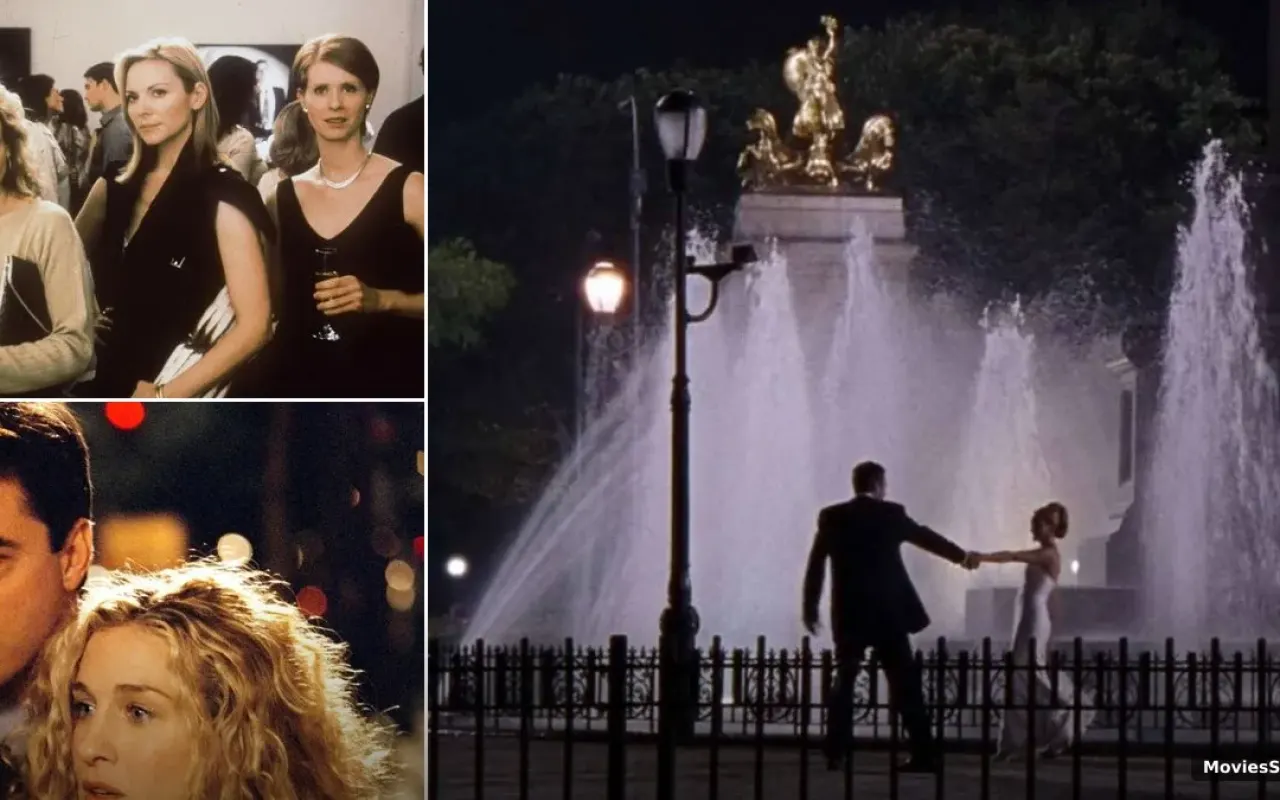
Twenty-eight years ago, on June 6, 1998, a show premiered on HBO that didn't just change television—it rebranded womanhood, New York City, and the very concept of a "Cosmopolitan." As we hit the Sex and the City 28th Anniversary, the series remains as polarizing and beloved as ever. But for the modern binge-watcher, there’s a ticking clock involved. If you’ve been coasting on your Netflix subscription to revisit Carrie’s chaotic dating life, you’re about to hit a digital dead end. The licensing landscape is shifting, and the "Single Girl" era is packing its bags for a new home.
The 2026 Streaming Migration: Why Sex and the City is Leaving Netflix
If you’ve noticed Sex and the City leaving Netflix 2026 trending, it’s not just a rumor. The countdown has officially begun for the show’s departure from the world’s largest streaming platform. Here is the reality of the situation: Sex and the City is leaving Netflix at the end of June 2026 due to the expiration of a short-term licensing agreement between Netflix and Warner Bros. Discovery. The series, which is an HBO original, will remain available on Max (formerly HBO Max), as the parent company seeks to consolidate its premium content ahead of potential mergers with Paramount+.
The business logic here is straight out of a Warner Bros Discovery playbook. While licensing hits like Sex and the City or Insecure to Netflix provides a massive cash infusion and introduces the show to a younger Gen Z audience, it’s a temporary play. As the streaming wars intensify, owning your "crown jewels" becomes the only way to survive. With rumors swirling about a massive merger between WBD and Paramount Global, keeping high-value IP like the Carrie Bradshaw archives in-house is a strategic necessity.
For fans, this means you have until June 30, 2026, to finish your rewatch on Netflix. After that, you’ll need to migrate to HBO Max (or whatever the platform is named by then) to get your fix of 1990s Manhattan. If you’re a purist, this might also be the time to invest in the Sex and the City 4K restoration on physical media—because in the era of expiring licenses, owning the disc is the only way to ensure Kim Cattrall’s iconic one-liners never disappear from your library.
From Column to Cult Classic: The Candace Bushnell Origins
Before it was a high-budget HBO spectacle, Sex and the City was a gritty, often cynical column in The New York Observer. To understand the Sex and the City cultural impact, you have to look at the woman who started it all: Candace Bushnell. Writing under the pseudonym "Carrie" to hide her dating escapades from her parents, Bushnell captured a version of New York that was far less "Park Avenue Princess" and far more "Downtown Grind."
The Candace Bushnell Sex and the City columns were a time capsule of the "Age of Un-Innocence." While the show eventually leaned into glamor, the original text was a biting critique of Manhattan’s social hierarchies. Darren Star, the creator who adapted the book, saw the potential for a prestige dramedy, but he polished the edges. In the early seasons, you can still see the Bushnell influence: the dark lighting, the fourth-wall breaks, and the "on-the-street" interviews with real New Yorkers (who were actually actors) that made the show feel like a documentary of desire.
The Real-Life Counterparts: Fact-Checking the Fiction
One of the biggest questions fans ask 28 years later is: who were these people in real life? The truth is often more interesting than the script:
- Mr. Big: The "world's slimiest man" was based on Ron Galotti, a high-flying magazine executive and notorious New York bachelor. Bushnell has admitted Galotti was just as noncommittal and magnetic as the character Christopher Noth eventually immortalized.
- Carrie Bradshaw: She is, quite literally, Candace Bushnell’s alter ego. The obsession with shoes and the freelance writing struggles were pulled directly from Bushnell's 1990s bank statements.
- The Four Friends: While Samantha, Miranda, and Charlotte were composites, they represented the distinct "types" Bushnell encountered in the New York media and gallery scenes.
The Four Archetypes: Why We Still Identify as a 'Carrie' or 'Miranda'
The genius of the show—and why it has survived for nearly three decades—is the archetypal structure of the main cast. Even today, the "Which SATC character are you?" quiz is a staple of internet culture. Each woman represents a different pillar of the female experience:
Carrie Bradshaw represents the Neurotic Romantic. She is the seeker, the woman who prioritizes the "zsa zsa zsu" over logic, often to her own financial and emotional detriment. Sarah Jessica Parker infused the role with a vulnerability that made Carrie’s often-selfish decisions palatable to a global audience.
Miranda Hobbes (Cynthia Nixon) is the Cynical Realist. In 1998, Miranda was often seen as the "unlikable" one because she was a career-focused lawyer who didn't suffer fools. In 2026, she is a hero. The "Miranda Renaissance" of the last decade proves that her skepticism and independence were ahead of their time.
Charlotte York (Kristin Davis) is the Traditionalist. She believes in the gallery-opening, Tiffany-ring, "happily ever after" narrative. Her arc, moving from a rigid perfectionist to someone who finds love in the "imperfect" (shoutout to Harry Goldenblatt), remains one of the show's most satisfying journeys.
Samantha Jones (Kim Cattrall) is the Sexual Liberator. Samantha was the show’s heartbeat of confidence. Her absence in the sequel series, And Just Like That, created a void that many fans feel can never be filled. Samantha didn't just have sex; she had agency, and she refused to let age or social norms dictate her pleasure.
The Fifth Character: How SATC Rebranded New York City
You can’t talk about the Sex and the City 28th Anniversary without talking about the "SATC Effect" on New York City tourism. The show didn't just film in New York; it mythologized it. From the Magnolia Bakery cupcakes that launched a thousand sugar rushes to the brownstone stoop on Perry Street (which is still a nightmare for local residents due to the constant influx of tourists), the show turned the West Village into a global landmark.
The economic impact is staggering. SATC filming locations tours are still big business in 2026, and the show is credited with reviving the Cosmopolitan cocktail, taking it from a forgotten 1970s recipe to the most ordered drink in the world for an entire decade. However, there is a clear divide in how the city is portrayed. Pre-9/11 New York in the show is grittier, more experimental, and feels "lived-in." Post-9/11, the show became a love letter to the city’s resilience, but it also became increasingly aspirational—some might say unrealistic.
The Technical Evolution: From SD to 4K
For the tech-savvy Gen Z viewer, watching the early seasons can be a jarring experience. The show premiered in a 4:3 aspect ratio with the grainy texture of late-90s film stock. Over the years, the series has undergone a massive technical evolution. The recent 4K restoration has breathed new life into Patricia Field’s costume designs, allowing viewers to see every stitch of Carrie’s Dior saddle bag. It’s a far cry from the standard-definition broadcasts of 1998, and it's a major reason why the show continues to trend on platforms like TikTok—it finally looks as expensive as the characters' wardrobes.
Fashion as Narrative: The Patricia Field Legacy
If the dialogue was the soul of the show, the fashion was the skin. Costume designer Patricia Field broke every rule in the book. She mixed high-end couture with thrift store finds, famously buying Carrie’s iconic opening-credits tutu for $5 in a bargain bin. That tutu didn't just define a character; it defined an era of Sex and the City fashion trends that still resonate on the 2026 runways.
The "Carrie Necklace" (the nameplate necklace) became a global phenomenon, bridging the gap between street culture and high fashion. And then, of course, there are the shoes. Manolo Blahnik owes a significant portion of its brand equity to the show. Before Carrie Bradshaw, "Manolos" weren't a household name; after the show, they were a necessity for any woman aspiring to the Manhattan dream. The fashion wasn't just "pretty"—it was a narrative tool used to signal power, heartbreak, and evolution.
The Hard Truths: Diversity, Economics, and the Sequel Pivot
We have to be real: Sex and the City wasn't perfect. Looking back 28 years later, the show's lack of diversity is glaring. For a series set in one of the most diverse cities on Earth, the "Core Four" lived in a remarkably white bubble. This is a major content gap that the sequel series, And Just Like That, has desperately tried to fix—sometimes successfully, sometimes with the grace of a "generational crashout."
There’s also the "Carrie Math" problem. In the original run, Carrie was a freelance columnist who somehow owned a West Village apartment and a $40,000 shoe collection. While the show occasionally touched on her financial struggles (like the episode where she realizes she has no savings for a down payment), it mostly functioned as a fantasy. By the final season, the lead cast was reportedly earning $1 million per episode, a salary that reflected the show's status as an HBO juggernaut but further distanced the actors from the "struggling artist" vibes of Season 1.
The Numbers Behind the Phenomenon
- Emmy Legacy: The show was a critical darling, racking up 54 Emmy nominations and 7 wins, including a historic win for Outstanding Comedy Series—the first for a cable show.
- Box Office Power: The franchise's transition to the big screen was a financial triumph. The first Sex and the City movie grossed $415 million worldwide, while the sequel brought in $294 million despite critical panning.
- The Soundtrack: The Sex and the City soundtrack legacy is often overlooked, but the show’s use of jazz, lounge, and early 2000s pop defined the "chill" aesthetic of the era.
The Future of the Franchise: What's Next After 28 Years?
As we look toward the 30-year milestone, the franchise isn't slowing down. And Just Like That has been renewed for more seasons, and rumors of a The Carrie Diaries reboot or a Samantha-centric spin-off (unlikely given the Cattrall/Parker feud, but we can dream) continue to circulate. The question of where to watch Sex and the City will soon have a simple answer: Max. But the question of *why* we watch it is more complex.
We watch it because it was the first show to tell women that their friendships could be the "great loves" of their lives. It told us that being 35 and single wasn't a tragedy—it was an adventure. Whether you’re binging it for the first time on Netflix before the June 30, 2026 deadline or you’re a lifelong fan who knows every line of the "Post-it Note" breakup, the legacy of these four women is permanent.
Key Takeaways for the SATC 28th Anniversary
- Netflix Exit: The show leaves Netflix on June 30, 2026. Binge it now or prepare to subscribe to Max.
- Origin Story: The show is based on Candace Bushnell’s real columns for the New York Observer; Mr. Big was based on real-life exec Ron Galotti.
- Cultural Impact: From Manolo Blahnik shoes to the Cosmopolitan cocktail, the show’s influence on consumer habits is legendary.
- Technical Upgrades: The 4K restoration is the definitive way to watch the series in the modern era.
- Award-Winning: With 7 Emmy wins and over $700 million in total box office, it remains one of HBO’s most successful exports.
Ultimately, Sex and the City at 28 is more than just a show about dating. It’s a historical document of a specific time in New York, a masterclass in costume design, and a reminder that even in the age of apps and "situationships," the search for connection is universal. Just remember to finish your rewatch before the 2026 migration—because as Carrie would say, in the world of streaming, nothing is ever truly "forever."