The 70th anniversary of the Eurovision Song Contest is set to be a year of seismic shifts for the United Kingdom’s broadcast coverage. Following the sudden departure of a long-term staple, the BBC has officially confirmed the new Scott Mills Eurovision replacement. Irish television presenter and former Strictly Come Dancing star Angela Scanlon will step into the commentary booth, joining a refreshed lineup of presenters as the contest heads to the historic Wiener Stadthalle in Vienna.
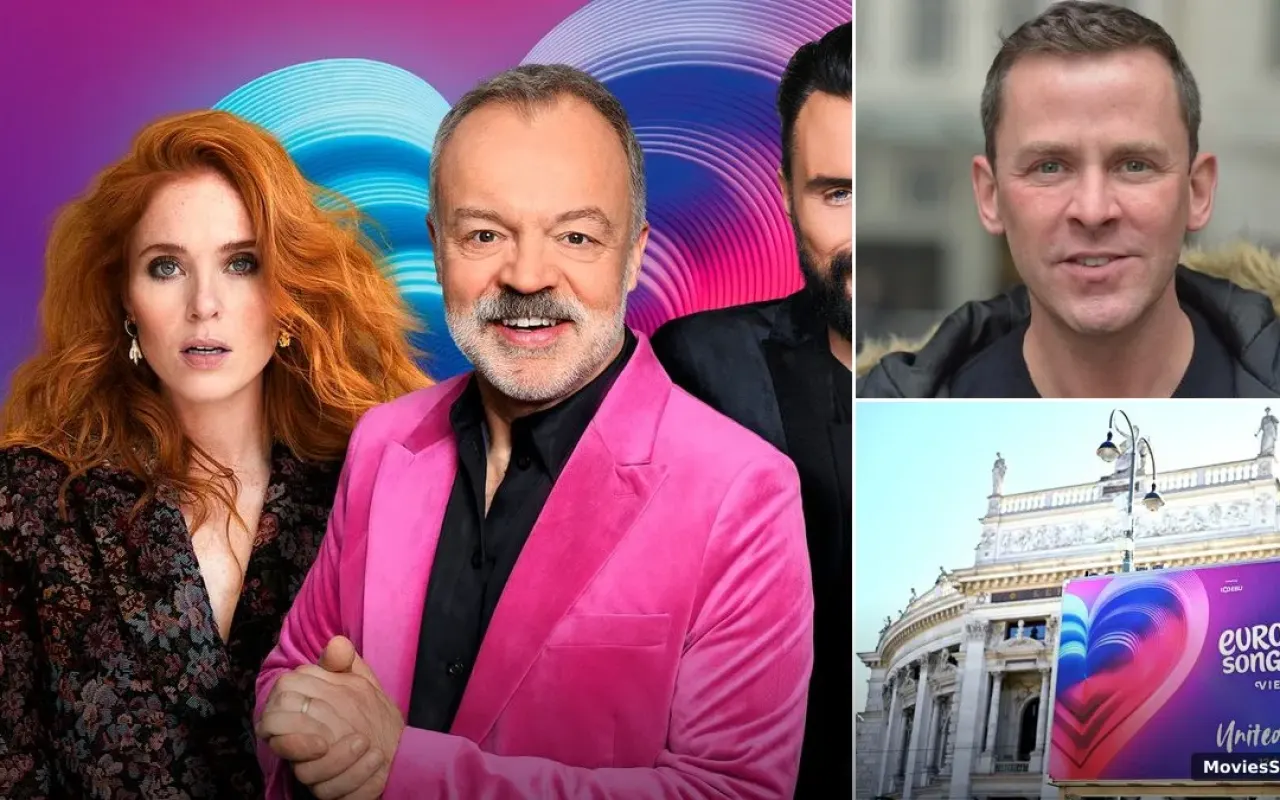
The BBC has confirmed that Irish TV presenter and former Strictly Come Dancing star Angela Scanlon will replace Scott Mills for the Eurovision Song Contest 2026. Scanlon will join Rylan Clark to provide commentary for the semi-finals on May 12 and 14, live from Vienna. This appointment marks a significant transition for the broadcaster as it prepares for one of the most anticipated editions of the contest in decades.
Angela Scanlon Confirmed as Scott Mills' Eurovision Replacement
Angela Scanlon’s appointment brings a fresh, high-energy dynamic to the BBC Eurovision presenting lineup. Known for her wit and vibrant personality on The One Show and Robot Wars, Scanlon is no stranger to large-scale entertainment formats. Her recent success on Strictly Come Dancing, where she finished sixth with partner Carlos Gu, has further solidified her status as a household name in the UK.
Reflecting on her new role, Scanlon described the opportunity as "equal parts thrilling and terrifying," noting that she grew up scoring the contest from her sofa with her sisters. While Scott Mills was known for a dry, radio-honed delivery, Scanlon is expected to bring a more conversational and emotive style to the Semi-finals commentary. This shift aligns with the BBC’s strategy to engage younger demographics who have increasingly flocked to the contest in recent years.
Scanlon will be stationed in Vienna alongside Rylan Clark, who remains a core pillar of the broadcast team. Together, they will guide viewers through the two qualifying rounds on May 12 and May 14, 2026. The move comes at a pivotal moment, as the European Broadcasting Union (EBU) prepares to celebrate seven decades of musical competition.
Why was Scott Mills Sacked? The BBC Exit Explained
The transition to Scanlon follows the abrupt dismissal of Scott Mills in March 2026. The 53-year-old DJ, who had been a cornerstone of BBC Radio and Eurovision coverage for years, was removed from his position just days after being taken off the air. The BBC issued a concise statement confirming that Mills was "no longer contracted to work with the BBC," though they declined to comment on the specific circumstances of his departure.
Public scrutiny intensified when details of a historical Metropolitan Police investigation surfaced. The investigation, which began in 2016 following a referral from another force, concerned allegations of serious sexual offences involving a boy under the age of 16 between 1997 and 2000. While Mills was questioned under caution in July 2018, the Crown Prosecution Service (CPS) ultimately determined in May 2019 that the evidential threshold had not been met to bring charges.
Despite the case being closed years ago, the timing of Mills’ dismissal and the resurfacing of these reports have created a complex backdrop for the 2026 season. The BBC has not explicitly linked the dismissal to the past investigation, but the vacancy necessitated a swift search for a replacement to maintain the continuity of the Eurovision brand.
The Full BBC Eurovision 2026 Presenting Team
Beyond the addition of Scanlon, the BBC Eurovision schedule 2026 features a blend of veteran voices and digital-first personalities. The lineup is designed to provide 360-degree coverage across television, radio, and social media platforms.
- Graham Norton: The undisputed voice of Eurovision in the UK, Norton returns to lead the Graham Norton commentary for the Grand Final on Saturday, May 16.
- Rylan Clark: Continuing his role as the "face of the fans," Rylan will co-host the semi-finals on TV and join the Radio 2 coverage for the final.
- Sara Cox: Having taken over Mills’ Radio 2 slot, Cox will also provide radio commentary for the semi-finals, bridging the gap between the two mediums.
- Tia Kofi: The RuPaul’s Drag Race UK winner serves as the digital reporter, providing "backstage tea" and exclusive content from across Vienna for the BBC’s social channels.
This "stacked" lineup aims to build on the momentum of the 2025 contest, which saw global viewership exceed 160 million. By incorporating figures like Tia Kofi, the BBC is looking to capture the "Eurovision super-fan" demographic that consumes content primarily through non-linear channels.
Meet the UK Entry: Look Mum No Computer (Sam Battle)
While the presenting team has seen a major overhaul, the UK’s musical hopes rest on the shoulders of Sam Battle, performing under the moniker Look Mum No Computer. The selection represents a bold, experimental turn for the UK, moving away from traditional pop ballads toward avant-garde electronic music.
'Eins, Zwei, Drei': Musical Machines Explained
The Look Mum No Computer Eurovision song, titled "Eins, Zwei, Drei," is a technical marvel. Battle is renowned for his "musical machines"—custom-built synthesizers and DIY electronic instruments made from salvaged parts. The track features a driving industrial beat layered with analog textures that are rarely seen on the Eurovision stage.
Music critics have noted that "Eins, Zwei, Drei" is a high-risk, high-reward entry. In a contest that often rewards spectacle, Battle’s wall of circuit-bent machines could provide the visual and auditory "wow factor" needed to secure a top-five finish. Current Eurovision 2026 betting odds place the UK as a dark horse, with many bookmakers waiting to see the technical execution of the live performance before narrowing the spread.
The 'Big Four' and 70th Anniversary Stakes
As a member of the "Big Four" (traditionally the Big Five, though adjusted this year due to Ireland and Spain's withdrawal), the UK enjoys automatic qualification for the Grand Final. This status has historically been a double-edged sword, often resulting in lower scores due to a lack of semi-final exposure. However, for the 70th anniversary, the EBU has introduced "additional safeguards" and performance slots within the semi-finals for the Big Four to ensure their acts are familiar to the voting public before the final Saturday.
Eurovision 2026 Vienna: A Guide to the 70th Anniversary
The choice of Vienna as the host city is a nod to the contest's rich history, following Austria’s victory in 2025. The Wiener Stadthalle, a venue with a capacity of approximately 16,000, will serve as the epicenter of the musical world this May.
For fans traveling to the event, the venue is located in Vienna's 15th district. It is easily accessible via the U6 metro line (Burggasse-Stadthalle station). Beyond the arena, the "Eurovision Village" is expected to be hosted at the Rathausplatz, offering a festive atmosphere for those without Eurovision 2026 ticket information to attend the live broadcasts.
Controversy: Boycotts and the EBU Stance
Despite the celebratory nature of the 70th anniversary, the 2026 contest is mired in political tension. Five countries—Ireland, Spain, the Netherlands, Iceland, and Slovenia—have officially withdrawn from the competition. This boycott is a direct protest against the European Broadcasting Union (EBU) and its decision to allow Israel to participate amidst ongoing geopolitical conflicts.
The withdrawal of Ireland and Spain is particularly significant for the UK, as these nations typically share strong cultural and voting ties. Analysts suggest that the absence of these countries could disrupt traditional "voting blocks," potentially making the outcome of the 2026 contest the most unpredictable in a generation. The EBU has maintained that Eurovision is a "non-political event," but the 5-country boycott has forced a conversation about the contest's future neutrality.
Key Takeaways for Eurovision 2026
- New Face of Commentary: Angela Scanlon is the official Scott Mills Eurovision replacement, joining Rylan Clark for the semi-finals.
- The Investigation: Scott Mills was sacked following the resurfacing of a 2016-2019 police investigation; the BBC has since ended his contract.
- Experimental Entry: Sam Battle (Look Mum No Computer) will represent the UK with the machine-heavy track "Eins, Zwei, Drei."
- Vienna 2026: The contest celebrates its 70th year at the Wiener Stadthalle, with the Grand Final set for May 16.
- Political Backdrop: A 5-country boycott over Israel's participation threatens to overshadow the musical competition.
Looking Ahead: A New Era for the BBC
As the rehearsals begin in Vienna, the focus remains on whether the BBC’s new-look team can maintain the high viewership standards set in previous years. The Scott Mills Eurovision replacement was a forced necessity, but in Angela Scanlon, the broadcaster may have found a presenter capable of leading the contest into its next decade. Whether the UK’s experimental entry can navigate the complex political waters of 2026 remains to be seen, but one thing is certain: the 70th Eurovision Song Contest will be a landmark event in broadcasting history.