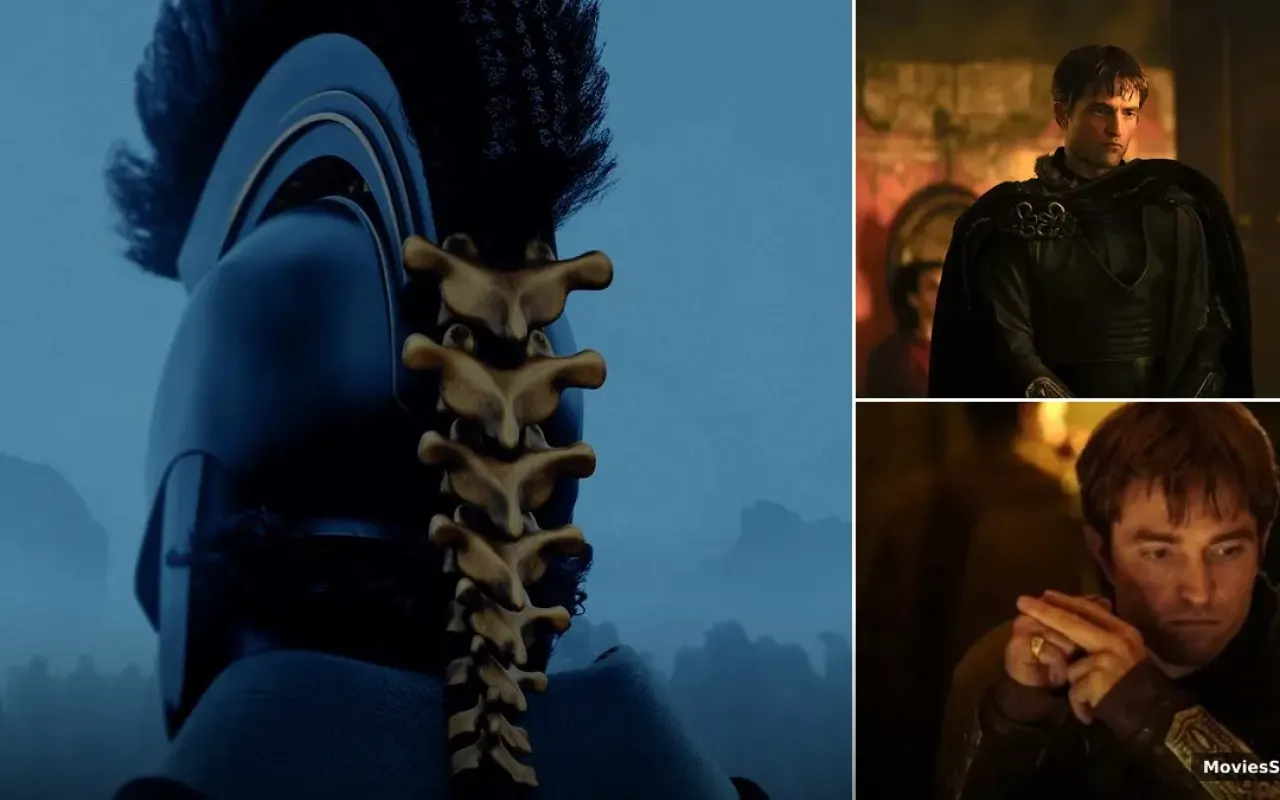
When the first frame of Christopher Nolan’s The Odyssey flickers across screens on July 17, 2026, it will mark the culmination of the most ambitious maritime production in cinema history. This is not merely another adaptation of Homer's Greek epic; it is a $250 million technical marvel that seeks to redefine the "real-world" fantasy genre. By blending the grit of ancient warfare with the director's signature nonlinear storytelling, Nolan is attempting to capture the psychological weight of a man lost in time and tide.
Christopher Nolan's 'The Odyssey' is scheduled for release on July 17, 2026. The film features an ensemble cast led by Matt Damon as Odysseus, alongside Tom Holland (Telemachus), Anne Hathaway (Penelope), Zendaya (Athena), Robert Pattinson (Antinous), and Charlize Theron (Calypso).
The Odyssey Trailer 2 Breakdown: Cyclops, Sirens, and Ancient Warfare
The latest The Odyssey trailer breakdown reveals a film that eschews the glossy, CGI-heavy aesthetic of modern blockbusters in favor of tactile, terrifying realism. The centerpiece of the new footage is the Cyclops, a creature that stands a staggering 30 feet tall. Unlike the stop-motion charm of Ray Harryhausen’s classics, Nolan’s Cyclops moves with a sickeningly human weight, appearing as a hulking, weathered titan that treats Odysseus’ men as mere sustenance. This "real-world" approach extends to the Sirens, who are depicted not as winged monsters, but as psychological manifestations of grief and longing, haunting the crew through a shimmering, heat-haze atmosphere.
The trailer also offers a visceral look at the Trojan War through a series of high-contrast flashbacks. We see the infamous Trojan Horse—a massive, charred wooden structure—being hauled into the gates of Troy under a blood-red sky. The combat sequences emphasize the "grit" of the era, featuring bronze-on-bronze violence that feels heavy and consequential. Visual highlights include a terrifying sequence involving a massive whirlpool (Charybdis) and the iconic moment where Penelope challenges the suitors to shoot an arrow through 12 axes—a scene shot with such clarity that the vibration of the bowstring is visible in IMAX 70mm.
A Star-Studded Ithaca: The Complete Cast and Character Map
The The Odyssey cast is perhaps the most impressive ensemble ever assembled for a single production. Matt Damon Odysseus is portrayed as a "weathered" and broken man, a stark departure from the traditional untouchable hero. Having spent 10 years at war and another 10 at sea, Damon’s performance focuses on the cognitive erosion of a soldier who has forgotten the faces of his family.
- Matt Damon as Odysseus: The King of Ithaca, struggling with his identity after decades of displacement.
- Anne Hathaway as Penelope: The anchor of the film’s emotional core, defending her home against a sea of political vultures.
- Tom Holland as Telemachus: Odysseus' son, who has grown up in the shadow of a legend he has never met.
- Robert Pattinson as Antinous: The primary antagonist and lead suitor, bringing a menacing, aristocratic arrogance to the halls of Ithaca.
- Zendaya as Athena: The goddess of wisdom, reimagined as a tactical advisor whose presence is felt more through coincidence and intuition than divine intervention.
- Charlize Theron as Calypso: The nymph who holds Odysseus captive, embodying the seductive danger of stagnation.
This "Character Map" is further bolstered by Mia Goth, Jon Bernthal, and Lupita Nyong’o, creating a complex web of loyalty and betrayal that spans from the battlefield of Troy to the rocky shores of Ithaca.
The IMAX Challenge: Why Christopher Nolan's The Odyssey is Shorter Than Oppenheimer
One of the most discussed aspects of the production is the The Odyssey runtime. Despite the sprawling nature of the source material, Nolan has confirmed the film will be "shorter" than the 180-minute Oppenheimer. This decision isn't just narrative—it's physical. The IMAX projector 3-hour limit is a hard technical ceiling for 15/70mm film platters. To exceed this, the film canisters would literally overflow the physical space of a standard projection booth.
To capture the dialogue-heavy scenes between Odysseus and Calypso, the production utilized a revolutionary IMAX blimp casing. Historically, IMAX cameras have been too loud for sync-sound recording, often sounding like a "chainsaw in a tin can." This new "blimp" technology significantly dampens the camera's internal motor noise, allowing cinematographer Hoyte van Hoytema to shoot intimate character moments in full large-format without the need for extensive ADR (Automated Dialogue Replacement). During the 91-day shoot, the team reportedly ran through 2 million feet of film, a testament to the sheer scale of the Universal Pictures production.
Technical Specifications Table
| Feature | Specification |
|---|---|
| Camera System | IMAX 15/70mm (MKIV and MSM 9802) |
| Sound Casing | Custom "Blimp" Noise-Reduction Housing |
| Film Stock | Kodak VISION3 250D/500T 65mm |
| Estimated Runtime | 162 Minutes |
| Projector Limit | 180-Minute Platter Capacity |
Nonlinear Storytelling: Starting with the 'Song of Odysseus'
In a move that mirrors the original structure of the poem, the film utilizes The Odyssey in media res (starting in the middle of the action). The narrative begins not with the fall of Troy, but with the Song of Odysseus—a haunting sequence where a blind bard sings of the "man of many ways" while a weary Odysseus washes ashore on the island of Ogygia. This Song of Odysseus nonlinear plot allows Nolan to jump between three distinct timelines: the present-day struggle of Penelope in Ithaca, Odysseus’ current captivity with Calypso, and the chaotic flashbacks to the Trojan War.
This structure has already sparked debate among historians regarding the Odysseus helmet historical accuracy. In early promotional stills, Damon is seen wearing a Mycenaean "boar's tusk" helmet rather than the more recognizable Corinthian style seen in later Greek history. This attention to Bronze Age detail signals Nolan’s commitment to a version of Greece that feels prehistoric and alien, rather than the "marble statue" aesthetic of typical Hollywood epics.
Global Production: Filming Locations from Greece to Morocco
The production was described by crew members as an "absolute nightmare" due to Nolan’s insistence on filming at sea. The 91-day schedule spanned six countries, utilizing locations that carry their own mythological weight. Messinia in Greece served as the primary backdrop for Ithaca, while the rugged coastlines of Favignana in Sicily were used for the island of the Cyclops.
The production moved to Morocco to film the desert-like outskirts of Troy, providing a stark, sun-bleached contrast to the deep blues of the Mediterranean. Additional scenes were shot in Scotland and Ireland to capture the misty, treacherous "Isle of the Dead" sequences. By filming in these diverse locations, the production avoided the "flat" look of green-screen environments, ensuring that every wave and rock face has a physical presence on the The Odyssey IMAX 70mm screen.
The score, composed by Ludwig Göransson, reportedly incorporates ancient Greek instruments like the hydraulis (water organ) and the kithara, blended with modern orchestral synthesis to create a soundscape that feels both ancient and timeless. This auditory depth, combined with van Hoytema’s cinematography, aims to immerse the viewer in the sensory overload of a 10-year voyage.
Key Takeaways
- Release Date: July 17, 2026, exclusively in theaters and IMAX.
- Technical Innovation: First major feature shot entirely on IMAX, using a new blimp casing for quiet dialogue scenes.
- Runtime: Shorter than 180 minutes due to physical IMAX platter capacity limits.
- Narrative Style: A nonlinear storytelling approach starting in media res with the "Song of Odysseus."
- Visual Effects: Heavy reliance on practical effects, including a 30-foot physical/animatronic Cyclops.
- Filming Locations: Shot on location in Greece (Messinia), Sicily (Favignana), Morocco, Scotland, and Ireland.
As we approach the summer of 2026, Christopher Nolan’s The Odyssey stands as a testament to the enduring power of large-format celluloid. By choosing to tell this ancient story through the lens of modern technical ingenuity, Nolan isn't just making a movie; he is attempting to bridge three millennia of storytelling. Whether the film can live up to the "hopes and dreams" of epic cinema remains to be seen, but the sheer scale of the endeavor suggests that audiences are in for a journey as perilous and rewarding as that of Odysseus himself.