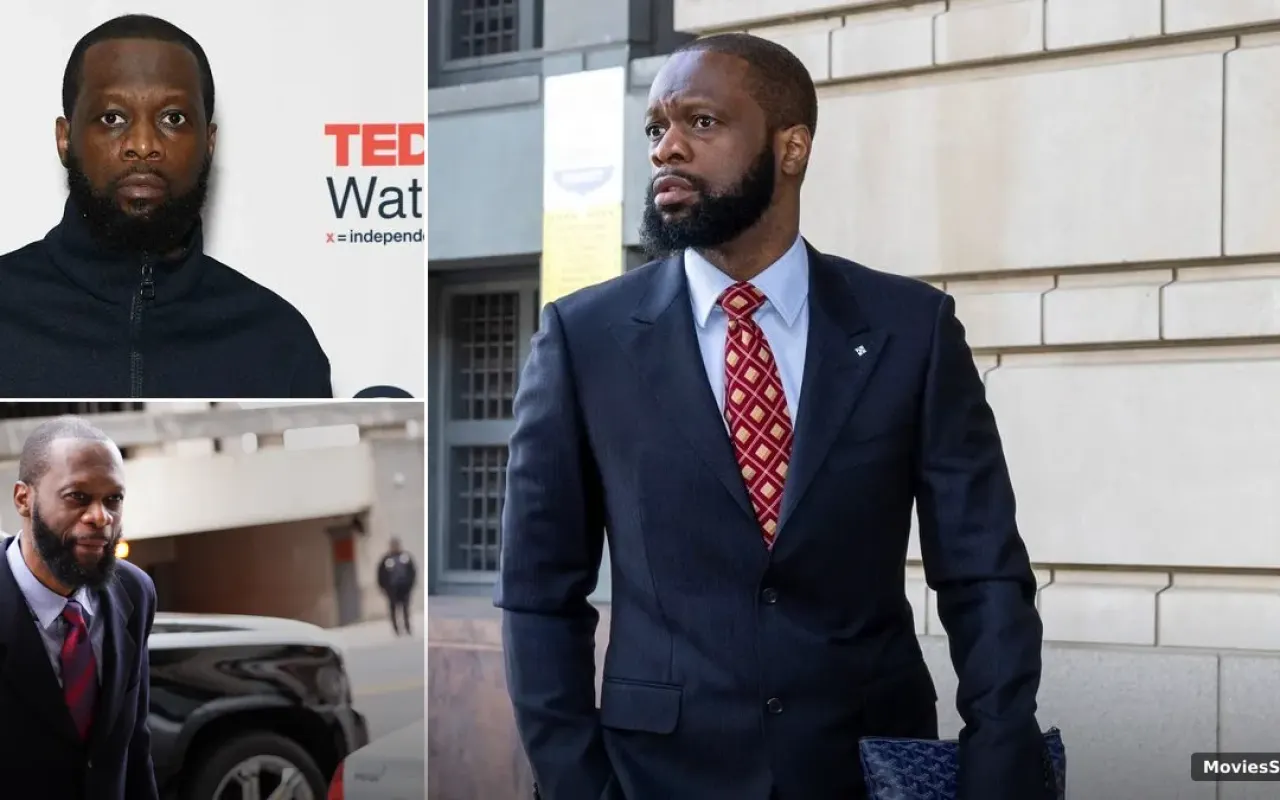
The transition from the Grammy stage to a federal cell block is officially complete. On April 30, 2026, Prakazrel “Pras” Michel, the founding member of the legendary hip-hop trio the Fugees, surrendered to authorities to begin his Pras Michel prison sentence. The 53-year-old rapper reported to FCI Safford Arizona, marking a somber milestone in a legal saga that feels more like a Scorsese screenplay than a real-life court docket.
Just weeks ago, Pras was seen in the VIP suite at SoFi Stadium, vibing with Lauryn Hill and Dave Chappelle during a Kanye West performance. Today, the man who helped define 90s hip-hop with The Score is trading designer threads for prison greens. While his Fugees rapper prison stint has officially begun, his legal team, led by spokesperson Erica Dumas, maintains that "this chapter is difficult but it is not his final one."
Why was Pras Michel sentenced to 14 years?
Pras Michel was sentenced to 14 years in federal prison following a 2023 conviction on 10 criminal counts, including money laundering, witness tampering, and acting as an unregistered agent of China. The charges stemmed from his involvement in a multi-million dollar scheme to funnel foreign funds from Malaysian financier Jho Low into U.S. political campaigns and influence government officials.
The 1MDB Connection: How a Fugee Met a Fugitive
To understand how we got here, you have to look at the 1MDB scandal Pras was pulled into. It’s one of the largest financial heists in history, involving the 1Malaysia Development Berhad (1MDB) sovereign wealth fund. At the center of it was Jho Low, a high-flying financier known for throwing $100 million parties and gifting Leonardo DiCaprio a Picasso.
Prosecutors argued that Pras became Low's "conduit" in the U.S. Between 2012 and 2017, Low allegedly funneled approximately $100 million to Pras. The goal? To buy access and influence within the highest levels of the American government. Real talk: this wasn't just about a rapper wanting to be a political player; it was about a massive, undisclosed lobbying campaign designed to halt U.S. investigations into Low and to sway the Federal Election Commission through illegal straw donors.
During the trial, the jury heard Leonardo DiCaprio testimony regarding how Low discussed his intent to donate up to $30 million to President Obama’s 2012 reelection campaign. Because foreign nationals cannot legally donate to U.S. elections, the government alleged Pras used a network of people to "smurfed" the money into the campaign in small increments to avoid detection.
The 10 Counts: Breaking Down the Pras Michel Prison Sentence
The conviction wasn't just a slap on the wrist for a single mistake. A federal jury found Michel guilty on 10 specific criminal counts. When you look at the Pras Michel prison sentence length, it reflects the sheer breadth of the conspiracy.
- FARA Violations: Acting as an unregistered agent of a foreign principal (the Foreign Agents Registration Act).
- Money Laundering: Moving millions of Low's "dirty" money through U.S. accounts.
- Witness Tampering: Attempting to influence the testimony of others involved in the investigation.
- Lying to the FEC: Falsifying records regarding where campaign donations actually came from.
- The China Extradition Plot: Perhaps the wildest part of the case involved Pras allegedly lobbying the Trump administration to extradite a Chinese dissident, Guo Wengui, back to China at the behest of the Chinese government.
Beyond the 14 years, the financial hit is staggering. Judge Colleen Kollar-Kotelly ordered Pras to forfeit $64 million to the U.S. government. For an artist whose legacy is built on independence and the "refugee" spirit, the total liquidation of his personal assets is a massive blow to his estate and future royalties.
The AI Defense Controversy: A Legal First
The trial took a bizarre turn when Pras’s former attorney, David Kenner, was accused of using an AI closing statement. This is one of the biggest content gaps in the public's understanding of the case. Michel’s new legal team argued that Kenner used a generative AI program to draft the final arguments, which they claim "bungled" key elements of the defense and failed to address critical evidence.
Pras requested a retrial based on "ineffective counsel," essentially arguing that he was a guinea pig for an unproven legal tech experiment. However, the court denied the request, ruling that the use of AI didn't fundamentally change the outcome of the case given the "overwhelming" evidence against him. This sets a chilling precedent for the use of AI in the courtroom—proving that while the tech can write a poem, it probably shouldn't be trusted with your 14-year freedom.
Life at FCI Safford Arizona
So, where is the Fugees rapper prison located? FCI Safford is a low-security federal correctional institution in Graham County, Arizona. While it isn't a "supermax," it is a far cry from the luxury life Pras enjoyed in New York and LA. Inmate life at Safford involves a strict regimen: 6:00 AM wake-up calls, mandatory work assignments (often in food service or maintenance), and limited access to the outside world.
For a man who spent his life in recording studios, the silence of the high desert will be the ultimate adjustment. Legal analysts suggest that because the crimes were non-violent, Pras might have been hoping for a "Club Fed" experience, but 14 years in a low-security facility is still a decade and a half of lost liberty.
The Fugees Legacy: Ready or Not?
The Fugees legacy after Pras conviction is now permanently clouded. The group—comprised of Pras, Lauryn Hill, and Wyclef Jean—changed the world with The Score in 1996, selling 22 million copies. But the internal drama has been just as loud as the music.
Recently, Pras dropped a lawsuit against Lauryn Hill over their canceled reunion tour, seemingly trying to clear the air before his surrender. However, with Pras behind bars, any hope of a full-scale Fugees reunion is effectively dead for the next decade. There are also questions about Fugees royalties; while Pras still owns his share of the music, the $64 million forfeiture order may allow the government to garnish his incoming checks to pay off his debt to the state.
Key Takeaways from the Pras Michel Case
- The Sentence: Pras is serving 14 years at FCI Safford Arizona after being convicted on 10 counts.
- The Catalyst: The case centers on Malaysian financier Jho Low and the 1MDB scandal.
- The Charges: Key convictions include money laundering, witness tampering, and illegal lobbying for China.
- The AI Twist: A failed attempt at a retrial was based on his lawyer's use of an AI closing statement.
- The Money: Pras must forfeit $64 million, a move that could bankrupt his personal estate.
- The Appeal: Despite being in prison, the Pras Michel appeal continues, with his team arguing his rights were violated.
What’s Next: The Appeal Process
Is there a path out? The Pras Michel appeal grounds focus heavily on the "ineffective assistance of counsel" regarding the AI usage and the Foreign Agents Registration Act (FARA) charges. His legal team believes the record will eventually show the "truth was obscured" during the initial trial.
However, the road is steep. Success in a federal appeal is rare, and even if a retrial is granted, the government has a mountain of digital receipts and witness testimonies from the likes of DiCaprio. For now, the man who sang "Ready or Not" has to be ready for a long stay in the Arizona desert. The industry is watching closely, not just for the sake of hip-hop history, but for the precedent this case sets for foreign influence in U.S. politics.
As the legal team continues to fight "on the inside," the music world is left to wonder how one of its most influential figures ended up as a cautionary tale of international intrigue and artificial intelligence. This isn't just the end of a tour; it's the beginning of a 168-month countdown.