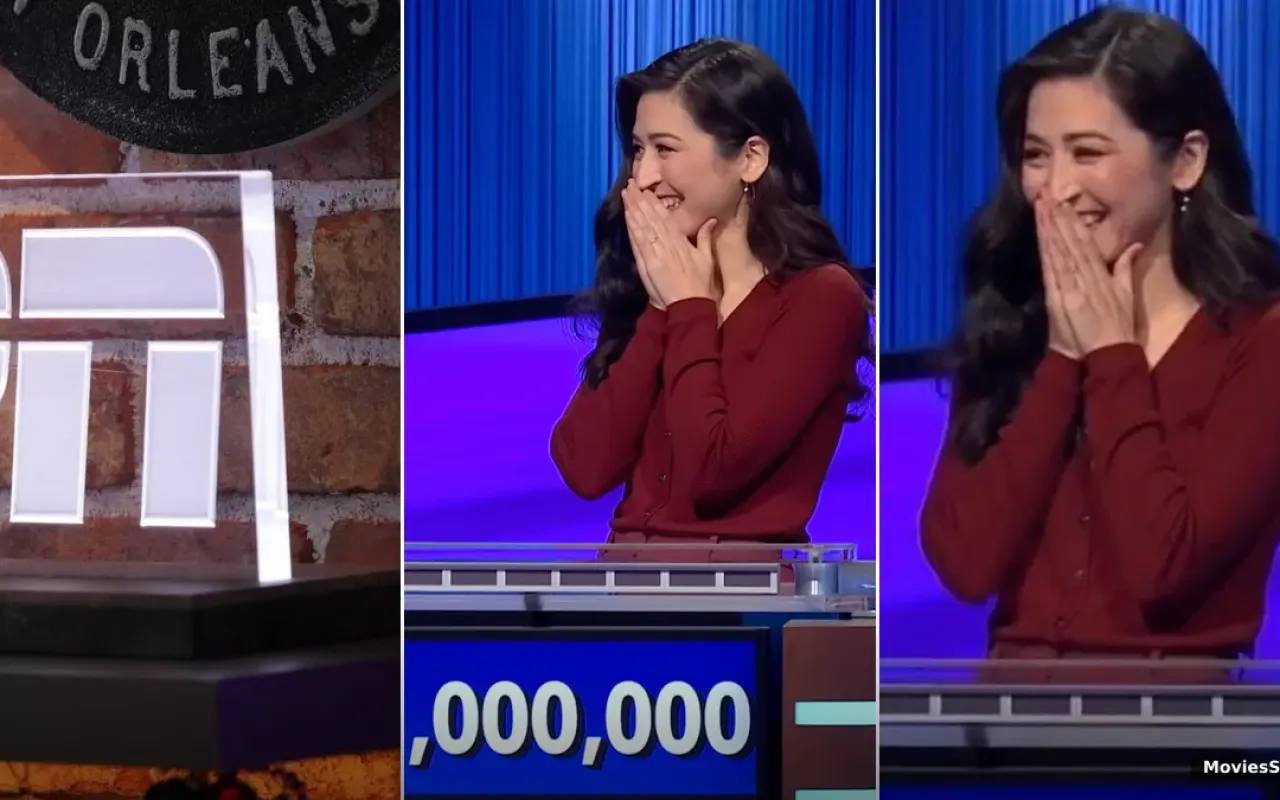
If you’ve spent any time on NFL Twitter, you know Mina Kimes doesn't do anything halfway. But her latest victory didn't happen on a football field—it happened under the iconic purple lights of the Sony Pictures Studios. By mastering the Mina Kimes Celebrity Jeopardy strategy, the ESPN analyst just secured $1 million for the SELAH Neighborhood Homeless Coalition, proving that being a Yale English major is a massive flex when the stakes are seven figures. While most people play for the vibes, Kimes played the percentages, and the result was a masterclass in mathematical probability.
The Grand Finale: Kimes vs. Barinholtz vs. Weber
The Celebrity Jeopardy! All-Stars finale wasn't just a trivia contest; it was a collision of heavyweights. Kimes faced off against actor-comedians Ike Barinholtz (a previous champion) and Steven Weber. Going into the final round, the tension was measurable. Kimes held a narrow lead with $12,500, followed by Weber at $10,500, and Barinholtz trailing at $5,100.
The category? "Name’s the Same." For a Yale English major, the clue was essentially a hanging curveball: "It’s the name of an 1873 novel subtitled ‘A Tale of Today,’ a period of U.S. history & a TV drama that debuted in 2022."
The answer, of course, was "The Gilded Age," the Mark Twain novel that defined an era and eventually became a hit HBO series. While Barinholtz also got the answer right and doubled his score, he couldn't catch Kimes. She nailed the response, secured her lead, and walked away as the Celebrity Jeopardy All-Stars winner. It was a clean win, but the real story—the one that has game theory nerds obsessed—happened in the semifinals.
Game Theory 101: The Mina Kimes Celebrity Jeopardy Strategy Explained
To understand how Kimes won the whole thing, you have to look at her semifinal match against Lisa Ann Walter and Katie Nolan. This is where the Mina Kimes wagering logic truly shone. Entering Final Jeopardy, Kimes was in second place with $8,000, trailing Walter’s $9,600. Most casual viewers would expect Kimes to bet it all to try and overtake the leader. Instead, she did something much smarter.
What was Mina Kimes' Jeopardy wagering strategy?
Mina Kimes used a 'cover' wagering strategy from second place. She bet a small amount ($2,210) to ensure that if both she and the leader (Lisa Ann Walter) answered incorrectly, Kimes would remain ahead of the leader's falling total and the third-place contestant's score, prioritizing survival over point maximization.
Kimes later explained on social media that her Final Jeopardy wager was based on the "only known variable": what the person in first place would do. "They will almost always do the logical thing, which is bet to cover you," Kimes noted. By anticipating that Walter would bet at least $6,401 to cover a potential doubled score from Kimes, Mina realized her only path to victory was if Walter got the question wrong. If they both got it wrong, Kimes’ small bet ($2,210) kept her total at $5,790, safely above Walter’s plummeted score of $2,600. It was pure game theory in action.
Wagering for Dummies: Why Betting Small is a Big Brain Move
If you're ever on that stage, here is the "Mina Kimes" guide to not losing from second place:
- Assume the leader is smart: The leader (1st place) has to bet enough to beat you if you double your score.
- The "Wrong Answer" Insurance: If you are in second place, you usually only win if the leader gets the answer wrong. Therefore, you should bet an amount that keeps you above the leader’s "wrong answer" total.
- Ignore the urge to "Max Out": Betting everything feels brave, but it's statistically risky. If you and the leader both miss the clue, the person who bet the least wins.
This approach is a sharp contrast to the James Holzhauer style of play. While Holzhauer revolutionized the game with aggressive Daily Double strategy and massive bets to build an insurmountable lead, Kimes utilized a defensive, high-probability strategy that prioritized "staying alive" over "running up the score." It’s the difference between a blitz-heavy defense and a prevent defense that actually works.
By the Numbers: Mina Kimes Jeopardy Stats
While the Mina Kimes Celebrity Jeopardy strategy got the headlines, you don't win a million dollars on math alone. You have to actually know the answers. Kimes' performance across the tournament was statistically dominant, even when her "brain glitched" on a few clues. Here is the breakdown of her tournament run:
- Total Correct Answers: 155
- Total Incorrect Answers: 24
- Buzzer Success Rate: 35.95% (This is elite territory for the celebrity version of the game).
- Daily Double Performance: 10 out of 15 correct.
- Average Coryat Score: While official Coryat scores (a measure of performance excluding wagering) aren't always publicized for celebrity matches, analysts estimate Kimes maintained a high floor, consistently out-performing her opponents in "trash" (unanswered) clues.
Her buzzer speed was particularly notable. In the finals, she managed to beat out Ike Barinholtz—a known Jeopardy shark—on several high-value clues in the second round. Her strength was clearly in literature and history, likely a byproduct of her Yale background, while she occasionally struggled with more obscure pop-culture "AI" clues in the earlier rounds.
The $1 Million Impact: SELAH Neighborhood Homeless Coalition
The real winner of the night wasn't just Kimes; it was the SELAH Neighborhood Homeless Coalition. Kimes has been a long-time supporter of this Los Angeles-based organization, and the $1 million prize is transformative for their operations. Unlike massive national charities, SELAH is a volunteer-led movement focused on "connection and humanity."
According to representatives from the charity, these funds will be used to:
- Maintain and expand volunteer-led programs that provide immediate relief.
- Ensure consistent access to food benefits, healthcare, and housing support for Angelenos.
- Fund outreach programs that build direct relationships with unhoused neighbors, helping them navigate the bureaucracy of social services.
Kimes’ win comes at a critical time when many in the city are losing access to basic necessities. The fact that she "game-theoried" her way to this amount of money adds a layer of poetic justice to the victory.
Is the Tournament of Champions Next?
Whenever a celebrity performs this well, the same question arises: Could they hack it in the regular Tournament of Champions? While Ken Jennings has often praised the bravery of celebrities for even stepping on the stage—mentioning that stars like Amy Poehler or Donald Glover have "open invites"—Kimes has shown a level of betting math that rivals professional players.
Her 155 correct answers put her in a rare tier of celebrity contestants. While Tournament of Champions eligibility is usually reserved for 5-day regular season winners, the producers have been known to invite "All-Star" celebrities for special exhibitions. Given her Daily Double strategy and composure under pressure, Kimes wouldn't just be a participant; she'd be a threat.
Key Takeaways
- The Math Won: Kimes won her semifinal match despite a wrong answer in Final Jeopardy because her wagering logic accounted for the leader’s likely failure.
- Yale Roots: Her degree in English was the deciding factor in the finale, allowing her to identify The Gilded Age clue instantly.
- Statistical Dominance: With a 35.95% buzzer success rate and 155 correct answers, Kimes proved she had the speed to match her smarts.
- Charity Impact: The $1 million prize will stay in Los Angeles to fund SELAH’s mission of providing housing and healthcare support.
- The Barinholtz Factor: Kimes defeated a previous Celebrity Jeopardy champion (Ike Barinholtz), solidifying her spot as one of the best to ever play the celebrity format.
As Kimes moves on to host the National Spelling Bee later this month, she leaves behind a blueprint for future contestants. It’s not just about what you know; it’s about knowing what everyone else is going to do. In the world of Jeopardy!, as in the NFL, the best analysts always find the edge.