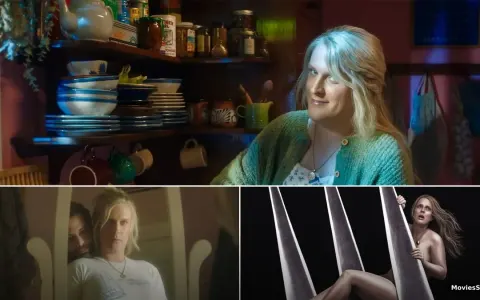
If you walked into the Théâtre Croisette expecting a period-accurate, lace-trimmed costume drama, you clearly haven't been paying attention to the career of Radu Jude. The Romanian auteur, known for his caustic wit and formal mischief, has finally delivered his Radu Jude French language debut at the Cannes 2026 Directors' Fortnight, and it’s predictably brilliant. This isn't just another adaptation of Octave Mirbeau’s 1900 novel; it’s a diagnostic tool used to slice through the performative liberalism of modern-day Europe. In this Diary of a Chambermaid Radu Jude review, we’re looking at how the director transforms a 19th-century classic into a 94-minute masterclass in socioeconomic satire.
What is Radu Jude's Diary of a Chambermaid about?
Radu Jude's 2026 adaptation of 'Diary of a Chambermaid' is a modern-day satire set in Bordeaux, France. It follows Gianina, a Romanian migrant worker employed by a progressive but self-absorbed French couple, using Octave Mirbeau's classic novel as a lens to critique contemporary class exploitation and European hypocrisy.
A Modern Variation on Octave Mirbeau’s Classic
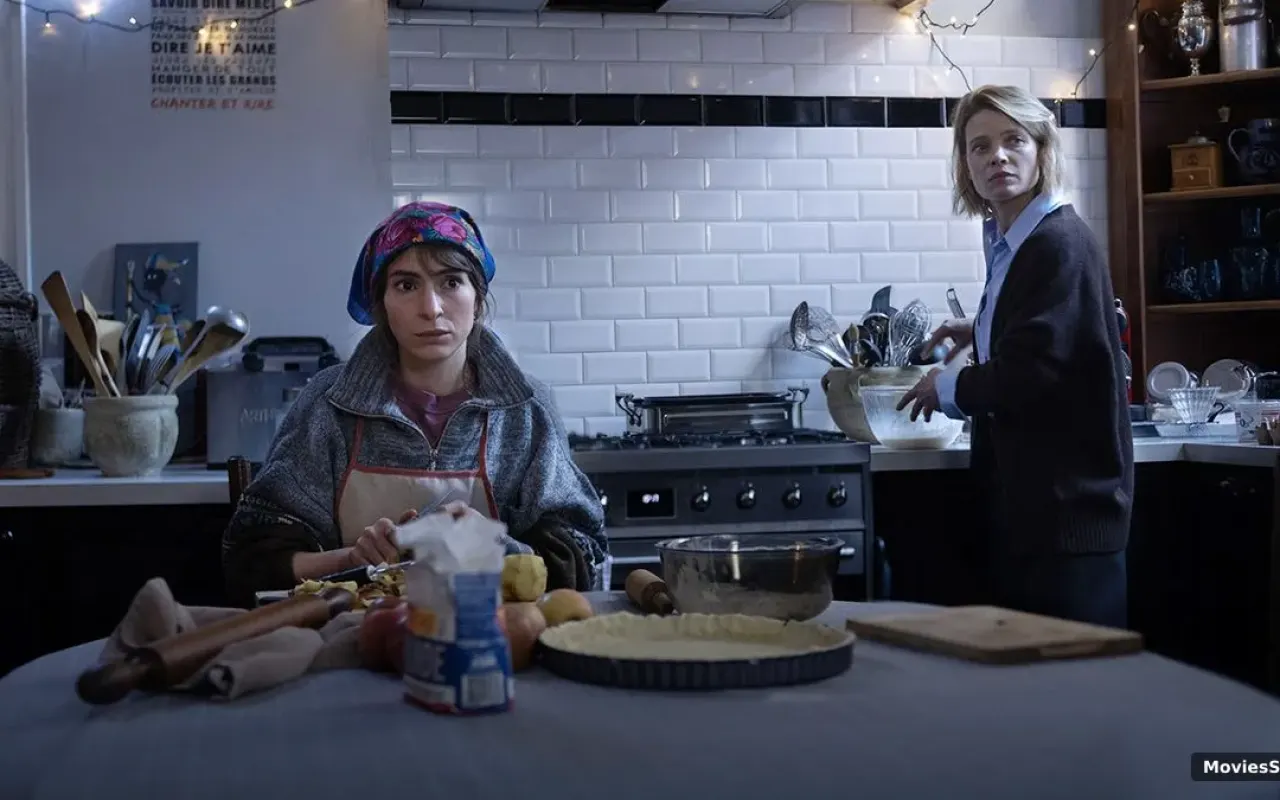
The film opens with a title card calling itself a "variation" on the Octave Mirbeau 2026 adaptation. We meet Gianina, played with a magnetic, restrained intensity by Ana Dumitrascu. Unlike the Célestine of the novel, Gianina is a migrant domestic worker in Bordeaux, navigating the daily indignities of serving the Donnadieu family. The setting is crucial: Bordeaux filming locations are used to highlight the city’s sanitized, modern efficiency, while Jude subtly nods to its historical past as a slave-trading hub.
The narrative structure mimics a diary, with dates flashing on screen from mid-September to Christmas. Some "entries" are nothing more than a few seconds of Gianina staring at a weed-choked field—specifically the 'October 18' diary entry shot—while others are protracted, uncomfortable glimpses into the life of a woman whose time is never truly her own. It’s a socioeconomic satire that understands exploitation in 2026 doesn't always look like a Dickensian villain; sometimes it looks like a "progressive" employer who quotes Foucault but forgets you have a daughter back home.
The Cast: Dumitrascu, Macaigne, and Thierry
The chemistry—or lack thereof—between the leads is where the movie’s "acidic" humor really lives. Ana Dumitrascu in Diary of a Chambermaid is a revelation. She spends much of the film caught between a mask of professional politeness and the private, coarse Romanian curses she mutters under her breath. It’s a performance of "depletion" rather than "cruelty."
- Vincent Macaigne (Pierre): Plays the "guilt-ridden" patriarch with a comedic timing that had the Cannes audience roaring. He is the king of sidestepping discomfort.
- Melanie Thierry (Marguerite): An icy, self-involved college professor who treats Gianina as both a "curiosity" and a utility.
- Sofia Dragoman (Maria): Gianina’s 10-year-old daughter, seen only through FaceTime calls, whose resentment toward the French child her mother cares for provides the film’s emotional core.
Meta-Adaptation: The Play Within the Film
In a quintessentially Jude move, the film features a meta-adaptation. Gianina is rehearsing for a theatrical production of Mirbeau’s novel directed by a character played by Ilinca Manolache (a Jude regular). These scenes are where the modern class divide is most absurdly skewered. Because the production lacks an intimacy coordinator, a "sex scene" involves Gianina thrusting against a broom while her co-star bounces on a bed nearby. It’s a "hyper-simulated" gag that targets a culture more obsessed with procedural correctness than actual human dignity.
The rehearsal subplot also introduces a sharp critique of the French intelligentsia. When a fellow migrant actor is deported due to a social media post, the director’s main concern isn't his safety, but rather: "Who will play the male roles now?"
Technical Mastery: Marius Panduru and the Water Mirror
Working with SBS Productions, Jude maintains his "lo-fi" aesthetic but elevates it through Marius Panduru cinematography. The film utilizes fixed medium shots that force you to sit with the awkwardness of the Donnadieu household. This is contrasted with the grainy, intimate FaceTime footage of the Romanian countryside, where Gianina’s mother and daughter yell at each other while slaughtering a chicken.
One of the most visually arresting moments is the analysis of the 'Water Mirror' scene in Bordeaux. As Gianina walks past the Miroir d'eau, the reflection of the grand architecture against the migrant worker’s silhouette serves as a silent indictment of the "Old Europe" that still thrives on the labor of the "New."
Comparison: Five Generations of Chambermaids
To understand why this Radu Jude review ranks the 2026 version so highly, you have to look at the lineage. Jude shares an "acidic" DNA with Luis Buñuel but rejects the more reverent, romanticized approach of Jean Renoir. While previous versions focused on sexual scandal, Jude focuses on atomized labor and the post-#MeToo sexual predation recalibration.
| Year | Director | Tone/Focus | Key Cultural Context |
|---|---|---|---|
| 1916 | M. Martov | Silent/Melodramatic | Early cinema adaptation |
| 1946 | Jean Renoir | Lyrical/Hollywood-esque | Post-war French/American hybrid |
| 1964 | Luis Buñuel | Surrealist/Fetishistic | Critique of 1930s fascism |
| 2015 | Benoît Jacquot | Psychological/Frigid | Focus on the interiority of Célestine |
| 2026 | Radu Jude | Satirical/Meta-textual | Migrant precarity & performative liberalism |
Deep Dive: The Beheading Motif and Bourgeois Rot
A recurring, almost jarring motif in the film is beheading. Jude weaves in discussions of the French Revolution, the fate of Romanian dictator Ceausescu, and even the "beheading" of chickens in the countryside. It’s a "diagnostic" metaphor for the way modern society severs the worker from their humanity, and the parent from their child.
The film also offers a unique Romanian cultural perspective. While the French characters are skewered for their ignorance, Jude doesn't spare the "hicks" of Romania’s hinterlands, portraying them with a coarse, one-dimensional grit that highlights the lack of "good guys" in this system. This is a film where everyone is compromised by the "banal rituals" of their own survival.
Key Takeaways
- The Runtime: The film clocks in at exactly 94 minutes, a lean duration that prevents the meta-commentary from feeling overstayed.
- The Language: While it is Jude’s first French language feature, it utilizes subtitles for the Romanian dialogue, highlighting the linguistic barrier between Gianina and her employers.
- Distribution: Following its Cannes 2026 run, the film is expected to hit Diary of a Chambermaid 2026 streaming platforms by late autumn, with a US theatrical release still pending.
- The Verdict: It ranks as one of Jude’s most accessible films, balancing the chaos of Dracula with the precision of I Do Not Care If We Go Down in History as Barbarians.
Ultimately, Radu Jude has created a "bittersweet Christmas movie" that is anything but festive. By the time the credits roll on Christmas Day, with Gianina’s holiday plans ruined by her employers' whims, the message is clear: the 19th-century chambermaid hasn't disappeared; she’s just changed her job title and her passport. The Diary of a Chambermaid Radu Jude review consensus is in—this is the sharpest look at the "European Dream" we've seen in years.