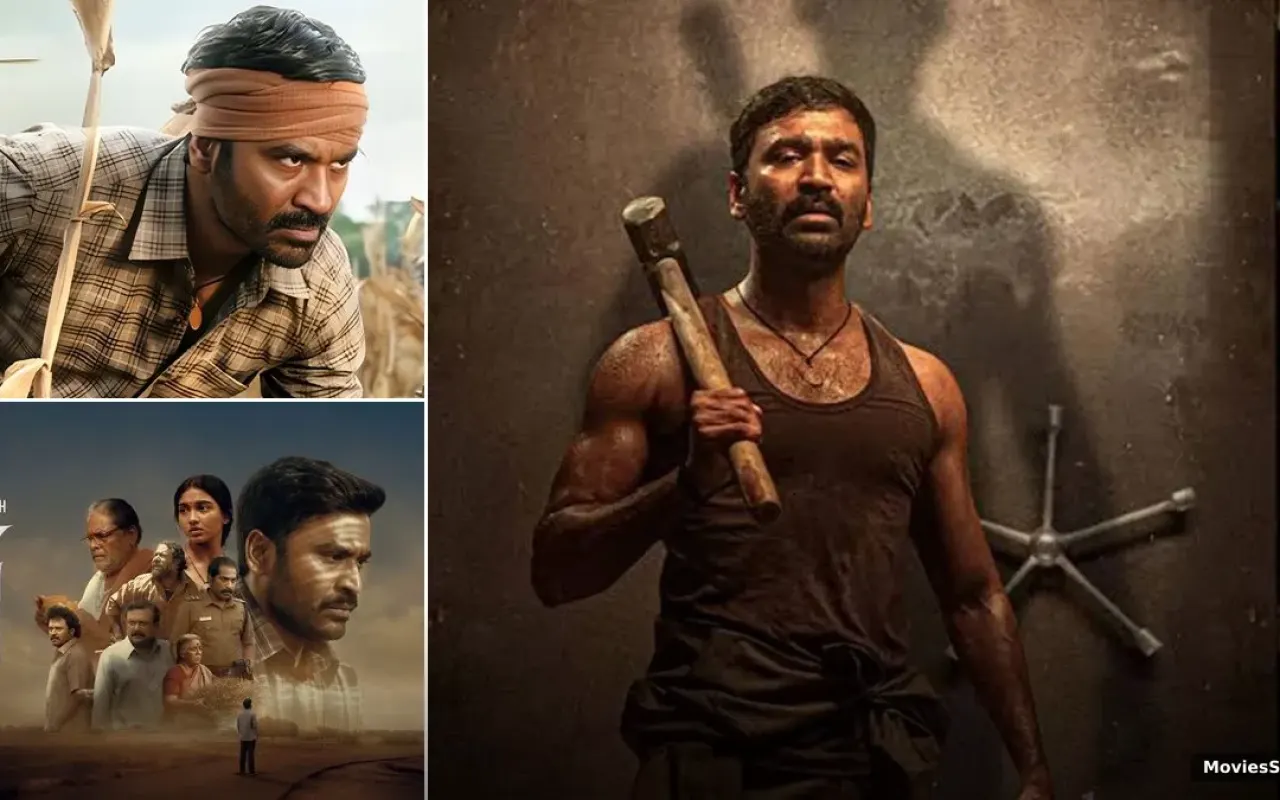
In the high-stakes landscape of Tamil cinema 2026, few projects have carried as much weight as the collaboration between National Award winner Dhanush and director Vignesh Raja. Following the massive success of the procedural thriller Por Thozhil, Raja returns with Kara, a film that attempts to weave a complex tapestry of historical hardship and "Robin Hood" style justice. This Kara movie review explores whether this ambitious heist drama succeeds in balancing its emotional core with its high-octane thriller elements.
What is the Story of Kara Movie?
Kara is a 2026 Tamil heist thriller directed by Vignesh Raja, starring Dhanush. Set against the 1991 Gulf War and fuel crisis, it follows a man who turns to crime to save his family's ancestral land from a corrupt banking system, blending emotional drama with high-stakes robbery.
Kara Movie Plot: A 1990s Survival Tale in Thiruverumbur
The narrative of Kara is firmly rooted in the dusty landscapes of 1991 Thiruverumbur. Dhanush portrays Karasamy, a man whose life is defined by the struggle for survival during one of India's most turbulent economic periods. While the 1991 Gulf War backdrop might seem like a distant historical footnote, Vignesh Raja uses it as a pivotal plot device, specifically focusing on the crushing fuel crisis that paralyzed rural transport and logistics.
The story kicks off with Karasamy living a double life. To his village and his wife, played by Mamitha Baiju, he is a respectable family man. In reality, he is a master thief specializing in burglarizing the homes of the corrupt elite. However, the stakes shift from personal gain to familial honor when his father, played with surprising vulnerability by KS Ravikumar, falls victim to a predatory banking system. This sets Karasamy on a collision course with the law, leading to a series of meticulously planned bank robberies designed to reclaim his family’s ancestral land and eventually serve the wider community.
Performances: Dhanush and the Ensemble Dynamics
In any Kara Dhanush review, the primary focus remains on the leading man's ability to ground even the most melodramatic sequences. Dhanush delivers a performance that feels like a natural evolution of his "rural protagonist" roles. Unlike his more explosive characters in films like Asuran, his portrayal of Karasamy is more internal—a man who thinks two steps ahead of the police while carrying the quiet grief of his father’s impending ruin.
- Dhanush: A masterclass in grounded acting, balancing the physicality of a heist thriller with the emotional weight of a family drama.
- KS Ravikumar: Often seen in loud or comedic roles, Ravikumar provides the film's emotional anchor. His portrayal of a father crushed by debt is arguably one of the most earnest performances of his late career.
- Mamitha Baiju: Following her breakout success in Premalu, her presence in Kara is a point of contention for many critics. While she brings a certain grace to the screen, her character is largely underutilized, serving more as a narrative catalyst than a fully fleshed-out participant in the heist mechanics.
- Suraj Venjaramoodu: Playing the investigative cop, Venjaramoodu brings his signature intensity. However, the script occasionally limits him to the "cat-and-mouse" trope without giving him the psychological depth seen in Raja's previous work.
Technical Breakdown: GV Prakash Kumar BGM and Theni Eswar’s Vision
The technical aspects of Kara are where the film truly shines, yet also where it faces its toughest scrutiny. The GV Prakash Kumar BGM is a narrative driver in its own right, utilizing thumping percussion and period-appropriate synth to heighten the tension during the bank sequences. However, some viewers have noted that the score occasionally works overtime to mask a thin script in the second half.
Theni Eswar, the cinematographer, deserves immense credit for the visual recreation of the 1990s. Eschewing the typical sepia-toned nostalgia, Eswar uses a gritty, naturalistic palette that makes the Thiruverumbur and Ramanathapuram locations feel lived-in and authentic. From the vintage Ambassador cars to the specific lighting of 90s-era bank vaults, the attention to detail is remarkable.
However, a Kara movie cinematography breakdown reveals a slight disconnect between the film's two halves. While the first half is shot like a gritty social drama reminiscent of Devara Magan, the second half pivots into a slick, modern-looking thriller, which can be jarring for a film set in 1991.
The 1991 Fuel Crisis: How Historical Accuracy Impacts the Plot
One of the most significant content gaps in current discussions about the film is the role of the 1991 fuel crisis. In Kara, this isn't just window dressing. The scarcity of petrol and diesel dictates the timing of the heists and the difficulty of the escapes. Historically, in 1991, India was facing a severe balance of payments crisis, and fuel prices were skyrocketing due to the Gulf War.
Vignesh Raja uses this to create a "locked-room" feel for the entire state. The heist thriller mechanics are built around the fact that Karasamy cannot simply drive away in a high-speed chase; he must navigate a world where every liter of fuel is accounted for. This adds a layer of historical accuracy rarely seen in mainstream Tamil cinema, though some may find the "Robin Hood" transition that follows to be a bit more fictionalized than the setting suggests.
Logic Audit: Analyzing the Heist Sequences
While the film is "masterfully executed" in terms of style, a Kara movie logical loopholes audit reveals some cracks in the screenplay analysis.
- Banking Security: The film portrays the 1991 banking system as surprisingly vulnerable to Karasamy’s tactics. While digital security didn't exist, the manual ledger system and physical vault protocols of the time were notoriously rigid, which the film occasionally glosses over for the sake of pacing.
- The Escape: In an era of limited communication, the speed with which the police coordinate across districts seems slightly ahead of its time.
- The Climax: The climax explanation leans heavily on a "convenient" resolution that favors the protagonist's survival over a realistic legal outcome, a common trope in star-driven vehicles.
Vignesh Raja’s Evolution: From Por Thozhil to Kara
Comparing Vignesh Raja Kara review metrics to his debut Por Thozhil shows a director willing to take bigger risks. Por Thozhil was a tight, clinical procedural. Kara is a sprawling, emotional epic. While Kara lacks the "lean" feel of his debut, it shows Raja's ability to handle a massive budget and a superstar like Dhanush. However, the Sreejith Sarang (Editor) collaboration, which was so sharp in the previous film, feels less disciplined here, particularly in a tiring second half that drags the overall Kara movie rating down.
Kara Box Office Collection and OTT Release Date
The Kara box office collection for Day 1 is projected to be between Rs. 5-7 crore. While this is lower than Dhanush's previous outing Idli Kadai (Rs. 12.75 crore), the film is seeing strong traction in the Telugu market. Presented by Vigneswara Entertainments and Vels Film International, the movie is targeting over 600 screens across the Telugu states of Andhra Pradesh and Telangana.
Regarding the Kara OTT release date, industry rumors suggest a deal with a major streaming giant like Netflix. Given the standard theatrical release window for 2026, fans can expect the film to arrive on digital platforms approximately 28 to 45 days after its April 30 release, likely in early June 2026.
Key Takeaways
- Dhanush's Powerhouse Performance: Once again proves why he is the backbone of modern Tamil drama.
- Historical Context: The 1991 fuel crisis is a unique and effective narrative tool that differentiates this from other heist films.
- Technical Excellence: The cinematography and BGM are top-tier, even if the editing feels loose.
- Second Half Slump: The transition from a grounded drama to a "Robin Hood" thriller results in a sluggish pace.
- Underutilized Cast: Mamitha Baiju and Suraj Venjaramoodu are given limited scope despite their talent.
The Verdict: Is Kara Worth Watching?
Ultimately, Kara is a film of two halves. The first half is a masterfully crafted look at rural struggle and the desperate lengths a son will go to for his father. The second half, while containing some of the best heist sequences in recent memory, struggles under the weight of its own commercial ambitions. For fans of Dhanush, it is a must-watch for his performance alone. For those seeking a tight, logical thriller on par with Por Thozhil, the experience may feel slightly uneven.
As Dhanush's career trajectory 2026 continues to rise, Kara stands as a testament to his ability to draw audiences into a period drama. It may not be a flawless masterpiece, but it is a sincere, visually stunning attempt at historical storytelling in a commercial format.