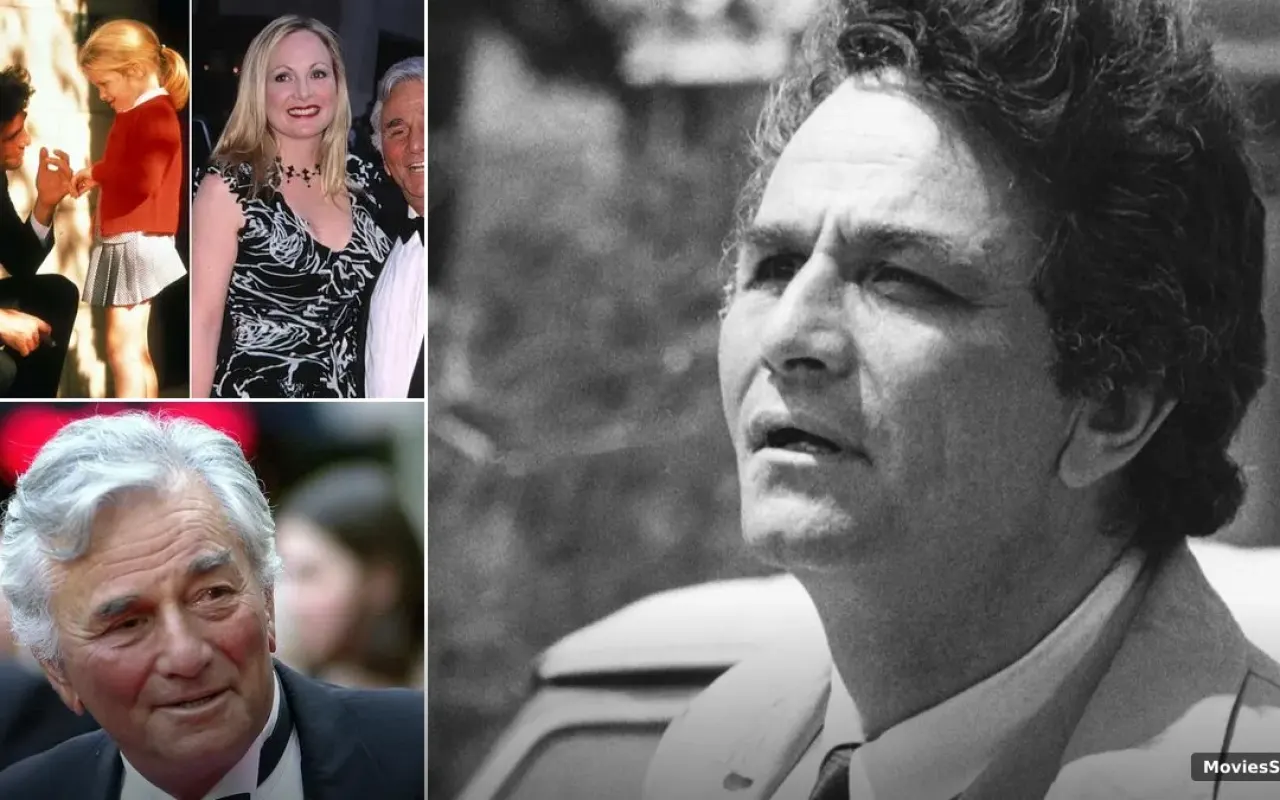
The legacy of Peter Falk, the legendary Columbo actor who captivated audiences for decades, has been struck by a fresh tragedy. On April 27, 2026, his daughter, Jacqueline Falk, was found dead in a Los Angeles residence, marking a somber end to a life lived largely away from the Hollywood spotlight. While her father’s career was defined by solving mysteries, the circumstances surrounding his daughter's passing have brought a painful family history back into the public eye.
The Circumstances Surrounding Jacqueline Falk’s Death
The Jacqueline Falk cause of death has been officially confirmed by the Los Angeles County Medical Examiner. Jacqueline Falk, the 60-year-old adopted daughter of "Columbo" star Peter Falk, died by suicide on April 27, 2026. According to the medical examiner’s report, the cause of death was hanging. The incident occurred at a private residence in Los Angeles, and while the case remains technically open for administrative finalization, the manner of death was ruled a suicide.
At the time of her passing, it remains unclear whether Jacqueline left a final note for her family or friends. Her death follows a decades-long history of family legal battles regarding her father's estate, his Alzheimer's and dementia care, and the visitation rights of his children. While her sister, Catherine Falk, became a public advocate for elder rights, Jacqueline was known for maintaining a much more private existence, making the news of her sudden passing even more shocking to those who followed the family’s saga.
A Life in the Shadow of "Columbo": Who Was Jacqueline Falk?
Jacqueline was one of two adopted daughters welcomed by Peter Falk and his first wife, Alyce Mayo. The couple, who were Syracuse University alumni, married in 1960 and adopted Jacqueline and her sister, Catherine, shortly thereafter. There has been some discrepancy in public records regarding Jacqueline's exact age; while some reports cite her as 66, official medical examiner records list her as 60 at the time of her death. If she was indeed 60, she would have been born in 1966, several years into Peter and Alyce’s marriage.
Growing up as the daughter of a television icon provided a unique childhood. Catherine Falk has previously shared memories of their father taking them to Los Angeles Kings hockey games and ice skating. However, Jacqueline chose a path far removed from the Hollywood Walk of Fame. Unlike her sister, who followed in her father's fictional footsteps to become a private investigator, Jacqueline avoided the cameras. Her rare public appearances were limited to significant milestones, such as joining her father at the 50th Annual Primetime Emmy Awards in 1998 and the NBC 75th Anniversary celebration in 2002.
Friends and family describe Jacqueline as a person who valued her privacy, though she was deeply affected by the internal fractures that defined the Falk family in later years. While Catherine took a lead role in legal challenges, Jacqueline’s struggle was often more internal, characterized by the quiet sadness of a daughter separated from her father during his final years.
The Bitter Legal Battle: Catherine Falk vs. Shera Danese
The Peter Falk daughter death cannot be fully understood without examining the Shera Danese Falk controversy. Peter Falk married his second wife, Shera Danese, in 1977, a year after his divorce from Alyce Mayo. Danese, an actress who appeared in several Columbo episodes, eventually became the primary gatekeeper to the actor as his health declined.
In 2008, following Peter’s diagnosis of Alzheimer's and dementia, a fierce conservatorship battle erupted in the Los Angeles Superior Court (Case No. BP114518). Catherine Falk filed for conservatorship, alleging that Danese was "isolating" their father and preventing his daughters from visiting him. The court eventually named Danese as the legal guardian and conservator, but the rift only deepened. Catherine and Jacqueline alleged they were not informed of their father’s worsening condition, were not told when he died in June 2011, and were barred from attending his funeral.
The Headstone Controversy
The depth of the family estrangement was literally etched in stone. Following Peter Falk’s death, a controversy arose over his headstone, which reportedly bears the inscription: "I’m not here. I’m home with Shera." For the daughters, this was seen as a final, public exclusion from their father’s life and legacy. This level of family estrangement in later life can have a devastating impact on the mental health of adult children, a factor that mental health advocates suggest often goes overlooked in high-profile estate battles.
Understanding "Peter Falk’s Law": A Legacy of Elder Rights
While Jacqueline’s death is a tragedy, it highlights the significant legal legacy born from her family’s pain. Frustrated by the inability to see her father, Catherine Falk founded the Catherine Falk Organization to advocate for adult child visitation rights and elder abuse prevention.
This advocacy led to the creation of Peter Falk’s Law. This legislation ensures that guardians and conservators must notify family members of an incapacitated parent's hospitalization, change of residence, or death. Most importantly, it grants children the right to seek court-ordered visitation if a conservator is blocking access.
Peter Falk’s Law was first passed in New York in 2015. Since then, more than 20 states have adopted similar statutes to protect the rights of families. These states include:
- California
- New York
- Arizona
- Texas
- Florida
- Illinois
- Iowa
- Utah
- South Dakota
- Tennessee
- Virginia
- West Virginia
Legal experts note that before this law, many children had no legal standing to see an ailing parent if a spouse or guardian objected. "The Falk case exposed a massive loophole in probate law," says one elder law specialist. "It turned a private family matter into a standard for civil rights for the elderly and their descendants."
Jacqueline's Role and the Current State of the Falk Estate
While Catherine was the face of the Catherine Falk Organization, Jacqueline’s role was more subdued. Records from the organization suggest that while Jacqueline supported the cause, she did not seek the same level of public engagement. However, her inability to visit her father during the last three years of his life was frequently cited by the organization as a primary example of why the law was necessary.
As for the Peter Falk estate value, it was estimated at approximately $5 million at the time of his death, with the bulk of the assets left to Shera Danese. While the financial battle concluded years ago, the emotional toll clearly persisted. Shera Danese, now in her 70s, has remained largely out of the spotlight in recent years, living in the Beverly Hills home she shared with Peter.
Key Takeaways
- Jacqueline Falk cause of death: Confirmed as suicide by hanging on April 27, 2026.
- Age Discrepancy: While some media outlets reported her age as 66, the Medical Examiner officially recorded it as 60.
- The Legal Legacy: The family rift led to "Peter Falk's Law," now active in over 20 states, protecting visitation rights for adult children.
- A History of Isolation: Jacqueline was reportedly unable to see her father for the final three years of his life due to the conservatorship held by Shera Danese.
- Mental Health Resources: If you or someone you know is struggling, the 988 Suicide & Crisis Lifeline provides 24/7, free, and confidential support.
Conclusion: A Legacy of Mystery and Advocacy
The death of Jacqueline Falk is a tragic coda to the story of a man who brought joy to millions. While Peter Falk will always be remembered as the rumpled detective with "just one more question," his family’s reality was far more complex than a scripted mystery. The Jacqueline Falk suicide serves as a stark reminder of the long-term effects of family litigation and the importance of mental health support for those navigating the trauma of estrangement.
Moving forward, the work of the Catherine Falk Organization continues to ensure that other families do not have to suffer the same isolation that Jacqueline and Catherine endured. Though Jacqueline lived a private life, her family’s fight has changed the legal landscape for millions of Americans, ensuring that the bond between parent and child is protected, even in the face of illness and complex family dynamics.