The 2026 horror calendar has found its first true masterpiece in Hokum, a chilling descent into the heart of Irish folklore that marks a significant evolution for director Damian McCarthy. Released in theaters on May 1, 2026, the film masterfully blends the claustrophobic tension of a haunted hotel with the psychological weight of a protagonist who is as abrasive as he is haunted. This Hokum movie review explores why this particular nightmare is being hailed as the most effective "shriek-inducing" experience of the year.
Hokum is a 2026 supernatural horror film directed by Damian McCarthy. It follows Ohm Bauman (Adam Scott), a cynical horror novelist who travels to a remote Irish hotel to scatter his parents' ashes, only to become trapped in a haunted honeymoon suite linked to a local legend of a trapped witch.
The Plot: A Bitter Writer and a Haunted Honeymoon Suite
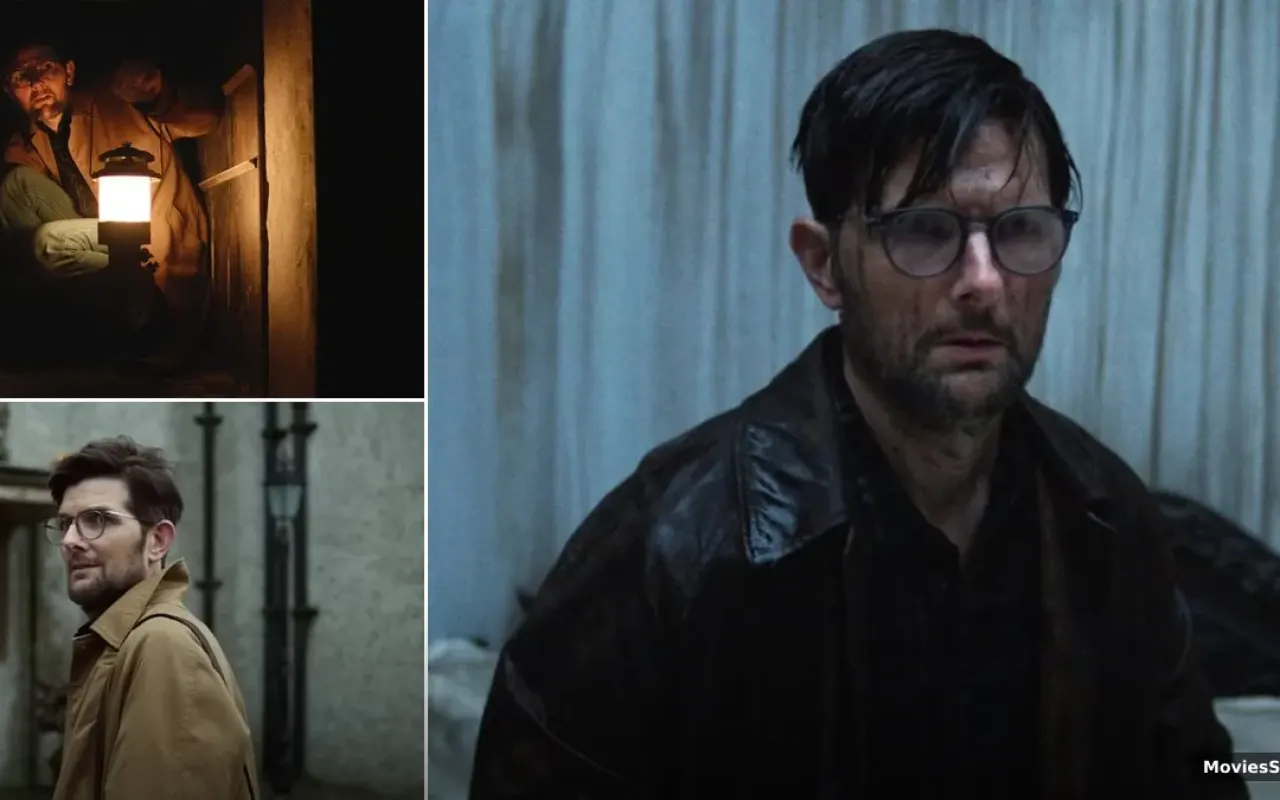
The story centers on Ohm Bauman, a "genius" novelist portrayed with prickly restraint by Adam Scott. Ohm is a man struggling with a severe case of writer’s block and a mounting drinking habit. He travels to the Bilberry Hotel, a remote and decaying establishment in West Cork, Ireland, to fulfill a somber duty: scattering the ashes of his parents at the site of their honeymoon.
Upon arrival, Ohm’s abrasive personality immediately clashes with the hotel staff, including the manager, Mal (Peter Coonan), and a young bartender named Fiona (Florence Ordesh). The hotel itself is a character of its own—dark, filled with sinister statues, and housing a "sealed" honeymoon suite that locals whisper is the prison of a long-dead witch. The atmosphere shifts from uncomfortable to terrifying when Fiona disappears following a Halloween party, leaving Ohm alone in the hotel to investigate. As he delves into the mystery, he finds himself trapped in the suite, forced to solve "Resident Evil-style" puzzles involving miniature statues with voyeuristic eyes and a creepy dumbwaiter that leads to a pitch-black basement.
Hokum 2026 Ending Explained: Reality vs. The Conquistador Trilogy
One of the most discussed aspects of the film is the Hokum 2026 ending explained through the lens of Ohm’s own work. Throughout the movie, McCarthy uses a framing device involving "The Conquistador Trilogy," Ohm’s popular but nihilistic book series. These scenes, featuring a man (Austin Amelio) and a young boy (Ezra Carlisle) stranded in a desert, initially feel like jarring interruptions. However, the finale reveals that these sequences are not just glimpses of Ohm’s creative process, but a psychological mirror of his own trauma.
The "harsh choices" faced by the characters in the desert reflect a secret Ohm has carried regarding the death of his parents. The "witch" in the honeymoon suite is both a literal supernatural threat and a manifestation of Ohm's guilt. The final scene suggests that Ohm’s fate was never random; by finally accepting a "deserved outcome" and exorcising his internal demons, he finds a twisted form of redemption. Unlike the "shitty movie adaptations" Ohm mocks earlier in the film, Hokum refuses to grant him a sanitized happy ending, opting instead for a conclusion that is as tidy as it is brutal.
The Folklore of Hokum: Witches and the Rabbit Man Explained
Damian McCarthy continues to build his own cinematic universe of Irish folklore horror. Following the success of Oddity, Hokum introduces the Rabbit Man, a folkloric entity that serves as a harbinger of doom. While the witch in the suite provides the immediate scares, the Rabbit Man represents the deeper, ancient rot of the Irish countryside. This "folkloric freakout" is rooted in the idea of the Pooka or a corrupted Banshee, entities that don't just haunt locations but claim souls.
A key element of this mythology is the "goat milk potion" provided by a forest-dwelling wild man (David Wilmot). This potion is said to "open the mind" to the supernatural, acting as the catalyst that allows Ohm to see the hotel's true horrors. It bridges the gap between Ohm's rational, cynical mind and the impossible reality of the Bilberry Hotel. This use of traditional folk medicine adds a layer of authenticity to the supernatural mystery, grounding the scares in a sense of place and history.
Technical Mastery: Sideways Tracking and the New Wave of Irish Horror
Visually, Hokum is a triumph of technical precision. Working with cinematographer Colm Horgan, McCarthy employs unique sideways tracking shots. These shots allow the camera to follow Ohm through the cramped hallways of the Bilberry Hotel, giving him the freedom to turn around constantly without the need for an edit. This technique creates a palpable sense of being followed, as the audience is never quite sure what is lurking just outside the frame.
The film’s score, composed by Joseph Bishara (known for The Conjuring and Insidious), is a layered soundtrack of "warped wailing" and environmental chimes that heightens the psychological thriller elements. McCarthy’s direction favors "straightforward, savage, and efficient" violence over excessive gore, choosing instead to get under the viewer's skin with "voyeuristic" camera angles and a "nerve-shredding" use of silence.
Hokum Movie Cast: Adam Scott’s Career-Best Performance
The Hokum movie cast is led by a transformative performance from Adam Scott. Moving away from his typical comedic persona, Scott embraces the role of a "bad good guy." His Ohm Bauman is rude, misogynistic, and physically aggressive—at one point even harming a fan who works as a bellhop (Will O’Connell). Yet, Scott manages to make Ohm’s journey toward self-discovery compelling.
The supporting cast provides excellent foils to Scott’s cynicism:
- Peter Coonan as Mal: The hotel manager whose "real-world" secrets are just as dangerous as the ghosts.
- Florence Ordesh as Fiona: The bartender whose disappearance serves as the film’s central catalyst and a commentary on how "disposable" women are often treated in both horror and society.
- David Wilmot: As the mysterious wanderer who understands the hotel's true nature.
Hokum Streaming Release Date and Parents Guide
For those wondering where to stream Hokum 2026, the film is expected to follow the path of McCarthy’s previous hits. While it is currently an exclusive theatrical release, industry insiders suggest a Hokum streaming release date on Shudder in late 2026, likely around the Halloween season. There are also rumors of a potential Netflix acquisition for international territories outside of Shudder's reach.
Parents Guide: How Scary is Hokum?
While Hokum is not a "gore-fest," it is exceptionally intense. Parents should be aware of the following:
- Intensity: High. The film relies on "shriek-inducing" jump scares and a constant sense of dread.
- Violence: Sudden and savage. While infrequent, the deaths are impactful and lingering.
- Language/Themes: Strong language and heavy themes of alcoholism, grief, and the trauma of parental loss.
- Age Rating: Likely R or 15 for sustained terror and psychological distress.
Hokum vs. Oddity: A New Standard for McCarthy
Many fans are asking if Hokum is a sequel to Oddity. While it is not a direct narrative sequel, it functions as a spiritual successor. McCarthy’s "New Wave of Irish Horror" style is on full display here, but with a significantly larger budget and higher production values. Where Oddity was a "horror grab bag" of ideas, Hokum is a more focused, "exceptionally chilling" narrative that proves McCarthy is ready for blockbuster-level projects.
Key Takeaways
- Adam Scott delivers a career-defining performance as an unlikable protagonist seeking redemption.
- The Bilberry Hotel serves as a terrifying, puzzle-filled setting reminiscent of classic survival horror games.
- The Rabbit Man and the "trapped witch" expand McCarthy's unique Irish folklore mythology.
- The sideways tracking shots and Joseph Bishara’s score create a "nerve-shredding" atmospheric experience.
- The Hokum ending skillfully ties the "Conquistador Trilogy" framing device to the main plot's resolution.
Conclusion
Hokum is more than just a haunted hotel story; it is a meticulously crafted exploration of guilt and the stories we tell ourselves to survive. Damian McCarthy has successfully avoided the "sophomore slump" (or in this case, the third-film hurdle) by delivering a movie that is both a "giggly, exhilarating rollercoaster" and a deeply unsettling supernatural mystery. Whether you are a fan of Adam Scott horror movies or a devotee of Damian McCarthy’s Oddity, Hokum is an absolute must-watch that will linger in your mind long after the credits roll. Don't be surprised if you find yourself checking the corners of your room—and the eyes of every statue you pass—for days to come.