The mist-shrouded landscapes of West Cork have long served as a fertile ground for ghost stories, but in the new Hokum movie review cycle, critics are calling Damian McCarthy’s latest effort his most terrifying yet. Released on May 1, 2026—a date significant in Irish tradition as May Day or Beltane—the film marks a major leap for McCarthy, transitioning from indie darling to a master of high-tension, atmospheric dread. Starring Adam Scott in a role that subverts his usual charm, Hokum is a nerve-shredding exploration of grief, nihilism, and the ghosts we refuse to leave behind.
What is the movie Hokum about? Hokum is a 2026 Irish folk horror film written and directed by Damian McCarthy. It stars Adam Scott as Ohm Bauman, a cynical novelist who travels to a remote Irish hotel to scatter his parents' ashes, only to uncover a supernatural mystery involving a haunted honeymoon suite and local folklore.
Hokum (2026) Release Date, Runtime, and Essential Production Details
For audiences tracking the Hokum release date, the film arrived in theaters on May 1, 2026, distributed by IFC Films and Shudder. This "May Day" launch is no coincidence; the date traditionally marks the beginning of summer in Ireland, a time when the veil between worlds is said to be thin. Unlike the slow-burn pacing often associated with contemporary "elevated horror," Hokum maintains a propulsive 107-minute runtime that rarely lets the audience catch their breath.
Produced at the West Cork Film Studios, the film represents the largest budget to date for the Oddity director. While still maintaining the grit of his previous work, the increased resources are evident in the intricate production design of the Bilberry Hotel and the sophisticated practical effects used to bring its supernatural inhabitants to life.
| Feature | Details |
|---|---|
| Theatrical Release | May 1, 2026 |
| Director/Writer | Damian McCarthy |
| Primary Cast | Adam Scott, Peter Coonan, Florence Ordesh, David Wilmot |
| Runtime | 107 Minutes |
| Age Rating | 15A (Ireland) / R (USA) |
| Filming Locations | West Cork, Ireland (Bilberry Woods) |
The Hokum 2026 Plot: A Writer’s Nightmare at the Bilberry Hotel
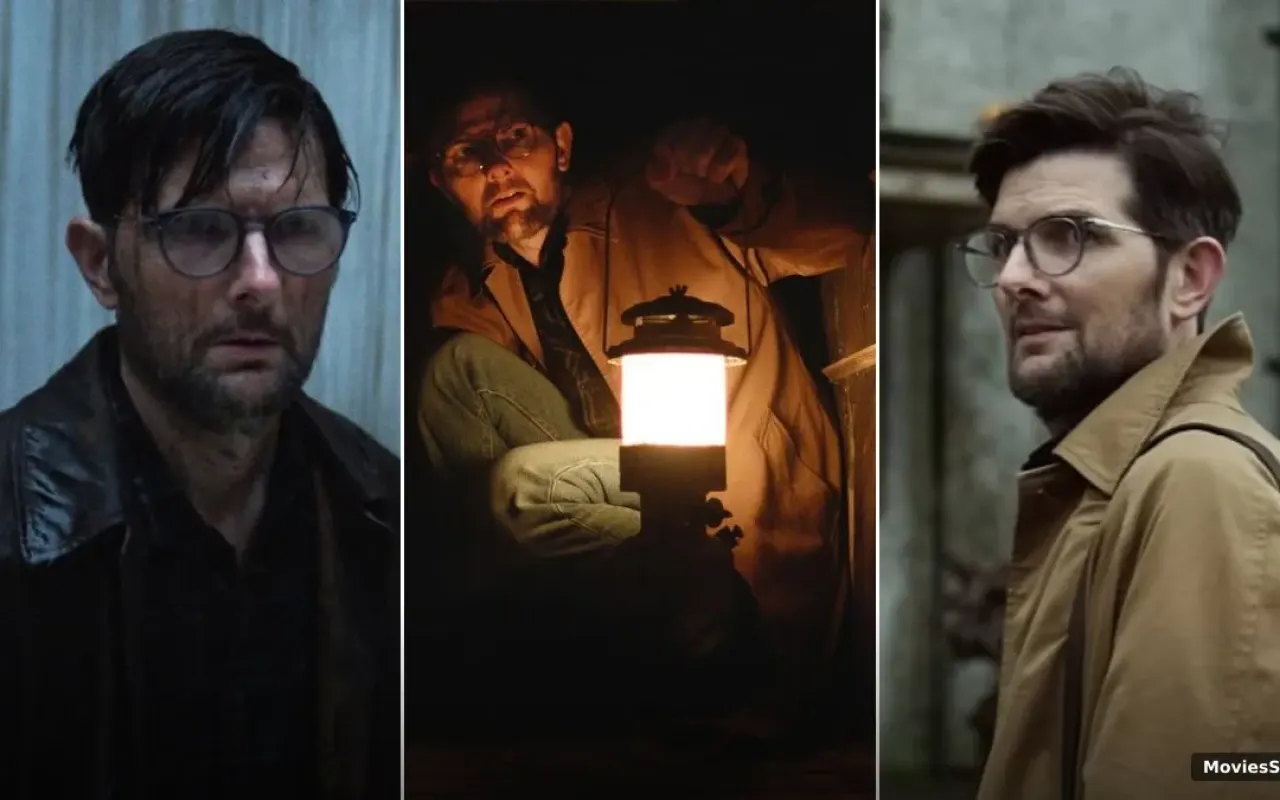
The story follows Ohm Bauman (played with abrasive intensity by Adam Scott), a celebrated but miserable horror novelist famous for his refusal to write happy endings. Ohm is currently struggling with a massive bout of writer's block while attempting to finish the final installment of his Conquistador Trilogy. His journey to the remote Bilberry Hotel in the Irish countryside is ostensibly a "sacred duty"—he intends to scatter his parents' ashes at the site of their original honeymoon.
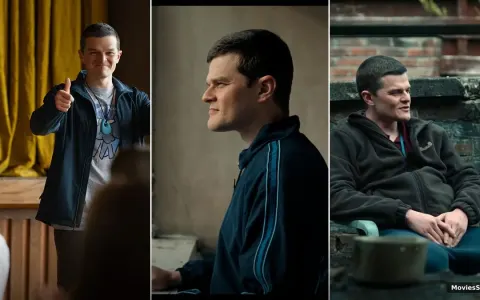
However, Ohm is far from a grieving, sentimental son. He is rude to the staff, including the hotel manager Mal (Peter Coonan) and the fan-boy bellhop Alby (Will O’Connell). The only person who seems to pierce his cynical exterior is Fiona (Florence Ordesh), the bartender who warns him about the hotel’s shuttered honeymoon suite, rumored to be haunted by a malevolent witch. Ohm dismisses the stories as "hokum," a choice of words that serves as the film's title and its central irony. When Fiona mysteriously disappears and Ohm find himself trapped within the hotel’s shifting architecture, his skepticism is replaced by a desperate, supernatural mystery that forces him to confront his own traumatic past.
Adam Scott Hokum Performance: From 'Severance' to Sinister
One of the most striking elements of the Adam Scott Hokum performance is how the actor leverages his "everyman" persona from Severance and Parks and Recreation to create someone truly unlikable. Ohm Bauman is a jerk—he is discourteous, self-absorbed, and physically dismissive of those he deems beneath him. Yet, Scott’s performance is layered with enough self-loathing and vulnerability that the audience remains tethered to his survival.
Critics have noted that this is Scott's best work to date, as he portrays a man whose nihilistic writing is a shield against childhood trauma. His transition from a "yank" outsider to a man shattered by the hotel’s secrets is a masterclass in psychological thriller acting. McCarthy’s decision to keep the protagonist abrasive for much of the film is a bold choice that pays off during the harrowing third act, where Ohm’s fate becomes a matter of moral reckoning rather than just survival.
Damian McCarthy Horror Movies: Technical Mastery and West Cork Roots
For fans of Damian McCarthy horror movies, Hokum feels like the culmination of the themes explored in Caveat (2020) and Oddity (2024). McCarthy’s Damian McCarthy horror style analysis reveals a director obsessed with spatial horror—the idea that a building’s layout can be as predatory as any ghost. The Bilberry Hotel is a labyrinth of dark hallways, dumbwaiters leading to confined basements, and rooms that seem to change when you aren't looking.
The Hokum movie filming locations West Cork provide a frigid, isolated atmosphere that McCarthy enhances through specific cinematography techniques. He utilizes long, sideways tracking shots that allow the camera to follow Ohm without cutting, creating a sense that something is always just out of frame. The Hokum movie soundtrack further builds this tension, using a layered soundscape of "warped wailing," creaky floorboards, and consistent, rhythmic chimes that mimic the ticking of a clock toward an inevitable doom.
Perhaps most impressive is the use of practical effects and animatronics. Eschewing the CGI-heavy trends of modern horror, McCarthy employs a terrifying animatronic figure that divulges key backstory. The tactile nature of these effects—combined with unsettling miniature statues with voyeuristic eyes—makes the horror feel uncomfortably real.
Decoding the Folklore: The Witch and the Conquistador Trilogy
The Hokum ending explained often hinges on the film's meta-narrative: the Conquistador Trilogy. Throughout the film, we see glimpses of a man and a young boy (Austin Amelio and Ezra Carlisle) stranded in a desert. Initially jarring, these scenes are revealed to be the creative process of Ohm’s final book. This framing device connects the "fictional" desert survival story to Ohm’s real-world struggle in the hotel, suggesting that his stories are a manifestation of his inability to find peace.
The "witch" in the suite is another point of deep Irish folk horror. While Ohm dismisses her as a ghost story, she represents a blend of the Sluagh (restless spirits) and the Cailleach (the divine hag) of Celtic myth. Unlike the cinematic witches of Hollywood, this entity is tied to the land and the hotel itself, functioning as a mirror to the characters' sins. The film asks whether the supernatural is truly "hokum" or if it is the only way our minds can process the weight of inherited trauma.
Is the Bilberry Hotel a Real Place?
While the Bilberry Hotel is a fictional creation for the film, it is inspired by the various shuttered, historic inns found throughout rural Ireland. The production team utilized specific West Cork locations to create the exterior, but the interior is a meticulously designed set built to facilitate the film's puzzle-like scares.
Parents Guide and Content Advisory
For parents considering a viewing, Hokum is a mature psychological thriller with significant horror elements. The 15A/R rating is earned through:
- Violence: Sudden, efficient, and savage. While not a "slasher" film, the deaths are impactful and often unexpected.
- Terror: Intense sequences of claustrophobia, jump scares, and "nightmare fuel" imagery involving practical effects.
- Language: Frequent strong language, particularly from the protagonist.
- Themes: Deeply dark themes involving grief, the death of parents, and nihilism.
Key Takeaways
- Atmospheric Brilliance: Hokum excels in building "overwhelming anxiety" through sound design and spatial horror.
- Career-Best Performance: Adam Scott delivers a complex, abrasive, and ultimately moving performance as Ohm Bauman.
- Practical Horror: The use of animatronics and physical sets makes the film stand out in a CGI-saturated market.
- Folk Horror Roots: Damian McCarthy cements his status as a leader in the Irish horror scene, utilizing West Cork's natural dread.
- Meta-Storytelling: The Conquistador Trilogy framing device adds a layer of intellectual depth rarely seen in the genre.
Conclusion: A New Standard for Irish Horror
In this Hokum movie review, it is clear that Damian McCarthy has crafted a film that is both a "good old-fashioned ghost story" and a sophisticated character study. By blending the cynical modern world of Ohm Bauman with the ancient, whispering terrors of the Irish countryside, Hokum creates a unique brand of "folkloric freakout."
Whether you are a fan of Adam Scott or a devotee of Irish folk horror, this film is essential viewing. It proves that you don't need a massive blockbuster budget to create a masterpiece; you just need a dark room, a creaky floor, and the courage to look into the corners of the honeymoon suite. As the credits roll on what is undoubtedly the scariest film of 2026, one thing is certain: Damian McCarthy is no longer a director to watch—he is the director to beat.