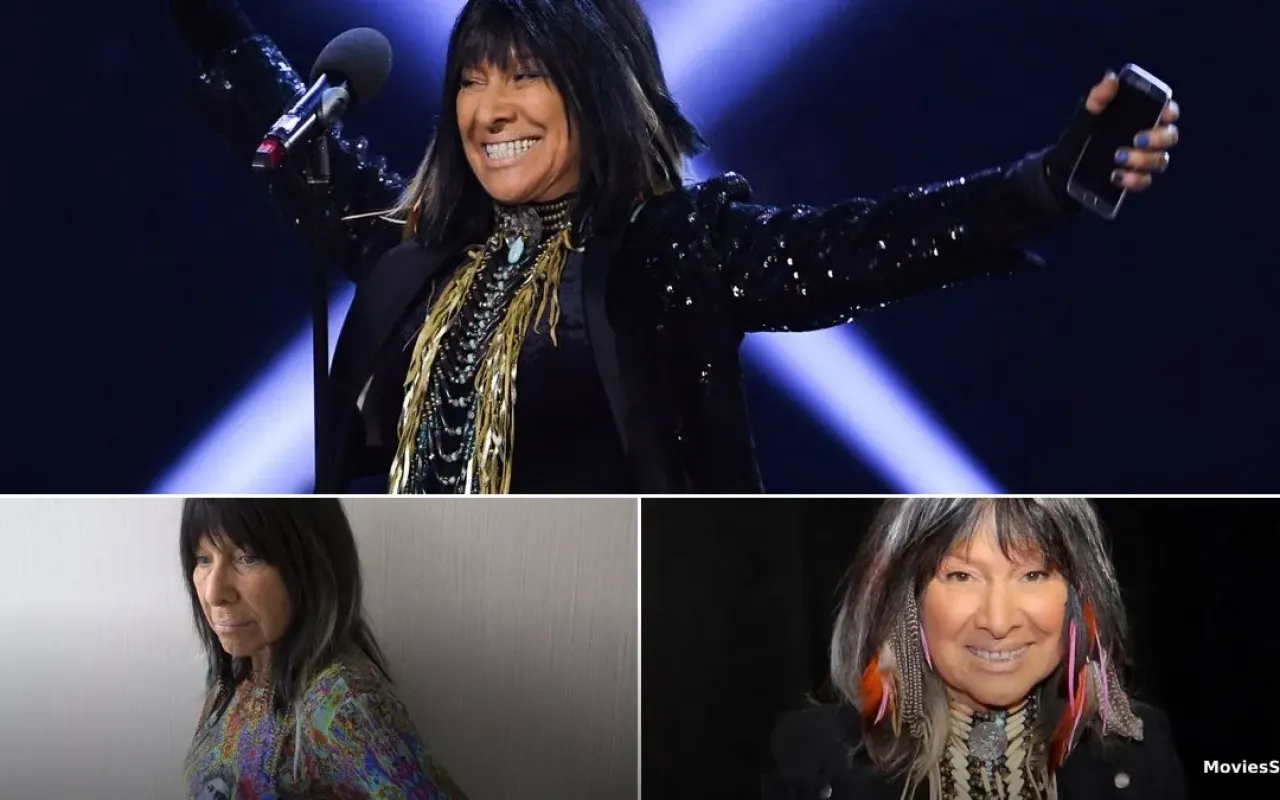
In the nearly 200-year history of the University of Toronto, only two people have ever had their honorary degrees stripped. One was Duncan Campbell Scott, the mid-century bureaucrat who architected the horrors of Canada’s residential school system. The other, as of May 2026, is folk music legend and activist Buffy Sainte-Marie. This isn't just a headline; it is a seismic shift in how institutions handle the fallout of "pretendianism" and the ethics of Indigenous identity.
The University of Toronto revokes Buffy Sainte-Marie honorary degree following a multi-year saga that has polarized the folk music world and Indigenous communities alike. On May 13, 2026, the university’s Governing Council finalized the decision to rescind the Doctor of Laws degree originally bestowed upon her in 2019. While the school was once a stage for her social advocacy, it has now become the latest institution to distance itself from her legacy.
Why was Buffy Sainte-Marie's honorary degree revoked?
The University of Toronto revoked Buffy Sainte-Marie's honorary Doctor of Laws degree in May 2026 following a 2023 CBC investigation that questioned her Indigenous heritage. The university's Governing Council approved the rescindment after a petition and a review by the Standing Committee on Recognition, making her only the second person in the school's 200-year history to have a degree revoked.
The Ancestry Dispute: From Yorkville to Massachusetts
To understand why a global icon is losing her credentials in 2026, we have to go back to the 2023 The Fifth Estate Buffy Sainte-Marie report. For decades, Sainte-Marie was the face of Indigenous excellence. She was the first Indigenous person to win an Oscar (for "Up Where We Belong"), a Polaris Prize winner, and a staple of the Yorkville folk scene. Her narrative was one of survival: a Cree child taken from the Piapot First Nation in the Qu’Appelle Valley and raised by white adoptive parents in the States.
But the CBC investigation pulled a thread that unraveled that story. Journalists located a Massachusetts birth certificate stating that "Beverley Jean Santamaria" was born in 1941 to parents of Italian-American descent. Family members in the U.S. came forward to say there was no secret adoption—that Buffy was their biological relative. This sparked a massive Buffy Sainte-Marie ancestry dispute that forced every institution holding her name to look at their own records.
Sainte-Marie’s defense has remained consistent: she claims she was adopted as a young adult by a Cree family and that her Indigenous heritage is a matter of "heart" and community belonging rather than just DNA. "My Cree family adopted me forever, and this will never change," she stated. But for a university, a Doctor of Laws is based on more than vibes; it’s based on the integrity of the recipient's public record.
The U of T Standing Committee on Recognition Process
The internal mechanics of this revocation weren't a knee-jerk reaction. In 2024, the university established the Standing Committee on Recognition to handle exactly these types of "de-naming" and "de-recognizing" scenarios. This was part of a broader U of T Standing Committee on Recognition process designed to ensure that honors remain aligned with the university's values.
Here is how the timeline went down:
- February 2025: A formal petition was filed by a group of Indigenous faculty and students, as well as the Indigenous Identity Integrity Group, calling for the degree to be rescinded. The petition reportedly garnered hundreds of signatures.
- April 20, 2026: The Standing Committee met to review the evidence. They looked at the Massachusetts birth certificate, the CBC findings, and the university’s own criteria for academic integrity and honorary degrees.
- May 13, 2026: The Governing Council officially voted to approve the recommendation.
The criteria for revoking a degree usually involve a "disrepute" clause. If a recipient’s actions or the revelation of their true history brings the university into serious disrepute, the degree can be pulled. In this case, the committee found that the discrepancy between her public identity and the genealogical records was a bridge too far.
A Rare Precedent: Buffy Sainte-Marie vs. Duncan Campbell Scott
The gravity of this move cannot be overstated. By rescinding this honor, U of T has placed Sainte-Marie in the same administrative category as Duncan Campbell Scott U of T. Scott had his degree revoked in 2025 because of his role in the "cultural genocide" of Indigenous peoples. Comparing a folk singer to a residential school architect might seem extreme, but for the university, the core issue is the same: the misuse of Indigenous identity and the harm caused by settler colonialism.
Columbia University professor Audra Simpson, a member of the Kahnawá:ke Mohawk Territory, called the decision "long overdue." She noted that both Scott and Sainte-Marie, in very different ways, acted on the "imperatives of settler colonialism"—one by trying to erase Indigenous people through policy, and the other by allegedly occupying an Indigenous identity that wasn't hers to claim. It’s a harsh take, but it reflects the deep sense of betrayal felt by many in the community.
The Domino Effect: Who Else Is Reviewing Her Status?
The Buffy Sainte-Marie 2026 update shows a legacy in freefall. U of T is not the first, and likely won't be the last, to act. Dalhousie University revoked her degree earlier in 2026 after a Mi’kmaw student raised ethical concerns. In 2025, she voluntarily returned her Order of Canada medals, acknowledging she is an American citizen and holds a U.S. passport.
However, the list of institutions that haven't acted is still long. As of this writing, Sainte-Marie still holds over 15 honorary doctorates. The status of her degrees at the following schools is currently under the microscope:
- University of British Columbia (UBC): Currently "reviewing" the situation but no final decision.
- University of Regina: Under pressure from local Indigenous leaders.
- Carleton University: Has faced student petitions but remains silent.
- University of Saskatchewan: A particularly sensitive case given her ties to the Piapot First Nation.
The Indigenous identity fraud consequences are also hitting her wallet and her trophies. The 2023 Polaris Prize was a major blow, and there are ongoing questions about what happens to scholarship funds or programs named after her. Most universities have "gift agreements" that allow them to rename programs if the namesake's reputation becomes a liability.
The Legal and Community Fallout
There is a massive content gap in how we talk about the legalities here. Does she have to return the physical diploma? Technically, yes, though universities rarely send "repo men" for paper scrolls. The real consequence is legal and professional: she can no longer list the "Hon. LL.D." on her CV or use the title "Doctor" in academic or professional settings associated with the university.
The reaction from the Piapot First Nation has been more nuanced. While some members feel she is a daughter of the community regardless of her birth certificate, others feel that the "pretendian" label has caused lateral violence within the nation. The Chief of Piapot has previously stated that adoption is a sacred Cree tradition, but the legal reality of Indigenous heritage in Canada is increasingly tied to verifiable ancestry for the purposes of grants, awards, and positions of power.
For Indigenous students at U of T, the impact is personal. Many grew up seeing Buffy as the ultimate "main character" of Indigenous success. Seeing that story dismantled feels like a loss of a different kind. It forces a conversation about pretendianism that many would rather not have, but which the university clearly felt was necessary for academic integrity.
Key Takeaways: The U of T Decision at a Glance
- The Event: The University of Toronto revokes Buffy Sainte-Marie honorary degree (Doctor of Laws) as of May 13, 2026.
- The Reason: Evidence from a Massachusetts birth certificate and the CBC Fifth Estate report suggesting she is of Italian-American, not Cree, descent.
- The Rarity: She is only the second person to have a degree revoked in the school’s 200-year history.
- The Process: The decision followed a Standing Committee on Recognition process triggered by a February 2025 petition.
- The Broader Impact: This follows the loss of her Order of Canada and Polaris Prize, with other universities like UBC and Carleton currently under pressure to follow suit.
As we look toward the future, the conversation around Buffy Sainte-Marie is no longer about the music. It’s about the ethics of identity in a post-Truth and Reconciliation era. While her songs like "Universal Soldier" will likely remain in the folk canon, her status as an Indigenous authority has been officially de-platformed by Canada’s most prestigious university. The "pretendian" conversation has moved from the fringes of the internet to the highest levels of academic governance, and it isn't going away anytime soon.