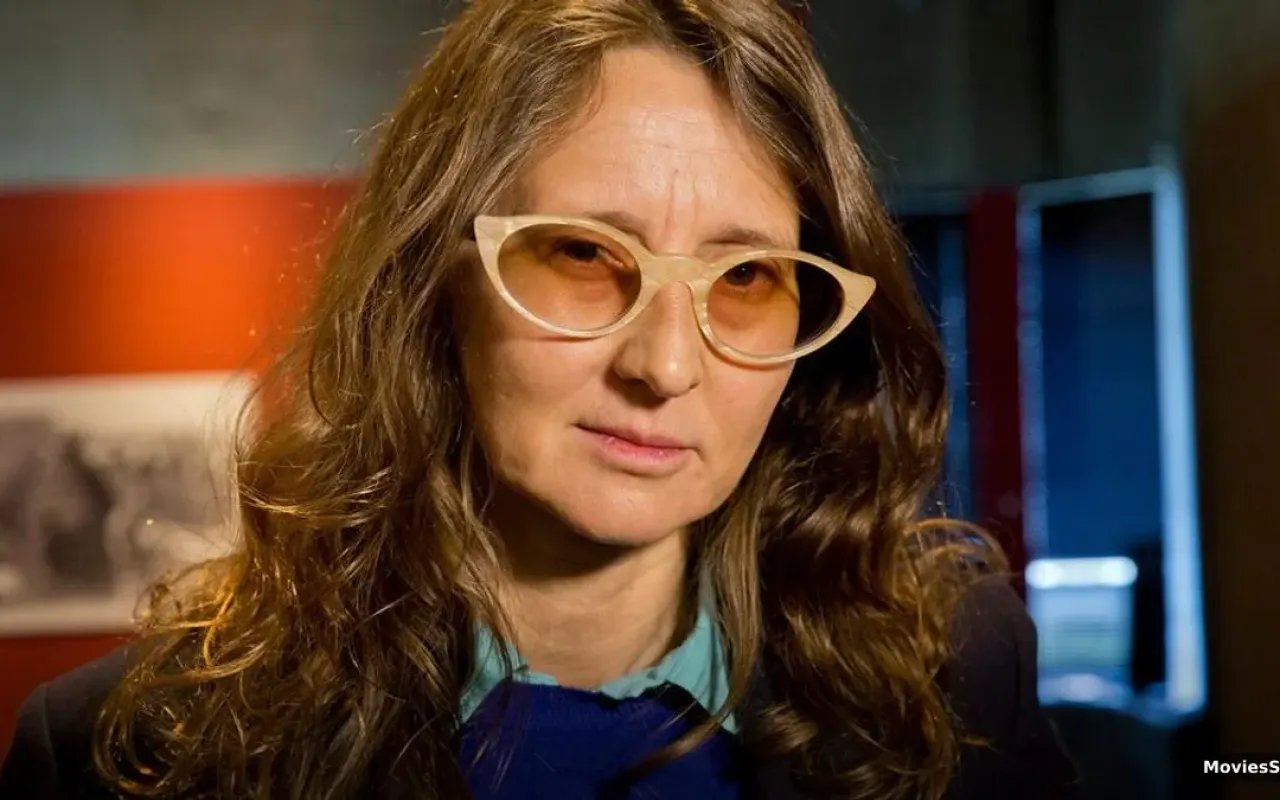
In the twenty-five years since Lucrecia Martel redefined global cinema with her directorial debut, La Ciénaga, the Argentine auteur has maintained a reputation for meticulous, rare, and transformative storytelling. While Argentina has seen a revolving door of political leadership during this period, Martel’s filmography has remained a steady, albeit deliberate, examination of the country’s soul. Her latest project, Lucrecia Martel Our Land (Nuestra Tierra), marks a significant pivot: her first foray into non-fiction cinema. This transition from narrative fiction to documentary filmmaking arrives alongside a major career retrospective at the Berkeley Art Museum and Pacific Film Archive (BAMPFA), offering a comprehensive look at a filmmaker who views the camera as both a tool for curiosity and a weapon against historical amnesia.
What is Lucrecia Martel's Our Land about?
Our Land (Nuestra Tierra) is the first documentary by Argentine director Lucrecia Martel. It chronicles the years-long struggle for justice following the 2009 murder of Javier Chocobar, a leader of the Chuschagasta Indigenous community, during an attempt to illegally remove them from their ancestral lands in Northern Argentina. The film utilizes archival footage and modern cinematography to expose the enduring legacy of colonialism in Latin America.
The Evolution of an Auteur: From The Salta Trilogy to Zama
To understand the weight of Lucrecia Martel Our Land, one must look at the trajectory of the New Argentine Cinema movement. Martel emerged as its leading light in 2001 with La Ciénaga (The Swamp), a film that dismantled the domestic comforts of the Argentine bourgeoisie. This was followed by The Holy Girl (La niña santa, 2004) and The Headless Woman (La mujer sin cabeza, 2008), completing what critics call "The Salta Trilogy." These films are characterized by a "tactile" visual language and a sound design philosophy that prioritizes off-screen space, making the environment feel as alive—and often as threatening—as the characters themselves.
After a nearly decade-long hiatus from feature films—during which she famously turned down a Marvel project and explored a sci-fi adaptation of the comic El Eternauta—Martel returned in 2017 with Zama. Based on the novel by Antonio di Benedetto, Zama was a fever dream of colonial stagnation. It was during the research for Zama that Martel encountered the footage of Javier Chocobar’s murder, a discovery that would eventually lead to the Nuestra Tierra documentary Argentina project. The connection between the 18th-century colonial rot in Zama and the modern-day land theft in Our Land is a central theme in her current work.
The Chocobar Case: A Decades-Long Fight for Indigenous Land Restitution
The Javier Chocobar murder film is not merely a true-crime investigation; it is a structural analysis of power. In 2009, Chocobar was shot and killed by Darío Amín, a businessman claiming ownership of the Chuschagasta territory, accompanied by two former police officers. The incident was captured on a handheld camera by a member of the community, creating a chilling piece of archival evidence that forms the backbone of Martel's documentary.
While a 2018 trial finally resulted in a 22-year prison sentence for Amín and his accomplices, the legal victory remains precarious. In 2024, Indigenous land restitution Argentina remains a volatile issue. The Chuschagasta community continues to face legal challenges and physical threats, as the state’s recognition of their ancestral rights often clashes with private commercial interests. Martel’s film documents the exhausting "bureaucracy of justice," showing how the legal system itself can be a form of slow-motion violence against marginalized groups.
Cinematic Ethics: Drone Cinematography and the Objectifying Gaze
In Lucrecia Martel Our Land, the director collaborated with cinematographer Ernesto de Carvalho to navigate the ethics of filming a traumatized community. A standout feature of the film is its use of drone cinematography. In modern policing, drones are often tools of surveillance and "objectifying gazes." However, Martel and Carvalho repurpose this technology to capture the breathtaking beauty of the Northern Argentine landscape, reclaiming the perspective of the land itself.
Martel’s approach to documentary filmmaking is rooted in building trust. She spent years engaging with the Chuschagasta people, moving past their initial "defensive stance" to reach a level of intimacy where they felt comfortable expressing their internal thoughts rather than just their political grievances. This patient gaze is contrasted sharply with the archival footage of the killers, who carried both a camera and a revolver—using the former to document their perceived "right" to the land and the latter to enforce it.
Martel’s Sound Design Philosophy: Hearing the Unseen
One cannot discuss a Lucrecia Martel retrospective without analyzing her revolutionary use of sound. While many directors like Lisandro Alonso focus on the vastness of the visual frame, Martel builds her world through audio layers. She often describes her process as "listening" to the film before seeing it. In Our Land, the soundscape bridges the gap between the archival past and the cinematic present, using ambient noise to suggest the spirits of the ancestors and the persistent presence of the land that outlasts its occupiers.
BAMPFA Lucrecia Martel Retrospective: 2024 Event Details
The BAMPFA Lucrecia Martel retrospective, titled "This Is Not a Documentary," offers a rare opportunity for North American audiences to see Martel’s complete body of work on 35mm and 4K restorations. The program includes her major features and several short films that are rarely screened outside of major festivals like the Cannes Film Festival.
- Location: Berkeley Art Museum and Pacific Film Archive, University of California, Berkeley.
- Featured Films: La Ciénaga (2001), The Holy Girl (2004), The Headless Woman (2008), Zama (2017), and Our Land (2024).
- Special Mention: The retrospective also features Canuto’s Transformation, directed by Ernesto de Carvalho, providing context for the collaborative spirit of the Argentine film community.
For those unable to attend the Berkeley screenings, Our Land is currently navigating the international film festival circuit. While a wide streaming release date has not yet been finalized for the U.S., Martel’s previous works are frequently available on platforms like MUBI and The Criterion Channel, which often host Argentine auteur spotlights.
The Political Climate: Cinema Under the Milei Administration
The release of Lucrecia Martel Our Land comes at a precarious time for the Argentine film industry. Under the current administration of President Javier Milei, there have been significant budget cuts to INCAA (the National Institute of Cinema and Audiovisual Arts). These austerity measures threaten the future of independent non-fiction cinema in Argentina. Martel has been a vocal critic of these policies, arguing that cinema is not a luxury but a vital part of a nation’s memory and identity.
Key Takeaways
- Lucrecia Martel Our Land is the director's first documentary, focusing on the 2009 murder of Indigenous leader Javier Chocobar.
- The film explores the intersection of colonialism in Latin America and modern-day land rights.
- Martel uses drone cinematography to challenge the traditional "police gaze" and highlight the beauty of the Chuschagasta territory.
- The BAMPFA Lucrecia Martel retrospective in 2024 provides a comprehensive look at her 25-year career, from La Ciénaga to the present.
- The Chocobar case highlights the ongoing struggle for Indigenous land restitution Argentina, despite the 2018 legal convictions.
Conclusion: The Camera vs. The Gun
In a Lucrecia Martel interview 2024, the filmmaker noted that "a camera is the opposite of firing a gun; it represents a desire to understand." Through Our Land, Martel proves that the documentary format is not just a recording of facts, but a deeply moral act of looking and listening. As her retrospective at BAMPFA demonstrates, Martel remains one of the most vital voices in cinema today—a director who refuses to look away from the complexities of history, ensuring that the story of Javier Chocobar and the Chuschagasta community is woven into the global cinematic consciousness.