George Lucas spent decades building worlds that defined our collective imagination, but his most ambitious project isn't happening on a soundstage. It’s landing in South Los Angeles. After years of construction delays, site changes, and a $1 billion price tag, the Lucas Museum of Narrative Art is finally preparing to welcome the public. This isn't just another gallery for "fine art" elitists; it’s a massive, spaceship-shaped bet that the stories we tell—through comic books, movie posters, and digital media—deserve the same reverence as a Renaissance painting.
Opening Date and Location: When and Where to Visit
The Lucas Museum of Narrative Art is scheduled to open on September 22, 2026. Located in Exposition Park, Los Angeles, the $1 billion museum founded by George Lucas and Mellody Hobson will feature over 40,000 works of narrative art. The 11-acre campus is situated in the heart of South Los Angeles, creating a new cultural anchor for the community.
The timing is strategic. By opening in late 2026, the museum will have nearly two years to find its rhythm before the 2028 Summer Olympics descend on Los Angeles. With the LA Memorial Coliseum and BMO Stadium as neighbors, the Lucas Museum will be at the epicenter of the global Olympic stage. It joins an already dense "museum row" that includes the Natural History Museum of Los Angeles County and the California Science Center, effectively turning Exposition Park into one of the most significant cultural hubs in the United States.
The $1 Billion Collection: What is Narrative Art?
If you're expecting a museum dedicated solely to Star Wars, you’re only seeing part of the picture. The narrative art collection here is designed to bridge the gap between "high art" and the art of the people. Lucas’s philosophy is simple: if a piece of art tells a story, it belongs here.
The collection spans 100,000 square feet of gallery space, divided into 35 distinct galleries. Rather than following a boring chronological timeline, these galleries are organized by universal human experiences. You can expect to walk through sections dedicated to:
- Family and Community: Exploring how we relate to those closest to us.
- Love and Conflict: The emotional highs and lows of the human condition.
- Work and Play: The daily grind versus the freedom of imagination.
- The Fantastical: Where the Star Wars archives and sci-fi concept art truly shine.
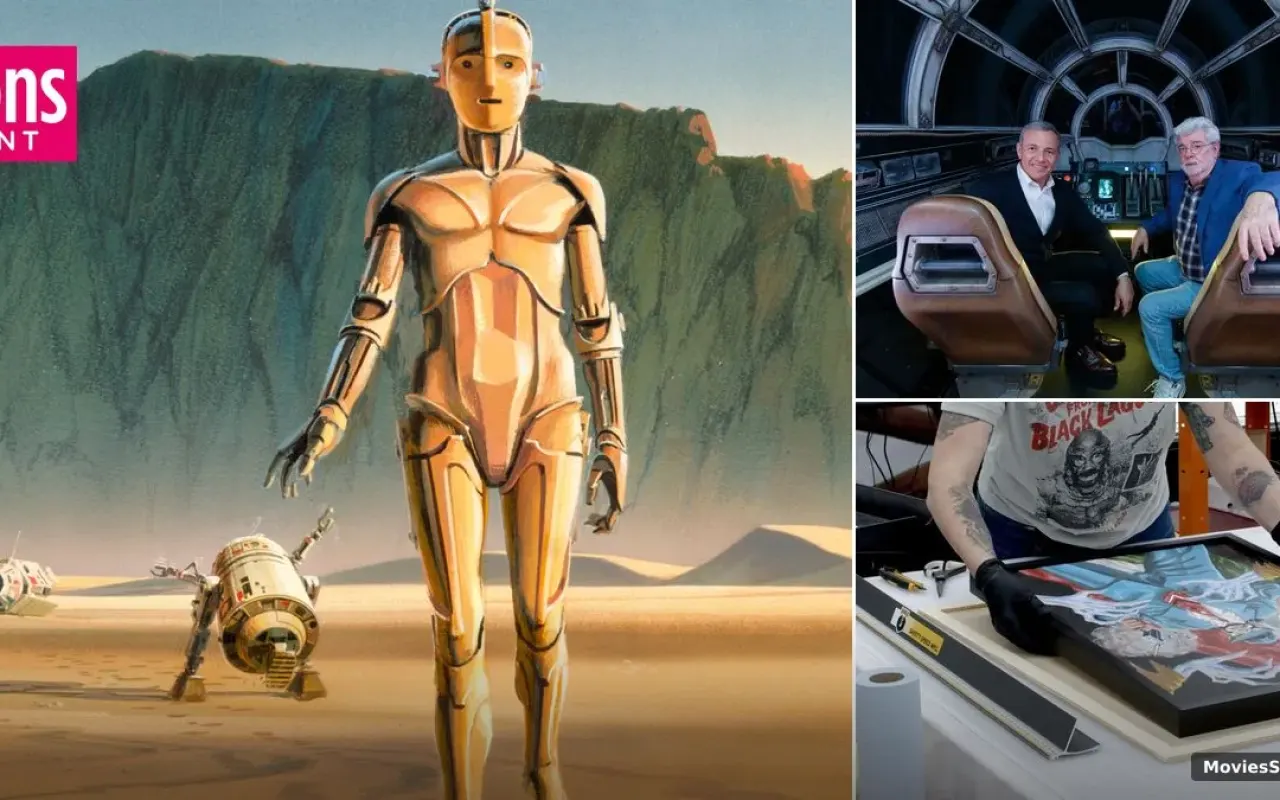
The heavy hitters are all present. You’ll find works by Norman Rockwell and Frida Kahlo alongside 20th-century masters like Diego Rivera. But the real "secret sauce" of the museum is the elevation of comic book art and cinematic art. For the first time, original 1996 cover art for Sonámbulo: Sleep of the Just by Rafael Navarro will share walls with legendary illustrators like Ralph McQuarrie—the man whose concept sketches actually convinced Fox to greenlight the original Star Wars when no one understood Lucas's vision.
Architecture: Ma Yansong's 'Spaceship' Design
You can’t miss the building even if you try. Designed by Ma Yansong of MAD Architects, the structure looks like a sleek, aerodynamic vessel that has gently touched down in the park. The exterior is wrapped in a pale, matte FRP (fiberglass-reinforced polymer) skin, giving it a futuristic, organic feel that stands in stark contrast to the Beaux-Arts architecture of the nearby Natural History Museum.
But the "spaceship" isn't just for show. The building is elevated, creating a shaded canopy underneath for visitors to gather. This "living" campus, designed by Mia Lehrer and her team at Studio-MLA, replaces what used to be acres of asphalt parking lots with an 11-acre green space.
By the Numbers: The Campus Landscape
- 200+ new trees: A mix of native and drought-tolerant species designed to provide a massive canopy for South LA.
- Native Meadows: Designed to support local biodiversity and reduce the museum's water footprint.
- Amphitheater: A dedicated outdoor space for community performances and screenings.
The Lucas Museum Parking Guide and Accessibility
Getting to a major LA attraction is usually a nightmare, but the Lucas Museum is better positioned than most. While there is an underground parking garage being built to replace the lost surface lots, the real move is taking public transit.
The Metro E Line Exposition Park stops are just a short walk from the museum's entrance. Specifically, the Expo Park/USC and Expo/Vermont stations provide direct access from Downtown LA and Santa Monica. This connectivity is crucial for the museum’s goal of being accessible to all Angelenos, not just those with a car and a $30 parking budget.
Narrative Art vs. Fine Art: The Cultural Impact
There has already been plenty of chatter among art critics about whether "populist art" like digital media and movie props belongs in a billion-dollar "temple." Some see it as the ultimate vanity project; others see it as a necessary democratization of art. By focusing on narrative storytelling, the museum invites people who might feel intimidated by a traditional museum to see themselves in the work. As Mellody Hobson puts it, they are simply "holding society's money" and giving it back in the form of inspiration.
A Decade in the Making: The Journey to Los Angeles
The road to Exposition Park was paved with drama. Before settling on Los Angeles in 2017, Lucas faced significant legal and political hurdles.
- San Francisco (2010-2014): The original plan for the Presidio was rejected by the Presidio Trust, who felt the design didn't fit the historic aesthetic.
- Chicago (2014-2016): A lakefront site was selected, but the "Friends of the Parks" group filed a lawsuit to block construction, leading Lucas to pull the plug entirely.
- The LA Win: Los Angeles Mayor Eric Garcetti and local officials moved aggressively to secure the project, recognizing the massive economic and cultural boost it would provide.
The project is funded entirely by Lucas and Hobson, who signed the Giving Pledge in 2010. This means no taxpayer money is being used for the construction or the endowment, a rarity for a project of this scale. It also allows the museum to operate with a specific educational mission: the George Lucas Educational Foundation is deeply integrated into the museum’s DNA, with dedicated classrooms and a narrative art curriculum designed for local K-12 schools.
Planning Your Visit: Facilities and Amenities
The Lucas Museum isn't just a place to look at pictures; it’s designed for a full-day experience. While ticket prices haven't been finalized yet, the museum has committed to being a family-friendly space for all ages.
Dining and Views
The rooftop restaurant is expected to be a major draw, offering panoramic views of the Los Angeles skyline and the Hollywood Hills. There will also be a more casual park-view cafe at the ground level for those who want to grab a coffee and sit in the meadows. The restaurant space spans several thousand square feet, designed to accommodate both museum-goers and the University of Southern California (USC) crowd from across the street.
The Theaters and Library
Two state-of-the-art cinematic theaters will host daily screenings, ranging from classic Hollywood features to experimental digital media. Meanwhile, the research library will offer public access (though likely by appointment) to a massive archive of books and materials on visual storytelling. This makes it a primary resource for students at USC's School of Cinematic Arts.
Key Takeaways
- Confirmed Opening: September 22, 2026, in Exposition Park, Los Angeles.
- The Founders: Co-founded by George Lucas and Mellody Hobson as part of their Giving Pledge commitment.
- The Architect: Designed by Ma Yansong (MAD Architects) with a futuristic, "spaceship" aesthetic.
- The Collection: Over 40,000 works, including the Star Wars archives, Norman Rockwell paintings, and comic book art.
- Green Space: 11 acres of new parkland designed by Studio-MLA, featuring 200+ trees.
- Accessibility: Easily reachable via the Metro E Line; located near the LA Memorial Coliseum.
The South LA Perspective: Cultural Investment or Gentrification?
Real talk: whenever a $1 billion project lands in a neighborhood like South Los Angeles, the "G" word (gentrification) comes up. Local residents have expressed a mix of excitement and skepticism. On one hand, the South LA cultural impact is undeniable—thousands of construction jobs and future Lucas Museum job openings in education, curation, and hospitality are a win. The 200+ new trees and 11 acres of parkland address a serious "green space" deficit in the area.
On the other hand, there are valid concerns about rising property values and whether the museum will truly feel like it belongs to the local community. The museum leadership has been proactive, hosting community meetings and ensuring the "Narrative Art" curriculum is accessible to local schools. The goal is for the museum to be a "temple to the people's art," not just a tourist trap for Star Wars fans.
As we head toward 2026, the Lucas Museum of Narrative Art stands as a testament to the power of the image. Whether you're a film student, a comic book nerd, or just someone who appreciates a really cool building, this is going to be the most talked-about opening of the decade. It’s a bold statement that the stories we love are the art that matters most.