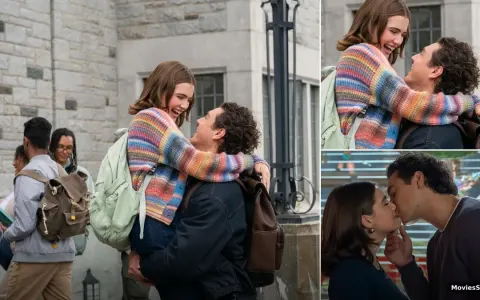
There is a specific kind of cinematic magic that happens when a director stops trying to "explain" history and starts trying to feel it. In her stunning debut feature, Katharina Rivilis does exactly that. This isn't just another I'll Be Gone in June review; it’s an autopsy of the moment the American Dream curdled into a fever dream. Set in the scorched landscape of Las Cruces, New Mexico, the film captures the precise vibration of 2001—a year that started with the optimism of the new millennium and ended in the smoke of the Twin Towers.
The Story of Franny: A German Outsider in the American Desert
If you're wondering what the buzz is about, here is the breakdown: 'I'll Be Gone in June' is a 2026 coming-of-age drama directed by Katharina Rivilis. It follows Franny (Naomi Cosma), a German exchange student in Las Cruces, New Mexico, whose life is upended by the 9/11 attacks, forcing her to navigate isolation, first love, and shifting American patriotism.
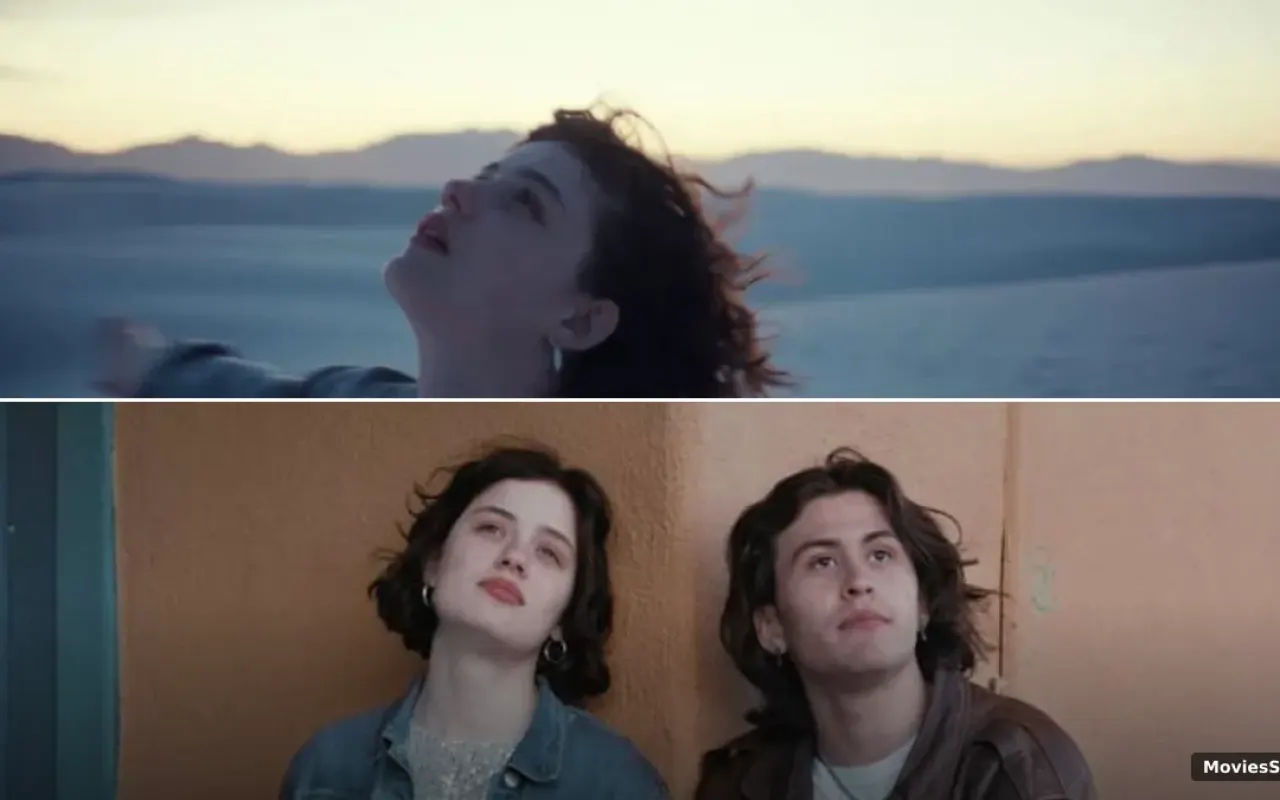
Franny arrives from Brandenburg, a place of lush forests and the lingering shadows of the Berlin Wall, only to be dropped into the "American nowhere." The transition is jarring. Through the lens of Giulia Schelhas DP, the New Mexico desert looks less like a postcard and more like bare, sun-reddened flesh. It’s beautiful, but it’s hostile. Franny is eager to belong, but her host family—a God-fearing, military-adjacent unit—makes it clear that her "otherness" is a problem. They snap when she speaks German; they glance at her secular books with suspicion.
Then, the planes hit. The film’s depiction of 9/11 isn't about the towers falling; it’s about the silence in a New Mexico classroom. It’s the "thoughts and prayers" intercom announcement that feels poignantly empty and the eerily formal ritual of the Pledge of Allegiance that follows. For Franny, the catastrophe doesn't just change the news cycle—it changes the way people look at her. Suddenly, the "Nazi girl" jokes from her classmates aren't just bad banter; they are symptoms of a country closing its ranks.
Naomi Cosma's Breakout Performance and the Cast of Non-Actors
The gravitational pull of the film is undoubtedly Naomi Cosma actress. In her debut role, Cosma delivers a performance that draws immediate comparisons to a young Nastassja Kinski—coltish, resourceful, and possessing a "star quality" that feels entirely unforced. She doesn't just play a teenager; she embodies the mercurial tonal shifts of being sixteen, where you can be heartbroken by a boy and terrified of a global war in the same breath.
What makes the film feel so lived-in is the supporting cast. Rivilis spent time casting local New Mexico non-actors to fill out Franny’s world. This pays off in a pivotal classroom scene where students are asked for the "right" response to the attacks. The answers—ranging from "exact revenge" to "it’s another Vietnam"—sound unscripted because they essentially were. These kids aren't reciting lines; they are channeling the raw, confused energy of youth in crisis.
The chemistry between Franny and Elliott, played by David Flores actor, is the film’s romantic core. Elliott is a melancholic musician, the kind of boy who makes remarks about the moon and finds charm in the "dourness" of a PJ Harvey soundtrack. While some might find their romance a bit "lyrical," it serves as a necessary anchor. In a world that is literally and figuratively on fire, finding tenderness in another adrift soul is a survival tactic.
The Wim Wenders Influence: A New Vision for Road Movies
It’s no coincidence that Wim Wenders producer attached his Road Movies production banner to this project. Wenders, who famously captured the American West in Paris, Texas and explored post-9/11 paranoia in Land of Plenty, clearly saw a kindred spirit in Rivilis. The film shares that Wenders-esque "cinematic language"—a focus on the landscape as a character and the soul-searching journey of the outsider.
Wenders reportedly took a rare, hands-on interest in the project, even offering guidance in the editing room to help balance the film’s "sensory" nature with its political weight. The result is a movie that feels like a passing of the torch. It takes the DNA of the classic road movie and updates it for a generation that views the "American Dream" with a healthy dose of skepticism.
Technical Mastery: Alexa 35 and the Lyrical Desert Landscape
One of the most discussed aspects of this I'll Be Gone in June review is the visual contrast. The film was shot over 50 days in New Mexico, utilizing the Alexa 35 cinematography to its full potential. The digital images are crisp, saturated with lilac-hued sunsets and deep midnight blues. It creates a "saturated romanticism" that feels like a memory you’re trying to hold onto before it fades.
However, Rivilis disrupts this beauty with Franny’s own "video diary." Using a turn-of-the-century handheld camcorder, these scuzzy, low-res sequences offer an intimate, unmediated view of her world. While some critics argue the two formats don't always coalesce, the disconnect feels intentional. It represents the gap between how the world looks (the grand, cinematic desert) and how it feels (the shaky, grainy reality of a girl trying to find her place in it).
The Soundtrack: PJ Harvey, Nina Simone, and Anachronistic Vibes
- PJ Harvey: Franny’s karaoke rendition of "Ballad of the Soldier’s Wife" is a haunting standout.
- Nina Simone: The use of "Wild Is the Wind" adds a layer of timeless blues to the New Mexico heat.
- Chavela Vargas: "La Llorona" grounds the film in the local culture of the borderlands.
Is 'I'll Be Gone in June' Based on a True Story?
The short answer: Yes, it’s deeply semi-autobiographical. Katharina Rivilis was herself a German exchange student in 2001, landing in Las Cruces just before the world changed. This personal history is what gives the film its "receipts." When Franny is told not to speak German around a foster child, or when she faces "Nazi girl" taunts, these aren't just plot points—they are lived experiences.
Rivilis, who previously earned a Student Academy Award nomination for her film Day X, uses her Katharina Rivilis filmography to date as a roadmap for exploring how personal memory warps collective experience. The film also features a heavy metaphorical layer involving the Trinity Site—the location of the first nuclear bomb test. When Franny walks to the site, imagining the blast, it serves as a chilling parallel to the "blast" of 9/11 that destroyed her version of America before she even got to know it.
Latest Updates: Distribution and Where to Watch
Following its successful run at Cannes Un Certain Regard 2026, the film has been making waves in the industry. Luxbox sales agent has already sealed a major French distribution deal with Nour Films. As for the US, the I'll Be Gone in June trailer has sparked a bidding war among boutique streamers and indie distributors. While a firm I'll Be Gone in June release date US hasn't been locked in yet, industry insiders expect a late 2026 theatrical run followed by a streaming debut on a platform like MUBI or Neon.
Key Takeaways
- Naomi Cosma is a bona fide breakout star, delivering a performance of incredible depth.
- The film is a "semi-autobiographical" time capsule of 2001, grounded in the director's own life.
- Wim Wenders served as a producer, lending the film his signature "Road Movies" aesthetic.
- The Alexa 35 visuals by Giulia Schelhas are some of the most stunning seen at Cannes this year.
- It avoids 9/11 clichés by focusing on the "peripheral trauma" of an outsider in Las Cruces.
In the end, I'll Be Gone in June isn't just about a girl who went to America and came back. It’s about the realization that the place you were looking for doesn't exist anymore—and maybe it never did. Rivilis doesn't offer easy answers or a clean "hero's journey." Instead, she gives us a "rambling odyssey" that feels exactly like real life: messy, beautiful, and occasionally heartbreaking. Whether you're here for the 9/11 history or the indie-rock aesthetics, this is a debut that demands your attention.