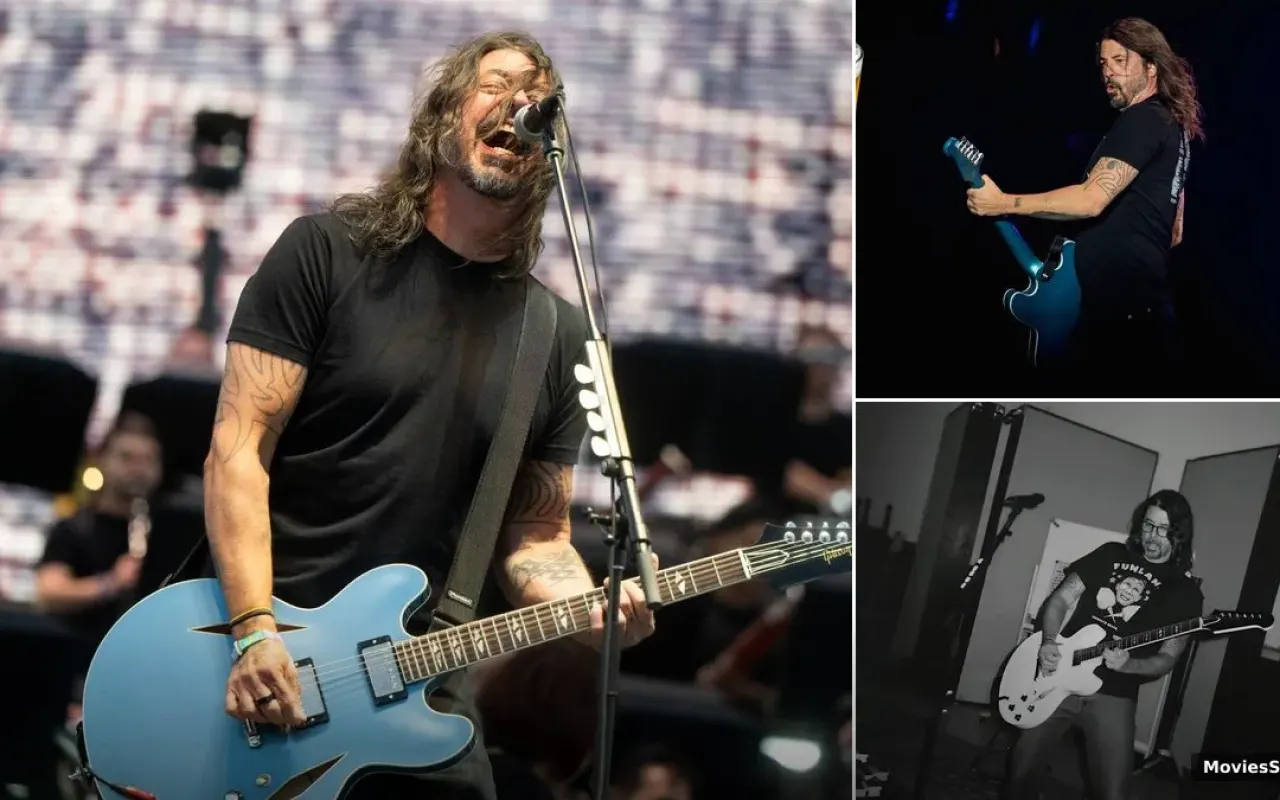
Real talk: If you’ve spent thirty years screaming like your life depends on it, you’d expect your throat to look like a crime scene. But when it comes to Dave Grohl vocal cords, the rules of medical biology seem to be more of a suggestion than a law. While most elite vocalists treat their throats like priceless Stradivarius violins—think humidifiers, honey, and hours of silence—the Foo Fighters frontman has spent decades doing the exact opposite. In a recent appearance on the Dish podcast with Nick Grimshaw and Angela Hartnett, Grohl revealed that his version of "vocal hygiene" involves zero warm-ups and a significant amount of Coors Light.
The wild part? It’s actually working. About eight years ago, Grohl finally decided to see an otolaryngologist for an endoscopy, fully expecting to be told his career was over. He admitted he thought his vocal folds would look like "string cheese"—the clinical term for vocal nodules or polyps that look like frayed, white fibers. Instead, his doctor was floored, telling him his throat looked "amazing" and "great." When Grohl explained his pre-show routine, the doctor’s advice was simple: "Just don't change what you're doing."
What is Dave Grohl's pre-show ritual?
For those looking to capture that stadium-rock energy (or just curious about the chaos), here is the step-by-step timeline of the Dave Grohl pre-show ritual that he follows before every Foo Fighters gig:
- 60 Minutes Before: Open the first beer (usually a Coors Light) and take an Advil to manage joint pain.
- 50 Minutes Before: Take the first shot of whiskey.
- 40 Minutes Before: Finish the first beer and open a second one.
- 25 Minutes Before: Participate in the "Band Prayer," a group shot of whiskey with the entire band.
- 15 Minutes Before: Open a third beer and take one final shot of whiskey before hitting the stage.
The Science of the 'Grohl Paradox': Why His Voice Isn't Thrashed
On paper, the Dave Grohl beer whiskey combo should be a disaster for Foo Fighters vocal health. Alcohol is a known dehydrator and a vasodilator, which means it can make the vocal folds swell and become more prone to vocal cord hemorrhage. Most professional vocal coaches, like the legendary Roger Love, would warn that drinking before a set masks the pain, leading a singer to over-exert themselves without realizing they are causing damage.
So, how does Grohl avoid the fate of stars like Adele or Steven Tyler, both of whom required surgery for vocal cord hemorrhages and nodules? The answer likely lies in a combination of "grit" technique and sheer genetic luck. Grohl doesn't just scream; he uses a technique that engages the "false vocal folds" (vestibular folds) located just above the true vocal folds. This provides that signature rock distortion without putting the full physical load on the delicate tissues responsible for pitch.
There is also the Advil factor. While mixing NSAIDs with alcohol is generally a medical "no-go" due to risks of stomach lining irritation and increased bleeding, the Advil acts as a preemptive anti-inflammatory. In the high-decibel environment of a Foo Fighters show—where stage volume often exceeds 110 decibels—this might be keeping the inflammation at bay just long enough for him to get through the set.
Dave Grohl Vocal Warm Ups: The Power of Doing Nothing
The most shocking revelation from the Dave Grohl Dish podcast episode was his total lack of vocal warm ups. Most rock singers spend 30 to 60 minutes doing lip trills and scales to increase blood flow to the larynx. Grohl’s "warm-up" is the first three songs of the set. This flies in the face of traditional vocal hygiene, which emphasizes gradual preparation to prevent the vocal folds from slamming together too hard while dry.
However, rock singer longevity is often about consistency rather than "proper" form. Because Grohl has been singing this way since Nirvana’s 1991 breakout, his muscles have likely developed a specific callous-like resilience. Compare his voice in 1995 to the 2026 Your Favorite Toy era, and you'll hear a deeper resonance, but the power remains intact. He has rarely, if ever, had to cancel a show due to total voice loss, a feat that is nearly unheard of for someone playing 60+ stadium shows a year.
Medical Fact Check: The Risks of the Rockstar Routine
While Grohl’s doctor gave him the green light, it’s important to look at the "fine print" of this lifestyle. Touring vocal health tips usually prioritize vocal fold hydration, which requires drinking massive amounts of water 24 hours before a performance. Alcohol actually does the opposite, drying out the protective mucus layer on the cords.
- Gastric Reflux: Alcohol and spicy foods (or even just late-night tour meals) can trigger Gastroesophageal Reflux Disease (GERD). Stomach acid rising into the esophagus can "burn" the vocal cords, causing chronic hoarseness.
- The Numbing Effect: Whiskey and Jägermeister can numb the throat. While this feels good in the moment, it prevents the brain from receiving "stop" signals when the tissue is tearing.
- The Advil Danger: Taking Advil (ibuprofen) before a show can actually increase the risk of a vocal cord hemorrhage because it thins the blood. One poorly timed "best of you" scream could theoretically cause a blood vessel in the throat to burst.
The 'Band Prayer' and Mental Performance
There is a psychological element to consider as well. The "Band Prayer"—the group whiskey shot—isn't just about the booze; it's a ritual of solidarity. For a band that has been through as much as the Foo Fighters, these moments of connection are likely more important for the performance than a 20-minute scale exercise. The shots of Jägermeister or whiskey act as a social lubricant that shifts the band from "normal people" to "rock stars."
Key Takeaways on Dave Grohl's Vocal Health
- The Diagnosis: Despite no warm-ups, an endoscopy showed Grohl's vocal cords are in "amazing" condition.
- The Ritual: A 60-minute countdown involving three beers, three shots of whiskey, and an Advil.
- The Technique: Grohl likely utilizes his "false vocal folds" to produce grit without destroying his primary vocal folds.
- The Warning: Medical experts generally advise against this routine due to the risks of dehydration, vocal nodules, and NSAID-related bleeding.
- The Outlier: Grohl is a statistical anomaly in the music world, maintaining rock singer longevity where others have required surgery.
Looking Ahead: The 2026 North American Stadium Tour
As the Foo Fighters gear up for their 2026 North American Stadium tour, all eyes (and ears) will be on Grohl. With a new album, Your Favorite Toy, dropping this April, the setlists are expected to be longer and more vocally demanding than ever. While the "beer and whiskey" diet works for the man who once finished a show with a broken leg, it remains a "don't try this at home" warning for aspiring singers.
Whether it’s superior genetics, the "Band Prayer" whiskey, or the fact that he’s just too fueled by rock and roll to fail, Dave Grohl continues to defy every rule in the vocal coach’s handbook. As long as the Dave Grohl vocal cords keep holding up, the stadium lights will keep staying on.